
What is Bitcoin Cash (BCH)?
Last updated
Written by

Reviewed by

Table of Contents
- Overview
- Why Bitcoin Cash Was Created
- How Bitcoin Cash Works
- CashTokens: Extending Bitcoin Cash Beyond Payments
- Privacy on Bitcoin Cash: CashShuffle and CashFusion
- Real-World Use Cases
- Security and Mining
- Bitcoin Cash vs Bitcoin: Key Differences
- Historical Forks of Bitcoin Cash
- Governance and Upgrades
- Future Outlook
- How to Store, Buy, and Use Bitcoin Cash
- Conclusion
- Frequently Asked Questions
Overview
Bitcoin Cash launched on August 1, 2017, as a hard fork of the Bitcoin (BTC) blockchain. The split was the result of a long-running disagreement within the Bitcoin community about how the network should scale. One side supported a path centered on small blocks + SegWit + off-chain solutions (Lightning Network). The other believed Bitcoin should scale on-chain, directly increasing block capacity to allow higher throughput and lower fees.
Supporters of the on-chain approach initiated a chain split, giving rise to Bitcoin Cash, a network designed to maintain Bitcoin’s original purpose as outlined in the 2008 whitepaper:
“A purely peer-to-peer version of electronic cash.”
Since launch, BCH has continued to evolve, adding technologies such as CashTokens, CashFusion, CashShuffle, and efficiency improvements that keep the network fast, affordable, and reliable.
Today, Bitcoin Cash is widely used for payments, remittances, merchant transactions, and new applications built directly on its chain.
Why Bitcoin Cash Was Created
The Bitcoin Cash fork happened because of a fundamental question:
Should Bitcoin scale directly on-chain?
From 2015 to 2017, Bitcoin’s limited block size (1 MB) caused:
- Network congestion
- Unpredictably high fees
- Slower confirmation times during peak demand
- Reduced ability to function as “everyday money”
Some developers, entrepreneurs, and early Bitcoin advocates - including Roger Ver, one of the earliest investors and evangelists of Bitcoin - supported increasing block capacity to keep Bitcoin fast and inexpensive to use.
When consensus was not reached, the community split. BCH adopted larger blocks, enabling far more on-chain transaction throughput.
Beyond technical scalability, Bitcoin Cash was created around the idea that money should empower individuals directly. By enabling people to store and exchange value without reliance on centralized institutions, Bitcoin Cash is designed to support financial autonomy, censorship resistance, and global economic participation on an open, permissionless network.
How Bitcoin Cash Works
Blockchain Architecture
Bitcoin Cash uses the same fundamental architecture as Bitcoin:
- Proof-of-Work (PoW) consensus
- SHA-256 mining algorithm
- 21 million fixed supply
- ~10 minute block time
- Halving every ~4 years
These parameters preserve Bitcoin’s monetary properties while enabling BCH to follow a different path in terms of scaling.
Block Size and Throughput
The defining feature of BCH is its 32 MB block size limit, far larger than Bitcoin’s ~1 MB base block.
Larger blocks mean:
- More transactions per block
- Lower fees, even during high demand
- Faster confirmations
- Higher throughput (hundreds of transactions per second in practice)
This allows BCH to function as everyday digital cash without relying on secondary networks.
Transaction Fees
Fees on Bitcoin Cash are typically fractions of a cent. Even during periods of heavy use, fees remain extremely low due to ample block space.
For example:
- Sending $10 to a friend → ~$0.0005 fee
- Paying a merchant → typically under one cent
- Cross-border transfer → still under a cent
This fee environment is essential for micro-transactions, tipping, gaming, and remittances.
Instant payments and Replace-by-Fee (RBF)
Unlike Bitcoin, Bitcoin Cash does not use Replace-by-Fee (RBF) by default. This design choice makes unconfirmed transactions significantly more reliable for everyday payments, allowing merchants and users to safely accept small transactions with near-instant settlement. Subsequent protocol upgrades have further improved the handling of chained and unconfirmed transactions, strengthening Bitcoin Cash’s suitability for high-volume, low-value payment environments.
CashTokens: Extending Bitcoin Cash Beyond Payments
In 2023, Bitcoin Cash activated one of the most significant upgrades in its history - CashTokens.
CashTokens allow the BCH blockchain to support:
- Fungible tokens
- Non-fungible tokens (NFT-like assets)
- On-chain logic for decentralized applications
But unlike many contract-heavy blockchains, CashTokens preserve efficiency by avoiding global state bloat, keeping BCH:
- Scalable
- Lightweight
- Affordable
- Easy to run at home
CashTokens expand BCH’s utility into areas such as on-chain trading, stablecoins, loyalty programs, digital collectibles, and permissionless services.
In addition to CashTokens, developers can build programmable applications on Bitcoin Cash using tools such as Cashscript, a high-level smart contract language designed specifically for BCH. These applications enable conditional payments, escrow arrangements, and other on-chain logic without relying on complex virtual machines, allowing Bitcoin Cash to support more advanced functionality while maintaining efficiency and low transaction costs.
Privacy on Bitcoin Cash: CashShuffle and CashFusion
Bitcoin Cash is a public ledger, but users have access to voluntary privacy tools:
CashShuffle
A coin-mixing protocol that groups multiple users’ transactions and redistributes them so no single input can be tied clearly to an output, as implemented by the CashShuffle.
CashFusion
A more advanced privacy system that uses multi-party transaction “fusions” to make deterministic tracing extremely difficult. Unlike custodial mixers, CashFusion never takes possession of user funds and instead restructures transactions cooperatively.
A more advanced privacy system using multi-party transaction “fusions” that make deterministic tracing extremely difficult. Unlike mixers that rely on custodial processes, CashFusion never takes possession of user funds. It simply restructures transactions cooperatively. Learn more about .
Privacy tools on BCH do not alter consensus rules - they operate at the wallet layer, keeping the base protocol simple and robust.
Real-World Use Cases
Everyday Payments
BCH is used globally for retail purchases, utility payments, e-commerce, and person-to-person transactions. Low fees make it suitable for any amount - from micropayments to high-value transfers.
Remittances
Cross-border payments using BCH are:
- Faster than bank transfers
- Cheaper than traditional remittance services
- Accessible globally
Fees rarely exceed a cent, making BCH practical for families sending money abroad.
Merchant Adoption
Thousands of merchants support BCH worldwide through payment tools and integrations such as:
- Bitcoin.com Wallet’s built-in merchant tools
- BitPay
- CoinPayments
- GoCrypto
- Paytaca integrations
QR-based payments make checkout seamless.
Micropayments and Tipping
Because fees are negligible, BCH is used in:
- Online tipping
- Creator platforms
- Chat integrations
- Gaming economies
- Pay-per-article content systems
On-Chain Apps (via CashTokens)
Developers build services such as:
- Decentralized exchanges
- Staking/earn applications
- Tokenized assets
- Voucher and coupon systems
- Community reward programs
These run directly on the BCH blockchain without requiring a high-fee virtual machine.
Security and Mining
Bitcoin Cash retains Bitcoin’s proven security model:
Proof-of-Work
Miners compete to solve cryptographic puzzles that validate transactions and secure the network. This requires real economic cost, making attacks extremely expensive.
SHA-256
BCH shares the mining algorithm with Bitcoin, meaning miners can choose which chain to mine depending on profitability.
Bitcoin Cash also uses a responsive difficulty adjustment algorithm designed to keep block production stable even as mining hash power shifts between networks. This helps ensure consistent transaction confirmations and predictable network behavior during periods of market volatility.
Decentralized Mining Ecosystem
Hashrate is distributed across multiple mining pools globally. This decentralization protects the network from unilateral control or censorship.
Bitcoin Cash vs Bitcoin: Key Differences
Below is a direct comparison of the two chains as of 2026:
| Feature | Bitcoin (BTC) | Bitcoin Cash (BCH) |
|---|---|---|
| Launch | 2009 | 2017 |
| Purpose | Store of value | Peer-to-peer payments |
| Block Size | ~1–4 MB | 32 MB |
| Typical Fees | $1–$5+ | <$0.01 |
| Throughput | Limited on-chain | High on-chain |
| Smart Contracts | Limited on L1 | CashTokens on L1 |
| Scaling Approach | Lightning Network | On-chain transactions |
| Supply | 21 million | 21 million |
| Consensus | PoW | PoW |
Both networks share the same monetary foundation but pursue different philosophies.
Historical Forks of Bitcoin Cash
Bitcoin Cash has its own fork history:
2018: BCH → Bitcoin SV (BSV)
A disagreement over block size policies and network direction created a split. Bitcoin Cash ABC remained “Bitcoin Cash,” while Bitcoin SV became its own chain.
2020: Bitcoin ABC Hard Fork
BCH split again due to disagreements over funding mechanisms. The community overwhelmingly supported Bitcoin Cash Node (BCHN), which became the canonical Bitcoin Cash chain.
These events reinforced BCH’s commitment to decentralized, community-driven governance.
Governance and Upgrades
Bitcoin Cash maintains a predictable upgrade schedule, generally once per year. Upgrades are coordinated through:
- Open discussion
- Developer collaboration
- Miner and node operator consensus
This process ensures upgrades are deliberate, stable, and aligned with user needs. Like Bitcoin, Bitcoin Cash governance is not dictated by any single authority. Network upgrades emerge through a process of discussion, experimentation, and voluntary adoption by users, miners, developers, and node operators, forming a decentralized social consensus around how the protocol evolves over time.
Recent upgrade themes include:
- Validation efficiency
- CashTokens enhancement
- Script improvements
- Scaling and resource management
- Usability refinements
Future Outlook
While Bitcoin Cash is optimized for payments, it retains the same fixed supply and issuance schedule as Bitcoin, allowing it to function as a scarce digital asset alongside its role as a medium of exchange. Bitcoin Cash’s long-term trajectory is centered around:
- Global payments
- Merchant adoption
- Low-fee transaction reliability
- Privacy tools
- New tokenized economies
- On-chain applications through CashTokens
- Scalable infrastructure without sacrificing decentralization
As of 2026, the BCH ecosystem continues to develop - from the growth of CashTokens-based platforms to expanding merchant networks, wallet innovations, and ongoing upgrades aimed at strengthening BCH as a global digital cash system.
How to Store, Buy, and Use Bitcoin Cash
Wallets
Bitcoin Cash is supported by:
- Bitcoin.com Wallet (recommended)
- Ledger
- Trezor
- Electrum Cash
- Electron Cash
- Paytaca
Self-custodial wallets are ideal for users who want full control of their keys.
Buying BCH
You can buy BCH through:
- The Bitcoin.com Wallet
- Most global exchanges
- Local P2P platforms
- Merchant and gift card platforms
Using BCH
Bitcoin Cash is commonly used for everyday payments such as paying merchants, sending funds internationally, online shopping, gaming, tipping, and interacting with CashTokens-based applications, with guidance available on how to buy Bitcoin Cash, how to sell Bitcoin Cash, and how to use Bitcoin Cash, as well as for businesses looking to start accepting Bitcoin Cash and understand the benefits of accepting it.
Conclusion
Bitcoin Cash was created to preserve one of the most important ideas in the history of digital money: that anyone, anywhere, should be able to send value instantly, affordably, and without permission. In the years since its launch, BCH has remained committed to this mission while evolving far beyond its origins as a Bitcoin fork. The network now supports large-scale on-chain payments, near-zero transaction fees, privacy-enhancing tools, and a growing tokenized economy powered by CashTokens.
In 2026, Bitcoin Cash continues to serve millions of users worldwide who rely on it for remittances, merchant payments, micro-transactions, and peer-to-peer transfers. Its development remains decentralized and community-driven, with a clear focus on scalability, efficiency, and long-term reliability.
For users and developers who believe in a future where cryptocurrency functions as practical money - not just a store of value - Bitcoin Cash remains one of the strongest and most mature implementations of that vision. Whether you are exploring digital payments, building new on-chain applications, or simply looking for a fast and inexpensive way to move money globally, BCH offers a powerful, proven, and accessible alternative.
Frequently Asked Questions
What is the main goal of Bitcoin Cash?
To remain true to the original vision of Bitcoin as “peer-to-peer electronic cash.” BCH focuses on enabling fast, affordable payments that anyone can access.
How did Bitcoin Cash originate?
BCH was created on August 1, 2017, after years of debate over Bitcoin's scalability. Supporters of larger blocks initiated a hard fork to maintain low fees and high throughput.
Who is behind Bitcoin Cash?
Bitcoin Cash is a decentralized, open-source project maintained by multiple independent development teams and supported globally by entrepreneurs, developers, miners, and users. Roger Ver, an early Bitcoin investor, has long been one of its most vocal advocates.
What consensus mechanism does BCH use?
Bitcoin Cash uses Proof-of-Work (PoW) with the SHA-256 mining algorithm.
What is the supply of Bitcoin Cash?
The maximum supply is 21 million BCH. As of 2026, over 19 million BCH are in circulation.
Can Bitcoin Cash be used for everyday payments?
Yes. BCH is accepted by thousands of merchants globally and is ideal for everyday spending because fees remain extremely low.
What are CashTokens?
CashTokens, launched in 2023, allow BCH to support fungible tokens, NFTs, and on-chain applications while remaining scalable and efficient.
What privacy tools exist for BCH users?
CashShuffle and CashFusion are popular tools that provide enhanced privacy by obscuring transaction flows without compromising the network.
Can I mine Bitcoin Cash?
Yes. BCH can be mined using SHA-256 ASIC hardware, similar to Bitcoin.
What is the future of Bitcoin Cash?
The roadmap focuses on global payments, scalability, privacy, and small contract functionality through CashTokens. Development remains active across multiple independent teams.
Related guides
Start from here →
How to buy Bitcoin Cash?
From payment methods to platform/venue used, where your Bitcoin Cash goes and more: This is your comprehensive guide to buying Bitcoin Cash.
How to buy Bitcoin Cash?
From payment methods to platform/venue used, where your Bitcoin Cash goes and more: This is your comprehensive guide to buying Bitcoin Cash.
How to sell Bitcoin Cash?
From exchange services to peer-to-peer platforms, this is your comprehensive guide to selling Bitcoin Cash into local currency.
How to sell Bitcoin Cash?
From exchange services to peer-to-peer platforms, this is your comprehensive guide to selling Bitcoin Cash into local currency.
How to use bitcoin cash
From creating a Bitcoin Cash wallet to sending, receiving, spending and more; This is your complete guide for how to use Bitcoin Cash.
How to use bitcoin cash
From creating a Bitcoin Cash wallet to sending, receiving, spending and more; This is your complete guide for how to use Bitcoin Cash.

How do I send bitcoin cash?
Learn how to securely send bitcoin cash.
How do I send bitcoin cash?
Learn how to securely send bitcoin cash.
How do I receive bitcoin cash?
Learn how to securely receive bitcoin cash.
How do I receive bitcoin cash?
Learn how to securely receive bitcoin cash.
How can my business start accepting Bitcoin Cash from customers?
Learn how to get set up to accept Bitcoin Cash from customers.
How can my business start accepting Bitcoin Cash from customers?
Learn how to get set up to accept Bitcoin Cash from customers.
How does accepting Bitcoin Cash benefit my business?
Get free marketing, pay lower fees, eliminate chargebacks, reach a new customer base, and more.
How does accepting Bitcoin Cash benefit my business?
Get free marketing, pay lower fees, eliminate chargebacks, reach a new customer base, and more.

STAY AHEAD IN CRYPTO
Stay ahead in crypto with our weekly newsletter delivering the insights that matter most

Weekly crypto news, curated for you

Actionable insights and educational tips

Updates on products fueling economic freedom
No spam. Unsubscribe anytime.
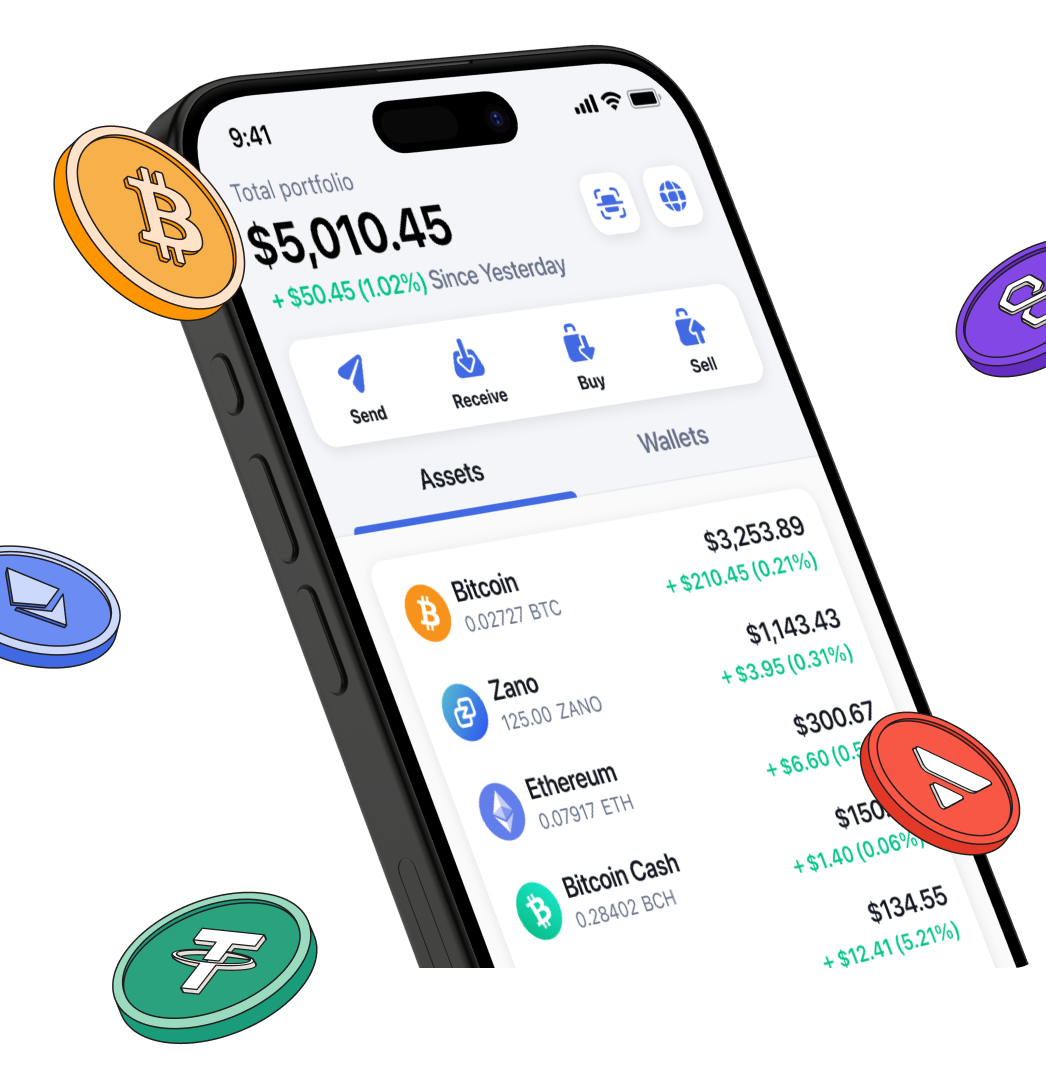
Start investing safely with the Bitcoin.com Wallet
Over wallets created so far
Everything you need to buy, sell, trade, and invest your Bitcoin and cryptocurrency securely



Download App


© 2026 Saint Bitts LLC Bitcoin.com. All rights reserved
Download App
Company
Insights
Products & Services
Reviews
Follow
© 2026 Saint Bitts LLC Bitcoin.com. All rights reserved
 Get Bitcoin