
What is Hyperliquid? Inside the High-Performance Layer 1 Perp DEX
Last updated
Written by

Reviewed by


Table of Contents
- Overview - A New Architecture for Fully On-Chain Finance
- How Hyperliquid Works - A Vertically Integrated Architecture
- Key Advantages - Why Hyperliquid Stands Out
- Trading on Hyperliquid - Features and User Experience
- Perpetual Futures - Design and Mechanics
- Hyperps - Oracle-Independent Perpetuals for Pre-Launch and Synthetic Markets
- Architecture Summary
- Tokenomics - USDH, HYPE, and the Insurance Fund
- Team, Governance, and Development Philosophy
- Security and Transparency
- How Hyperliquid Compares to Other Leading Perp DEXs
- Strengths of Hyperliquid
- Limitations and Risks
- Conclusion: Hyperliquid’s Position in the 2026 DeFi Landscape
- FAQ
Hyperliquid is a high-performance Layer 1 blockchain and decentralized perpetual exchange (Perp DEX) designed to run all trading, liquidity, and financial applications fully on-chain, delivering sub-second execution, deterministic order book matching, and up to 40× leverage on Bitcoin.
Overview - A New Architecture for Fully On-Chain Finance
Hyperliquid launched in 2023 with a bold objective: to build an on-chain financial system that delivers the speed and sophistication of centralized exchanges without sacrificing transparency or self-custody. Unlike most decentralized exchanges, Hyperliquid does not rely on Ethereum, Solana, Cosmos, or another base chain. It operates its own Layer 1, designed from first principles for low latency, high throughput, and unified composability.
At its core, Hyperliquid aims to collapse the fragmented DeFi stack into a single, vertically integrated, high-performance environment. Trading, liquidity, smart contracts, collateral management, synthetic assets, and governance all exist in one shared state machine. As of 2026, Hyperliquid supports more than 100 perpetual markets and consistently ranks among the top on-chain derivatives platforms by open interest, trading volume, and developer engagement.
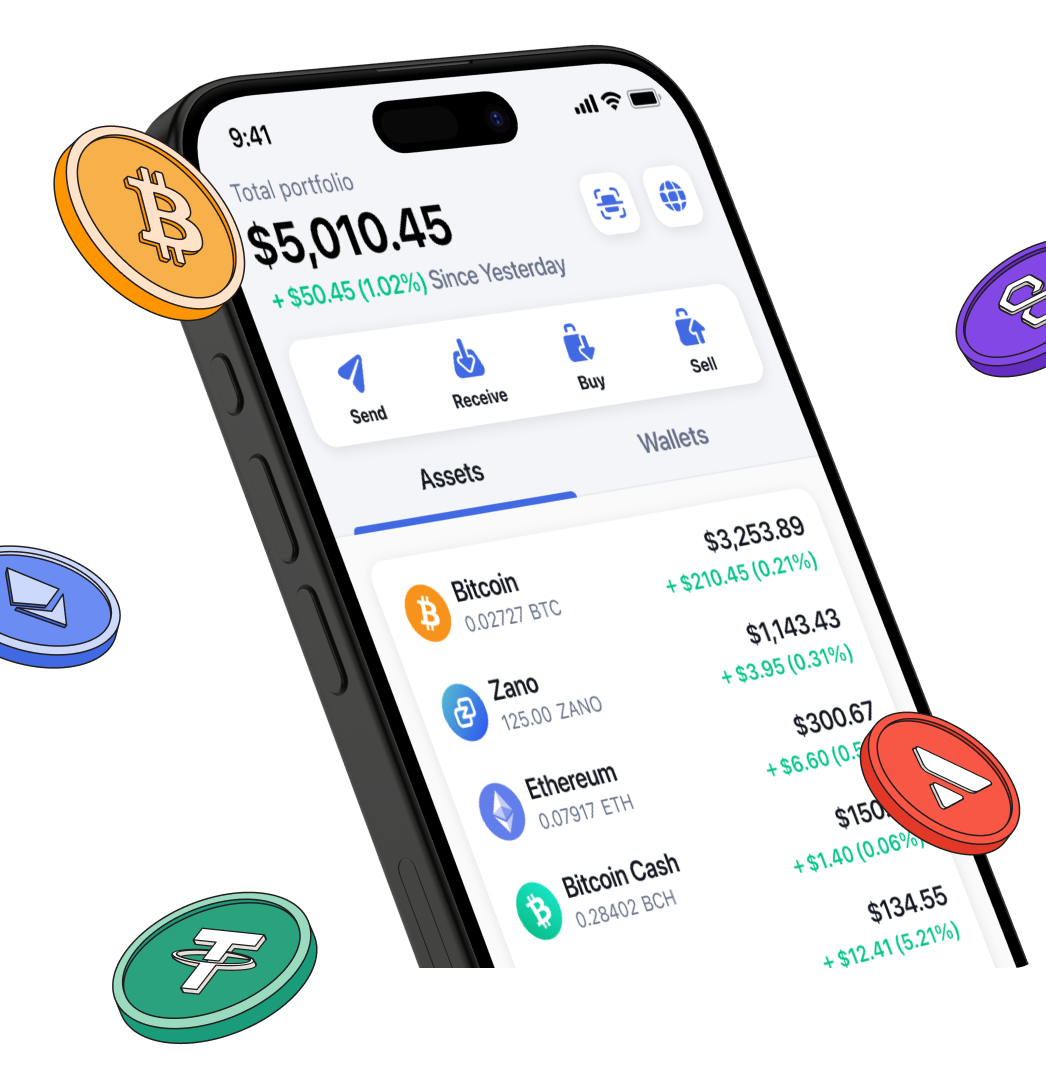
Users managing digital assets across decentralized platforms may also choose to manage supported assets through the Bitcoin.com Wallet, which offers secure access to a wide range of cryptocurrencies.
How Hyperliquid Works - A Vertically Integrated Architecture
Hyperliquid’s design revolves around three components that operate together as one system: HyperBFT, HyperCore, and HyperEVM. This vertical integration is what allows the platform to achieve deterministic execution, unified liquidity, and sub-second finality.
HyperBFT - The Low-Latency Consensus Layer
HyperBFT is a custom consensus protocol inspired by HotStuff. It is optimized explicitly for low-latency finance rather than generalized smart contract execution. Blocks finalize in a single round, providing predictable settlement without the batching or deferred execution found in many rollup or appchain designs.
In practice, HyperBFT offers median latencies around 0.2 seconds and 99th percentile latencies under 0.9 seconds. Combined with an optimized networking stack and a stake-weighted validator model, the system currently processes over 200,000 orders per second and is architected to scale into the millions as execution layers mature. This level of performance enables high-frequency trading (HFT)–style strategies to operate fully on-chain.
HyperCore - The Fully On-Chain Exchange Engine
HyperCore is the financial heart of Hyperliquid. It handles all perpetual and spot market operations, including order placement, matching, funding rate updates, liquidations, margin accounting, and settlement. Crucially, every action - orders, cancels, trades, and liquidations - occurs entirely on-chain.
The matching engine is deterministic, eliminating MEV and front-running opportunities. Latency is comparable to centralized exchanges for co-located users, with median execution around 0.2 seconds and nearly all transactions finalizing within one second. Because HyperCore is built into the Layer 1 itself, it avoids off-chain sequencers or private ordering systems, offering traders a level of transparency unprecedented in on-chain derivatives.
HyperEVM - Smart Contracts With Direct Access to On-Chain Liquidity
HyperEVM extends Hyperliquid into the realm of programmable finance. Unlike sidechains or bridging-dependent EVM environments, HyperEVM runs on the same state machine as HyperCore. This means smart contracts can read and modify trading-related state directly. Developers can launch ERC-20 tokens, build lending protocols that monitor order-book prices in real time, or design synthetic asset platforms that rely on HyperCore’s liquidity as a primary reference.
HyperEVM entered its alpha stage in 2026. Its rollout prioritizes neutrality - no private allocations, no insider access, and no privileged integrations - aligning with Hyperliquid’s ethos of openness and fairness. As the tooling matures, HyperEVM is expected to become a significant driver of the platform’s ecosystem growth.
Key Advantages - Why Hyperliquid Stands Out
Hyperliquid’s architecture offers several advantages that differentiate it from both centralized exchanges and other decentralized derivatives platforms. Its most significant strength is the combination of speed, transparency, and unified liquidity. Traditional DeFi platforms separate trading execution from smart contract computation across multiple layers. Hyperliquid unifies everything in one deterministic, verifiable environment.
The blend of high throughput, one-block finality, and publicly viewable order books enables users and developers to rely on transparent market mechanics rather than opaque centralized systems. The matching engine’s determinism makes it particularly attractive for algorithmic traders seeking fairness guarantees. Meanwhile, the unified HyperCore–HyperEVM design allows applications to tap directly into real-time order books and collateral flows, creating a foundation for advanced financial products that cannot be built on other chains.
Security is reinforced through a HotStuff-derived BFT consensus, redundant oracle inputs, continuous audits, and an insurance fund backed by trading fees. The result is a platform that aims to combine the best elements of centralized exchange performance with the best elements of decentralized verifiability.
Trading on Hyperliquid - Features and User Experience
Hyperliquid’s trading interface is built to rival centralized exchanges in both speed and ergonomics. Users can trade more than 100 perpetual futures markets, with Bitcoin offering up to 40× leverage and Ethereum typically capped around 25×. The platform supports both cross and isolated margin modes, allowing traders to tailor risk exposure to their strategies.
The execution environment includes TradingView charting, real-time depth data, funding rate analytics, detailed PnL dashboards, and transparent fill histories. Fees are competitive - generally in the 0.02%–0.05% range depending on maker/taker status. Funding rates update hourly, with mark prices derived from a combination of Hyperliquid’s own spot markets and major centralized exchanges such as Binance and OKX.
Liquidations are handled entirely on-chain, and maintenance margin requirements are set at half of the initial margin. This creates a predictable and transparent liquidation environment. Because the liquidation engine is deterministic and verifiable, users can independently audit liquidation events in real time.
| Category | Feature | Description |
|---|---|---|
| Leverage | Up to 40× on BTC, ~25× on ETH | Asset-dependent |
| Margin | Cross or isolated | Flexible exposure control |
| Liquidation | Fully on-chain | Transparent, deterministic |
| Markets | 100+ perpetual markets | BTC, ETH, SOL, ARB, AVAX, more |
| Fees | ~0.02%–0.05% | Competitive maker/taker |
| Funding | Hourly | Based on mark vs index |
Perpetual Futures - Design and Mechanics
Hyperliquid’s perpetual contracts are linear, USDC-margined instruments. Profit, loss, and collateral are all managed in USDC, simplifying risk management for traders. Funding mechanics ensure that perp prices remain anchored to spot indices, and the use of internal and external oracle data mitigates manipulation risks.
The platform’s liquidation model is straightforward: when a user’s margin ratio falls below the maintenance threshold, the position is liquidated on-chain at the best available price. Fees flow to an insurance fund designed to absorb shortfalls and stabilize the long-term health of the ecosystem.
Hyperps - Oracle-Independent Perpetuals for Pre-Launch and Synthetic Markets
One of Hyperliquid’s most notable innovations is the Hyperp, a perpetual futures contract that does not rely on external oracle feeds. Instead, Hyperps use an exponentially weighted moving average (EMA) of recent on-chain mark prices as both the trading reference and funding mechanism.
This architecture allows Hyperliquid to list synthetic or pre-launch assets before active spot markets exist. Hyperps reduce manipulation risk by smoothing out volatile price movements and provide continuous exposure to emerging sectors. When reliable spot data appears on major exchanges, Hyperps automatically convert into standard perpetuals.
The resulting system enables traders to access early-stage narratives and synthetic markets in a manner that is transparent and on-chain, without relying on centralized oracle operators.
Architecture Summary
Hyperliquid’s technical foundation can be understood as three layers working together:
- HyperBFT provides consensus and single-block finality.
- HyperCore manages all trading and financial logic.
- HyperEVM enables programmable applications with direct access to on-chain liquidity.
Together, these components create a vertically integrated system capable of executing more than 200,000 orders per second while maintaining deterministic and transparent settlement. It is one of the few platforms capable of offering CEX-level performance with DeFi-level trust assurances.
Tokenomics - USDH, HYPE, and the Insurance Fund
Hyperliquid’s economic system revolves around two primary tokens: USDH and HYPE.
-
USDH is the platform’s dollar-pegged stablecoin used for margin and settlement across perp markets. Its integration provides a unified collateral system that simplifies risk management and reduces fragmentation.
-
HYPE is the network’s governance and utility token. It underpins validator staking, network security, and protocol governance within the Hyperliquid ecosystem. The HYPE token was introduced via a public genesis event in late 2024, forming the foundation for the HYPE DAO. Learn more about Decentralized Autonomous Organizations (DAOs).
A protocol-level insurance fund collects trading fees to absorb losses from liquidation shortfalls. This backstop improves system stability and protects users from extreme market scenarios.
Team, Governance, and Development Philosophy
Hyperliquid Labs leads the platform’s development. The project was founded by Jeff and iliensinc, classmates from Harvard with extensive experience in quantitative trading and advanced distributed systems. The wider team includes engineers and quants from Caltech, MIT, Citadel, Hudson River Trading, Nuro, and other elite institutions.
One of Hyperliquid’s defining characteristics is its self-funded, no-VC approach. The project did not raise venture capital or conduct private token rounds, which allows the team to remain independent and avoid external pressure to optimize for short-term growth. This neutrality-first philosophy is increasingly rare among blockchain projects and resonates strongly with traders seeking fair, transparent infrastructure.
The Hyperliquid governance system is still evolving. As more validators join and HyperEVM grows, the HYPE DAO is expected to assume a larger role in protocol decisions. The long-term vision is to house all of finance on-chain - trading, liquidity, applications, and governance - within a cohesive, unified environment.
Security and Transparency
Hyperliquid operates with a strong emphasis on verifiability and reliability. All order book activity, trades, liquidations, and funding updates occur on-chain and can be independently audited in real time. The use of redundant oracle inputs, combined with the deterministic matching engine, reduces manipulation risk. Bug bounties, continuous code reviews, and a public validator set reinforce the platform’s security posture.
Because nothing is off-chain, there are no opaque custody arrangements or hidden liabilities - a critical contrast to centralized exchanges.
How Hyperliquid Compares to Other Leading Perp DEXs
Hyperliquid’s design distinguishes it from platforms such as GMX v2, dYdX v4, and Drift. GMX v2 relies on synthetic liquidity pools on Arbitrum, while dYdX uses a Cosmos appchain with an order book. Drift operates on Solana with a hybrid AMM–order book model. Hyperliquid takes a more vertically integrated approach by building both its trading engine and smart contract environment into a custom Layer 1.
This gives Hyperliquid advantages in speed, composability, and transparency. Its 0.2-second median latency and deterministic execution place it closer to centralized exchanges in performance, while its fully on-chain architecture ensures transparency that centralized venues cannot match.
The platform’s unified liquidity model also stands apart: HyperCore and HyperEVM operate on the same state, allowing developers to build programmable financial applications tightly coupled with real-time order book data.
| Feature | Hyperliquid | GMX v2 | dYdX v4 | Drift |
|---|---|---|---|---|
| Architecture | Custom L1 (HyperCore + HyperEVM) | Arbitrum (AMM) | Cosmos Appchain | Solana Hybrid |
| Consensus | HyperBFT | Arbitrum Rollup | CometBFT | Solana BFT |
| Order Type | Full on-chain order book | Synthetic pools | On-chain order book | Hybrid (AMM + matching) |
| Latency | ~0.2s | ~3–5s | ~1s | ~0.4s |
| Leverage | 40× BTC | 100× | 50× | 10× |
| Oracle | Pyth + internal | Chainlink + TWAP | Multi-oracle | Pyth |
| Governance | HYPE DAO | GMX DAO | DYDX DAO | Drift DAO |
Strengths of Hyperliquid
Hyperliquid’s strength lies in its ability to deliver high-performance on-chain trading without compromising transparency. The platform’s low-latency architecture, vertical integration, deterministic matching engine, and transparent liquidation model appeal to advanced traders and institutions. Its evolving smart contract environment expands its utility beyond perpetual futures, positioning it to become a comprehensive on-chain financial system.
The project’s commitment to neutrality - evidenced by the absence of VC funding - strengthens user trust and positions Hyperliquid as a long-term-focused infrastructure provider.
Limitations and Risks
Despite its advantages, Hyperliquid faces several challenges. Because it operates a custom Layer 1, ecosystem composability is currently more limited than platforms that build on Ethereum or Solana. The HYPE DAO is early in its development, and validator decentralization must grow in step with network throughput to maintain robust security.
HyperEVM is still in alpha, meaning developer tooling, documentation, and application frameworks are evolving. And although the platform’s UI is powerful, its sophistication may pose a learning curve for users accustomed to simpler interfaces. As with any derivatives platform, leverage carries inherent risks that users must manage carefully.
Conclusion: Hyperliquid’s Position in the 2026 DeFi Landscape
Hyperliquid represents one of the most ambitious attempts to push decentralized trading into true high-performance territory. By building its own Layer 1, integrating trading and smart contract execution, and designing every layer of the stack for speed and transparency, Hyperliquid demonstrates that fully on-chain order book trading can scale - and can do so competitively with centralized exchanges.
Its long-term success will depend on how effectively it decentralizes validator participation, expands the HyperEVM ecosystem, and maintains security as throughput grows. If it achieves these goals, Hyperliquid could define a new standard for decentralized exchanges, influencing the next generation of on-chain derivatives platforms and proving that modern finance can be built transparently, fairly, and entirely on-chain.
FAQ
Is Hyperliquid decentralized?
Yes. All trading activity occurs fully on-chain and finalizes through the HyperBFT consensus mechanism.
What makes Hyperliquid unique?
Its vertically integrated architecture - custom Layer 1, on-chain order book engine, and EVM-compatible smart contracts in the same state - enables CEX-level performance with full transparency.
What is HyperCore?
HyperCore is the execution layer responsible for all perpetual and spot markets, including matching, margin, liquidations, and funding.
What is HyperEVM?
HyperEVM is an Ethereum-compatible smart contract environment with direct access to HyperCore’s liquidity and trading data.
Who builds Hyperliquid?
Hyperliquid Labs, led by Jeff and iliensinc, along with contributors from Caltech, MIT, Citadel, and Hudson River Trading.
What are Hyperps?
Hyperps are oracle-independent perpetual contracts that rely on an EMA of recent on-chain mark prices, enabling synthetic and pre-launch asset trading.
Is Hyperliquid safe?
Hyperliquid’s on-chain nature allows users to audit every action. It is secured by BFT consensus, redundant oracles, and on-chain liquidations, though leverage and smart contract risks still apply.
Can I use the Bitcoin.com Wallet with Hyperliquid?
Yes. Users can manage supported assets through the Bitcoin.com Wallet and interact with decentralized platforms across compatible networks.
Looking for professional-grade tools with self-custody?
Try Orange Rock, built for traders who demand speed, precision, and control.
Related guides
Start from here →
Understanding Perpetual DEXs in 2026
Discover how decentralized perpetual exchanges (Perp DEXs) enable on-chain leverage, self-custody, and 24/7 global trading - all powered by smart contracts.
Understanding Perpetual DEXs in 2026
Discover how decentralized perpetual exchanges (Perp DEXs) enable on-chain leverage, self-custody, and 24/7 global trading - all powered by smart contracts.
Inside Perpetual Futures on Decentralized Exchanges
A complete breakdown of how perpetual futures operate on decentralized exchanges - covering smart contract mechanics, margin systems, and funding rate dynamics.
Inside Perpetual Futures on Decentralized Exchanges
A complete breakdown of how perpetual futures operate on decentralized exchanges - covering smart contract mechanics, margin systems, and funding rate dynamics.

Perp DEX vs. Spot DEX Explained
Learn how Spot and Perpetual DEXs differ in purpose, mechanics, and risk. Discover which decentralized exchange model fits your trading goals in 2026.
Perp DEX vs. Spot DEX Explained
Learn how Spot and Perpetual DEXs differ in purpose, mechanics, and risk. Discover which decentralized exchange model fits your trading goals in 2026.

Understanding Funding Rates on Perp DEXs
Explore how smart contracts use funding rates to stabilize perpetual futures. Learn how payments between longs and shorts keep prices in balance.
Understanding Funding Rates on Perp DEXs
Explore how smart contracts use funding rates to stabilize perpetual futures. Learn how payments between longs and shorts keep prices in balance.

Understanding Leverage in Crypto Trading
Discover how crypto leverage works - from margin and collateral to liquidation and funding. Learn how Perp DEXs manage leveraged positions transparently.
Understanding Leverage in Crypto Trading
Discover how crypto leverage works - from margin and collateral to liquidation and funding. Learn how Perp DEXs manage leveraged positions transparently.

How Liquidation Works on Perp DEXs
Discover how Perp DEXs automatically close leveraged positions to prevent losses. Learn how liquidation thresholds, oracles, and insurance funds protect users.
How Liquidation Works on Perp DEXs
Discover how Perp DEXs automatically close leveraged positions to prevent losses. Learn how liquidation thresholds, oracles, and insurance funds protect users.
How Oracles Keep Perp DEX Prices Fair
Explore how oracle networks deliver real-time market data to Perp DEXs, ensuring accurate pricing, fair liquidations, and stable funding rates.
How Oracles Keep Perp DEX Prices Fair
Explore how oracle networks deliver real-time market data to Perp DEXs, ensuring accurate pricing, fair liquidations, and stable funding rates.

Top Risks of Trading on Perpetual DEXs
Learn about the biggest risks in decentralized perpetual trading, including liquidation, funding volatility, oracles, liquidity, and smart contract exploits.
Top Risks of Trading on Perpetual DEXs
Learn about the biggest risks in decentralized perpetual trading, including liquidation, funding volatility, oracles, liquidity, and smart contract exploits.

Choosing the Right Perp DEX in 2026
A practical guide to finding the best Perpetual DEX for your needs - covering security, liquidity, fees, oracles, leverage, and governance.
Choosing the Right Perp DEX in 2026
A practical guide to finding the best Perpetual DEX for your needs - covering security, liquidity, fees, oracles, leverage, and governance.

STAY AHEAD IN CRYPTO
Stay ahead in crypto with our weekly newsletter delivering the insights that matter most

Weekly crypto news, curated for you

Actionable insights and educational tips

Updates on products fueling economic freedom
No spam. Unsubscribe anytime.
Start investing safely with the Bitcoin.com Wallet
Over wallets created so far
Everything you need to buy, sell, trade, and invest your Bitcoin and cryptocurrency securely



Download App


© 2026 Saint Bitts LLC Bitcoin.com. All rights reserved
Download App
Company
Insights
Products & Services
Reviews
Follow
© 2026 Saint Bitts LLC Bitcoin.com. All rights reserved
 Get Bitcoin