
What is Freedom Dollar (fUSD)?
Last updated
Written by

Reviewed by

Table of Contents
What is Freedom Dollar (fUSD)?
Freedom Dollar (fUSD) is a decentralized, privacy-preserving stablecoin designed to maintain a one-to-one value with the U.S. dollar. Built on the Zano blockchain, fUSD combines the utility of a dollar-pegged digital currency with advanced privacy technologies, offering a censorship-resistant way to transact while keeping balances and transfers confidential.
Origins and Purpose
Launched in January 2025, fUSD was created to provide an alternative to conventional stablecoins, many of which rely on centralized issuers and are subject to regulatory control or blacklisting. The development of fUSD was motivated by growing concerns over financial surveillance, the rise of central bank digital currencies (CBDCs), and the need for a stablecoin that preserves both dollar stability and user privacy.
By anchoring its value to the U.S. dollar, fUSD provides stability for everyday payments and savings. At the same time, it leverages Zano’s privacy-focused infrastructure to protect user data, ensuring that transactions remain confidential and cannot be arbitrarily censored.
The Need for Financial Freedom
Traditional financial systems present several barriers to individual sovereignty and accessibility. These include:
- Centralized control: Banks and governments can freeze accounts, block transfers, or impose restrictions.
- High fees and delays: International transfers often involve high costs and long settlement times.
- Privacy concerns: Traditional systems require extensive personal information, leaving users exposed to surveillance.
- Accessibility issues: Large populations worldwide remain unbanked or underbanked, unable to access essential financial services.
- Inflation and currency devaluation: Government-issued fiat currencies can lose purchasing power over time.
fUSD aims to address these issues by providing a stable, private, and permissionless alternative that combines the reliability of a dollar peg with the protections of decentralized technology.
fUSD aims to address these issues by providing a stable, private, and permissionless alternative that combines the reliability of a dollar peg with the protections of decentralized technology. By design, it reflects principles such as censorship resistance and the idea of unstoppable money, where individuals retain control over their funds regardless of external restrictions.
How fUSD Works
Unlike traditional stablecoins backed by custodial reserves of dollars in bank accounts, fUSD is issued directly on Zano’s blockchain as a Confidential Asset. This means it inherits Zano’s default privacy protections while operating without centralized oversight or reliance on traditional banking infrastructure.
- Collateralization: fUSD is over-collateralized with ZANO, Zano’s native token. At launch, the collateral ratio exceeded 10×, providing a strong buffer to maintain its dollar peg.
- Staked reserves: Staked reserves: The ZANO collateral is staked within the protocol, generating rewards that are added to reserves over time, strengthening the system’s backing.
- Algorithmic balancing: Algorithmic balancing: A combination of over-collateralization and algorithmic market-making mechanisms helps maintain the fUSD peg without dependence on centralized issuers.
These mechanisms are designed to ensure that fUSD maintains its stability while remaining censorship-resistant and private. Like other digital currencies, users should also practice strong digital asset security measures when holding or transacting fUSD to protect their funds.
Privacy Features
Zano’s blockchain architecture incorporates advanced cryptographic tools to provide strong privacy at the protocol level. These same features apply to fUSD transactions:
- Ring signatures obscure the true sender among a group of possible signers.
- Stealth addresses ensure that recipient identities cannot be traced on the public ledger.
- Confidential transactions hide the transferred amount as well as the type of asset being sent.
This is possible because fUSD is built on Zano’s Confidential Assets framework. Confidential Assets are tokens on the Zano blockchain that automatically inherit the network’s privacy features: the sender and recipient are hidden, the amount is concealed, and even the type of asset being transferred is obscured. In practice, this means fUSD transactions reveal nothing beyond the fact that a transfer occurred.
As the first live example of a Confidential Asset, fUSD also benefits from deeper cryptographic protections. Zano’s design extends Ring Confidential Transactions (RingCT) with unlimited decoy mixing and asset tag surjection proofs, ensuring that even in complex multi-asset transfers, both the type and the amount remain fully private. At the same time, these proofs guarantee that every transaction can be verified by the network without exposing sensitive information.
Use Cases
Freedom Dollar is designed for practical, real-world applications where stability and privacy are both required:
- Everyday payments: fUSD can be used for goods and services without exposing personal transaction histories.
- Savings and remittances: As a dollar-pegged asset, it shields users from crypto market volatility while enabling low-cost global transfers, including confidential remittances that protect sender and recipient details. Compared to traditional payment systems, these transactions can avoid high banking charges and instead rely on relatively small crypto transaction fees.
- Donations and political support: Provides a way for individuals and organizations to contribute without fear of financial deplatforming. For example, a recent $100,000 fUSD donation celebrating Ron Paul’s 90th birthday highlighted how Freedom Dollar can be used to support political expression. You can also watch our video breakdown of the event.
- Alternative to CBDCs: Offers a private, permissionless counterpart to state-issued digital currencies.
- Cross-border transactions: Enabling fast and low-cost global payments without reliance on banks or remittance services.
- DeFi applications: As adoption grows, fUSD will be integrated into more decentralized finance platforms for lending, borrowing, and other services, including a range of established DeFi use cases that benefit from confidential lending and trading without exposing balances.
- Financial inclusion: Offering access to stable money and financial tools for those excluded from traditional banking systems.
- Enterprise-grade tokens: Built on Zano’s Confidential Asset framework, fUSD demonstrates how shielded tokens can also serve business use cases, enabling sensitive transactions such as payroll or internal settlement to be conducted privately.
Integration and Access
fUSD is available through several exchanges, including MEXC, AscendEX, Biconomy, and XT.COM. It is also supported by major self-custodial wallets. Importantly, both fUSD and Zano are integrated directly into the Bitcoin.com Wallet app, making it easy for users to hold, send, and receive these assets alongside Bitcoin and other cryptocurrencies. As a Confidential Asset, fUSD can be transacted with full privacy in supported wallets, and the same framework will extend to other Confidential Assets issued on Zano. Additional support is provided by Zano’s own wallet, as well as popular options like Cake Wallet and Edge Wallet.
Comparing fUSD to Other Stablecoins
fUSD stands out within the stablecoin landscape:
- USDT and USDC: These leading stablecoins are centralized, backed by fiat reserves, and subject to issuer blacklisting.
- USDS (formerly DAI): A decentralized stablecoin under Sky Protocol, but its transactions are fully transparent on Ethereum.
- fUSD: Combines decentralization with privacy. It preserves stability without relying on a central custodian and ensures that transaction details remain confidential.
fUSD is one of the first stablecoins to fully integrate privacy protections at the protocol level through Zano’s Confidential Assets. Unlike most stablecoins, which prioritize transparency and compliance, fUSD shares key characteristics with privacy coins, emphasizing confidentiality, fungibility, and resistance to transaction-level surveillance. Understanding how fUSD differs from more established options such as USDT, USDC, and USDS helps clarify why this design represents a meaningful shift in the stablecoin landscape.
Conclusion
Freedom Dollar represents a significant step forward in the evolution of digital money. By uniting the stability of the dollar with the privacy protections of Zano, it provides a tool for financial freedom in an increasingly surveilled global economy. Development efforts on the Zano network and the ongoing growth of the Freedom Dollar project illustrate how this model is being put into practice.
By combining the stability of the U.S. dollar with Zano’s privacy infrastructure, fUSD directly responds to long-standing issues in traditional finance - centralized control, lack of access, privacy loss, and inflationary pressures. In doing so, it demonstrates how digital money can expand financial freedom while remaining practical for everyday use.
Adoption is still in its early stages, but with growing support across wallets, exchanges, and point-of-sale systems, fUSD demonstrates how stablecoins can evolve beyond transparency and control, toward a model that prioritizes sovereignty, confidentiality, and open access. Ongoing development on the Zano network and continued expansion of the Freedom Dollar ecosystem reflect this broader shift toward privacy-preserving digital money.
Frequently Asked Questions
What is Freedom Dollar (fUSD)?
Freedom Dollar (fUSD) is a privacy-preserving stablecoin built on the Zano blockchain. It is designed to maintain a 1:1 peg with the U.S. dollar while keeping transaction details confidential, including sender, recipient, amount, and asset type.
Is fUSD a stablecoin?
Yes. fUSD is a dollar-pegged stablecoin designed to track the value of the U.S. dollar. Unlike many stablecoins, it prioritizes privacy and decentralization at the protocol level rather than relying on centralized custodians.
How does fUSD maintain its dollar peg?
fUSD maintains its peg through over-collateralization with ZANO, Zano’s native token. At launch, the system was backed by more than 10× collateral, with reserves staked to strengthen backing over time. Algorithmic market-making mechanisms also help keep the price aligned with $1.
Does fUSD use smart contracts?
No. Zano does not support Ethereum-style smart contracts. fUSD is issued natively on the Zano blockchain as a Confidential Asset, with privacy and stability enforced through protocol-level cryptography, collateralization, and market mechanisms rather than programmable contracts.
What are Confidential Assets, and how do they relate to fUSD?
Confidential Assets are tokens issued on the Zano blockchain that automatically inherit its privacy features. This means transaction participants, amounts, and asset types are hidden by default. fUSD is the first live example of a Confidential Asset, using this framework to provide private, verifiable stablecoin transfers.
Are fUSD transactions private?
Yes. fUSD transactions are private by default. Zano’s privacy technologies, including ring signatures, stealth addresses, confidential transactions, and advanced cryptographic proofs, ensure that transaction details are not visible on the public ledger.
How is fUSD different from USDT or USDC?
USDT and USDC are centralized stablecoins backed by custodial reserves and subject to issuer controls such as blacklisting. fUSD, by contrast, is decentralized, does not rely on custodial fiat reserves, and integrates privacy at the protocol level through Zano’s Confidential Assets framework.
How is fUSD different from USDS (formerly DAI)?
USDS is a decentralized stablecoin under the Sky Protocol, but its transactions are fully transparent on Ethereum. fUSD differs by offering both decentralization and confidentiality, ensuring stable value without exposing transaction data.
Is fUSD similar to privacy coins?
fUSD shares certain characteristics with privacy coins, such as confidentiality and resistance to transaction-level surveillance. However, it differs in purpose: fUSD is designed specifically as a stable, dollar-pegged asset rather than a volatile native cryptocurrency.
Where can I store and use fUSD?
fUSD is supported in several self-custodial wallets, including the Bitcoin.com Wallet app, Zano’s native wallet, Cake Wallet, and Edge Wallet. It is also available on multiple exchanges, allowing users to buy, store, and transact fUSD privately.
Can fUSD be used for real-world payments?
Yes. fUSD can be used for everyday payments, remittances, donations, and other transactions where price stability and privacy are important. Its design makes it suitable for both individual and organizational use cases.
Is fUSD legal to use?
Regulatory treatment varies by jurisdiction. fUSD is a decentralized digital asset, and users are responsible for understanding and complying with local laws and regulations when using or holding it.
What is the main goal of Freedom Dollar?
The primary goal of fUSD is to provide a stable digital currency that preserves financial privacy and user sovereignty, offering an alternative to transparent, centrally controlled stablecoins and emerging state-issued digital currencies.
Where can I learn more about fUSD and Zano?
You can learn more through the official Zano website and the Freedom Dollar project site, as well as related Bitcoin.com Learning Center articles on Zano, Confidential Assets, stablecoins, and privacy coins.
Related guides
Start from here →
What is Zano?
Zano is a privacy-focused cryptocurrency. Learn about its features and technology.
What is Zano?
Zano is a privacy-focused cryptocurrency. Learn about its features and technology.

What Are Confidential Assets on Zano?
Discover how Zano’s Confidential Assets bring next-level privacy to your crypto — now supported in the Bitcoin.com Wallet.
What Are Confidential Assets on Zano?
Discover how Zano’s Confidential Assets bring next-level privacy to your crypto — now supported in the Bitcoin.com Wallet.

What are Privacy Coins?
Explore the world of privacy coins and how they enhance anonymity in cryptocurrency transactions.
What are Privacy Coins?
Explore the world of privacy coins and how they enhance anonymity in cryptocurrency transactions.
What are stablecoins?
Learn about the key US-dollar crypto 'stablecoins,' how they remain stable, what they're used for, ways to earn interest on them, and where to get them.
What are stablecoins?
Learn about the key US-dollar crypto 'stablecoins,' how they remain stable, what they're used for, ways to earn interest on them, and where to get them.

What is censorship resistance?
Censorship resistance is one of crypto's biggest strengths. Learn about its power.
What is censorship resistance?
Censorship resistance is one of crypto's biggest strengths. Learn about its power.
Unstoppable money
Learn about cryptocurrency's original and most powerful use case
Unstoppable money
Learn about cryptocurrency's original and most powerful use case

What is DeFi?
Learn what makes decentralized finance (DeFi) apps work and how they compare to traditional financial products.
What is DeFi?
Learn what makes decentralized finance (DeFi) apps work and how they compare to traditional financial products.

STAY AHEAD IN CRYPTO
Stay ahead in crypto with our weekly newsletter delivering the insights that matter most

Weekly crypto news, curated for you

Actionable insights and educational tips

Updates on products fueling economic freedom
No spam. Unsubscribe anytime.
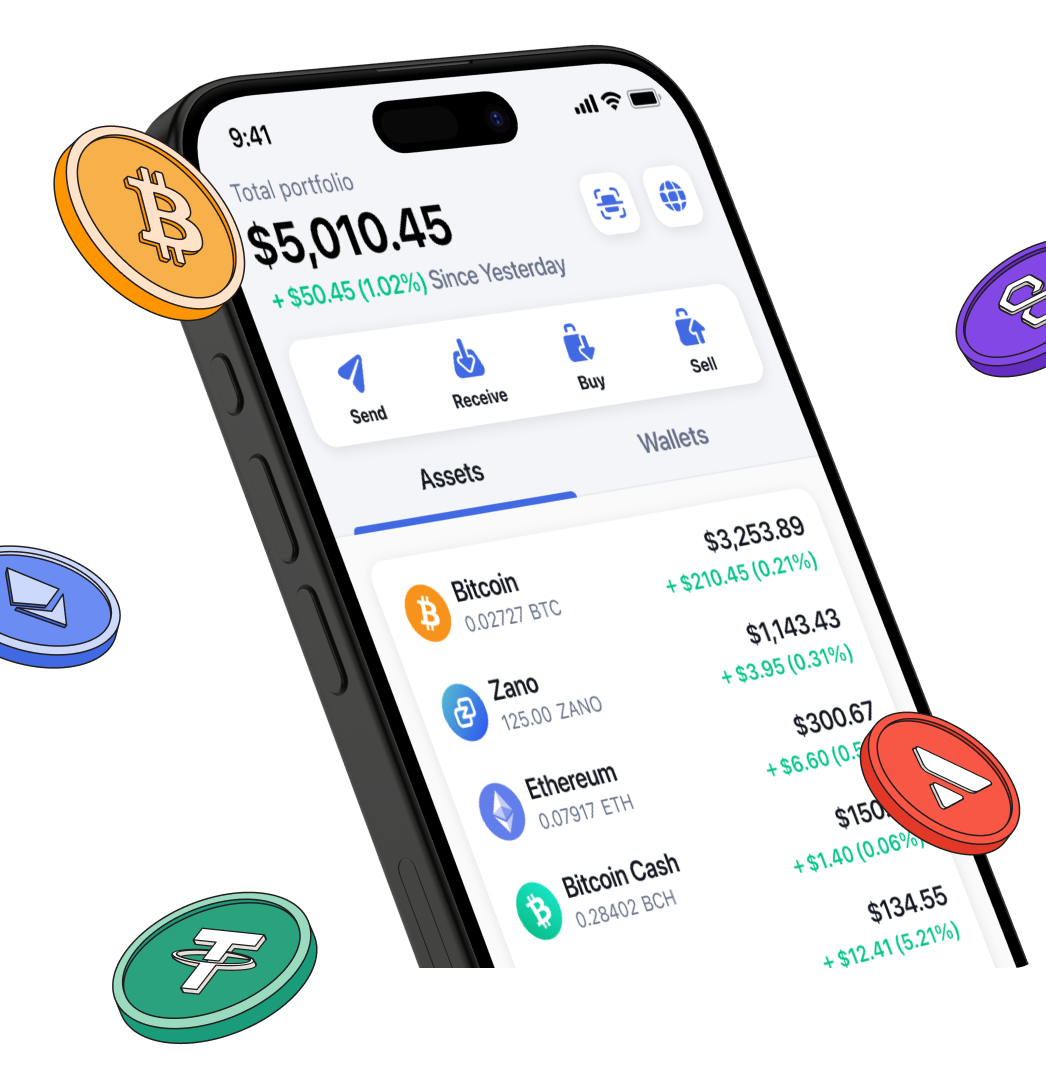
Start investing safely with the Bitcoin.com Wallet
Over wallets created so far
Everything you need to buy, sell, trade, and invest your Bitcoin and cryptocurrency securely



Download App


© 2026 Saint Bitts LLC Bitcoin.com. All rights reserved
Download App
Company
Insights
Products & Services
Reviews
Follow
© 2026 Saint Bitts LLC Bitcoin.com. All rights reserved
 Get Bitcoin