폴카닷(DOT)이란 무엇인가요?



목차
Polkadot (DOT) is an open-source Layer-0 blockchain protocol that connects multiple independent blockchains - called parachains - into a unified and interoperable ecosystem. By enabling these chains to share data and assets securely, Polkadot is building the foundation for Web3, a decentralized internet where users control their data and applications interact seamlessly across networks.
Overview
Launched in May 2020 by Dr. Gavin Wood (co-founder of Ethereum and creator of Solidity), alongside Robert Habermeier and Peter Czaban. Polkadot is the flagship project of the Web3 Foundation and is often described as a Layer-0 blockchain, a foundational coordination layer that sits beneath Layer-1 and Layer-2 networks in the broader blockchain stack, each serving different roles in scalability and execution across blockchain layers. Its architecture introduces a sharded multichain design, where many blockchains run in parallel - improving transaction throughput and flexibility compared to single-chain networks like Ethereum.
Each parachain specializes in a specific purpose, such as decentralized finance (DeFi), gaming, or identity management, while benefiting from Polkadot’s shared security and interoperability.
The network’s native cryptocurrency, DOT, secures the protocol through staking, supports on-chain governance, and bonds resources to connect new chains or purchase network blockspace.
How Polkadot Works
The Relay Chain
At the center of Polkadot lies the Relay Chain - a coordination layer that ensures consensus, security, and communication between parachains.
- It does not host smart contracts or decentralized apps (dApps) directly.
- Instead, it manages the validator set and message passing between connected chains.
- This design separates governance and consensus from execution, improving scalability and security.
Parachains
Parachains are individual Layer-1 blockchains that connect to the Relay Chain, enabling secure message passing and asset transfers between networks, a core feature of cross-chain interoperability. They can:
- Have their own tokens and consensus mechanisms.
- Be optimized for different use cases (finance, identity, privacy, etc.).
- Exchange data with each other via Cross-Chain Message Passing (XCMP).
Originally, parachains were acquired through crowdloan-funded auctions, but since the 2024–2025 rollout of Polkadot 2.0, they now use Agile Coretime, a dynamic, pay-as-you-go system for blockspace allocation.
Parathreads and Agile Coretime
Parathreads were designed as temporary chains renting connectivity as needed.
With the Agile Coretime model, their role has been absorbed into a flexible marketplace where developers can purchase blockspace in smaller, dynamic units - reducing barriers to entry for new projects and eliminating the need for long-term auctions.
Bridges
Polkadot also supports bridges to external blockchains such as Ethereum and Bitcoin, enabling cross-ecosystem interoperability and asset transfers - a key step toward the decentralized internet.
The DOT Token
The DOT token is integral to Polkadot’s design, serving three main functions:
- Staking – Validators and nominators lock DOT to secure the network under the Nominated Proof-of-Stake (NPoS) system. Honest participation earns rewards, while malicious behavior results in slashing.
- Governance – Every DOT holder can vote on proposals, upgrades, and treasury spending via Gov2, a fully on-chain referendum model replacing the earlier council-based system.
- Bonding/Coretime Purchase – DOT is used to bond new parachains or purchase blockspace under the Agile Coretime system.
Polkadot remains inflationary, with an approximate 10% annual issuance rate rewarding network participants while balancing validator incentives and circulating supply.
Polkadot 2.0: A New Era of Scalability (2025)
The Polkadot 2.0 upgrade, deployed across 2024–2025, introduced a major shift from static parachain slots to Agile Coretime, enabling:
- Elastic scaling: Blockspace is dynamically allocated to meet network demand.
- Lower entry costs: Projects no longer need to commit massive DOT stakes to win auctions.
- Greater efficiency: Parallel execution increases throughput and reduces congestion.
- Flexible economics: Developers can buy, sell, or lease Coretime on an open market.
Polkadot 2.0 also lays groundwork for PolkaVM, an upcoming smart contract environment that will expand direct programmability across the network.
Governance and Upgrades
Polkadot’s Gov2 system fully decentralizes decision-making:
- Any DOT holder can propose or vote on a referendum.
- Multiple referenda can run simultaneously, allowing continuous upgrades.
- The system replaces centralized councils and committees with transparent, token-weighted democracy.
Upgrades occur forklessly, meaning the network evolves without disruptive chain splits - a major advantage for long-term stability.
Security and Consensus
Polkadot uses Nominated Proof-of-Stake (NPoS) for consensus:
- Validators produce and verify blocks across parachains.
- Nominators delegate DOT to trustworthy validators to share rewards.
- Slashing penalties deter malicious actions.
This model secures the entire network with minimal energy use, distinguishing Polkadot from Proof-of-Work blockchains like Bitcoin.
Use Cases and Ecosystem
Polkadot hosts a growing ecosystem of parachains and dApps, including:
- Acala: A decentralized finance hub and stablecoin platform.
- Moonbeam: An Ethereum-compatible parachain enabling Solidity smart contracts.
- Astar Network: A DApp platform supporting multiple virtual machines.
- Phala Network: Privacy-preserving cloud computing.
- Centrifuge: Tokenization of real-world assets.
These projects highlight Polkadot’s role as a foundation for DeFi, gaming, privacy tech, and real-world asset tokenization.
Benefits of Polkadot
- Interoperability: Data and assets move securely across chains.
- Scalability: Parallelized execution increases throughput.
- Shared Security: Parachains inherit the Relay Chain’s validator protection.
- On-Chain Governance: Transparent, continuous decision-making via Gov2.
- Upgradeable Architecture: Seamless evolution without forks.
Risks and Challenges
- Complexity: The network’s layered architecture and governance can be challenging for new developers.
- Adoption competition: Rivals like Cosmos, Avalanche, and Near also target interoperability.
- Market volatility: DOT’s inflationary model and governance dynamics can influence price stability.
- Learning curve: Coretime mechanics and governance participation require technical understanding.
Polkadot vs. Other Blockchains
| Feature | Polkadot | Ethereum | Cosmos |
|---|---|---|---|
| Layer | Layer-0 (Relay Chain + parachains) | Layer-1 (EVM mainnet) | Layer-0 (IBC Hub + zones) |
| Consensus | Nominated Proof-of-Stake (NPoS) | Proof-of-Stake (PoS) | Tendermint PoS |
| Smart Contracts | Via parachains (Moonbeam, Astar) | Native EVM | Per-chain Cosmos SDK |
| Upgrades | Forkless, on-chain | Hard forks | On-chain but chain-specific |
| Interoperability | Native via XCMP | Bridges & rollups | IBC protocol |
Future Outlook (2026 and Beyond)
Polkadot continues evolving as one of the most advanced interoperability frameworks in blockchain.
Its Agile Coretime marketplace, Gov2 governance, and PolkaVM roadmap position it as a scalable, democratic, and developer-friendly network - a crucial step toward a truly decentralized Web3.
For users, Polkadot offers participation through staking DOT, voting in referenda, and exploring cross-chain DeFi and gaming ecosystems. Developers can build custom blockchains using Substrate and connect them to Polkadot for security and interoperability.
Frequently Asked Questions
What is Polkadot?
Polkadot is a Layer-0 blockchain protocol that connects multiple independent blockchains (parachains) into one interoperable network, enabling seamless data and asset exchange.
Who founded Polkadot?
It was founded by Dr. Gavin Wood, Robert Habermeier, and Peter Czaban - with Wood also known for co-founding Ethereum and creating Solidity.
How does Polkadot’s consensus work?
Polkadot uses Nominated Proof-of-Stake (NPoS), where validators produce blocks and nominators stake DOT to support them.
What is Polkadot 2.0?
Polkadot 2.0 replaces the old parachain auction model with Agile Coretime - a flexible, market-based system for blockspace allocation.
What is DOT used for?
DOT is used for staking, governance, and bonding/purchasing Coretime. It also powers the network’s economic model and treasury proposals.
Is Polkadot inflationary?
Yes. DOT’s inflation rate is roughly 10% annually under the NPoS model, rewarding validators and nominators for securing the network.
What is Kusama?
Kusama is Polkadot’s experimental network, used to test features and governance models before mainnet deployment.
What makes Polkadot unique?
Its forkless upgrades, interoperability, and fully decentralized governance make Polkadot one of the most innovative multi-chain networks in blockchain.
관련 가이드
여기에서 시작 →
비트코인이란 무엇인가요?
비트코인에 대한 간단한 소개와 그 중요성에 대해 알아보세요.
비트코인이란 무엇인가요?
비트코인에 대한 간단한 소개와 그 중요성에 대해 알아보세요.
알트코인이란 무엇입니까?
알트코인은 비트코인 외의 암호화폐입니다. 그들의 다양한 기능, 사용 사례, 위험 및 잠재력에 대해 알아보세요.
알트코인이란 무엇입니까?
알트코인은 비트코인 외의 암호화폐입니다. 그들의 다양한 기능, 사용 사례, 위험 및 잠재력에 대해 알아보세요.
블록체인이란 무엇인가?
이 초보자 가이드는 블록체인, 암호화폐에서의 중요성, 그리고 작동 방식을 설명합니다. 그 사용 사례, 장점 및 미래 잠재력을 탐험하세요.
블록체인이란 무엇인가?
이 초보자 가이드는 블록체인, 암호화폐에서의 중요성, 그리고 작동 방식을 설명합니다. 그 사용 사례, 장점 및 미래 잠재력을 탐험하세요.
블록체인 레이어 설명
블록체인 기술의 다양한 계층, Layer 0부터 Layer 3까지, 그리고 암호화폐 생태계에서의 그들의 역할에 대한 심층 분석.
블록체인 레이어 설명
블록체인 기술의 다양한 계층, Layer 0부터 Layer 3까지, 그리고 암호화폐 생태계에서의 그들의 역할에 대한 심층 분석.
크로스체인 상호운용성이란 무엇인가요?
크로스체인 상호운용성, 그 중요성 및 직면한 과제들에 대해 알아보세요.
크로스체인 상호운용성이란 무엇인가요?
크로스체인 상호운용성, 그 중요성 및 직면한 과제들에 대해 알아보세요.

블록체인 탐색기란 무엇인가요?
블록체인 탐색기는 블록체인에서 거래, 주소 및 블록의 세부 정보를 볼 수 있게 하여 암호화폐 세계의 투명성과 보안을 증진합니다.
블록체인 탐색기란 무엇인가요?
블록체인 탐색기는 블록체인에서 거래, 주소 및 블록의 세부 정보를 볼 수 있게 하여 암호화폐 세계의 투명성과 보안을 증진합니다.
비트코인 대 알트코인
비트코인 대 알트코인: 암호화폐 투자자를 위한 비교 분석.
비트코인 대 알트코인
비트코인 대 알트코인: 암호화폐 투자자를 위한 비교 분석.

암호화폐에서 앞서 나가세요
우리의 주간 뉴스레터로 가장 중요한 통찰력을 제공받아 암호화폐에서 앞서 나가세요.

매주 당신을 위한 암호화폐 뉴스 큐레이션

실행 가능한 인사이트와 교육적인 팁

경제적 자유를 촉진하는 제품에 대한 업데이트
스팸 없음. 언제든지 구독 취소 가능합니다.
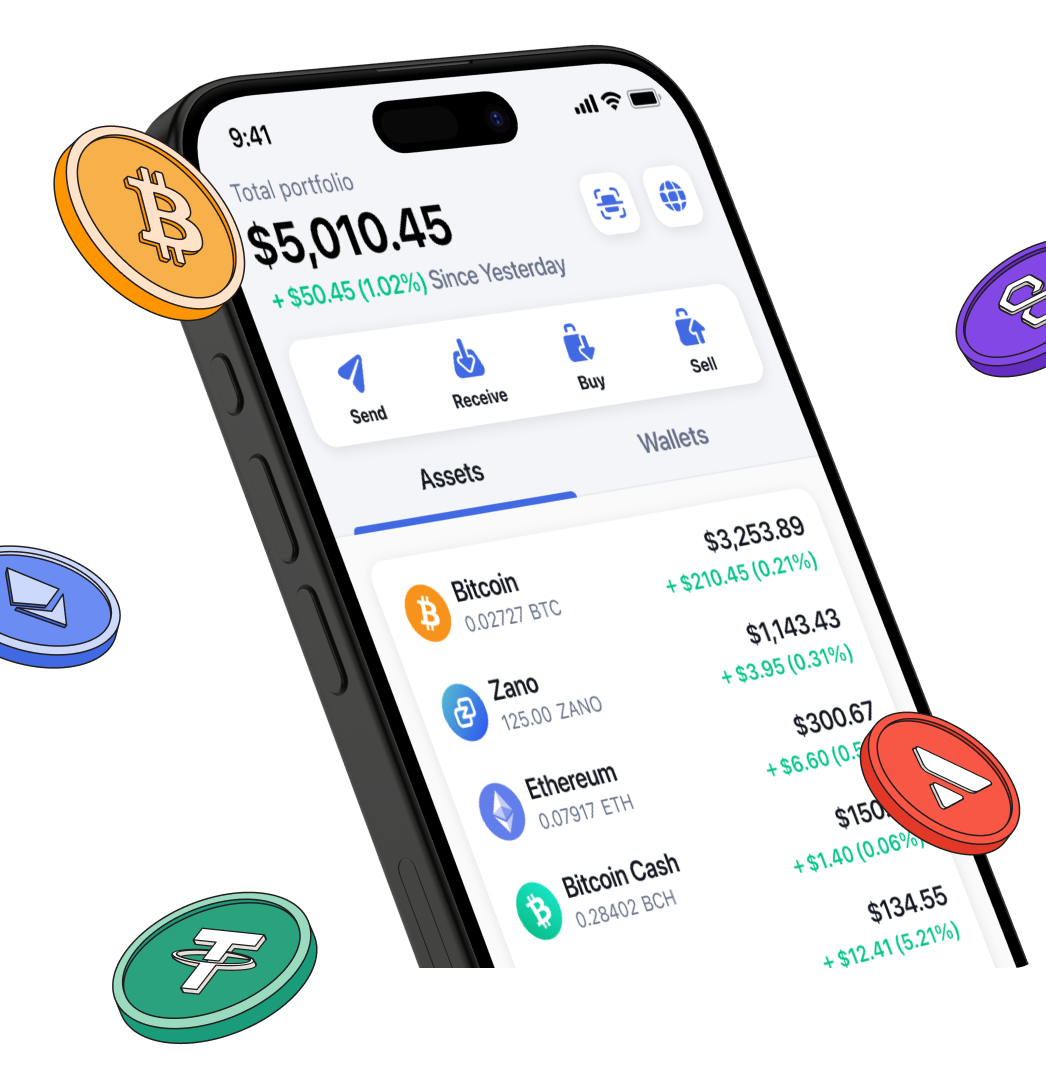
비트코인닷컴 지갑으로 안전하게 투자 시작하세요.
지금까지 개의 지갑이 생성되었습니다.
비트코인 및 암호화폐를 안전하게 구매, 판매, 거래 및 투자하는 데 필요한 모든 것




 Get Bitcoin