
GMX: The Decentralised Perpetual Exchange Protocol
Last updated
Written by

Reviewed by


Table of Contents
GMX is a decentralised exchange protocol that supports spot swaps and perpetual futures trading through a modular, oracle-driven liquidity framework known as GMX V2.
Overview
GMX is a decentralised exchange (DEX) that enables users to trade spot assets and perpetual futures directly from their wallet. It is designed for on-chain execution, low slippage, and transparent pricing, with liquidity sourced from market-specific pools rather than centralised market makers.
Launched in 2021, GMX initially operated through a single multi-asset pool known as GLP. in 2025, the protocol transitioned fully to GMX V2, a redesigned architecture that uses isolated markets, stronger oracle protections, and GM liquidity tokens. Today, V2 is the active and supported version of GMX across Arbitrum and Avalanche.
How GMX Works (V2)
GMX V2 is built around isolated liquidity markets and oracle-verified pricing. Each market operates independently, with its own collateral and risk settings. Traders interact with these markets to open spot swaps or leveraged long/short perpetual positions.
Liquidity and GM Tokens
Liquidity is provided on a market-by-market basis. When users deposit assets into a specific market, they receive a GM token representing their share of that market’s liquidity.
GM tokens accrue fees generated within that market, giving LPs more control over their risk exposure compared to older pooled models.
This isolated structure prevents losses in one market from spilling into others, improves capital efficiency, and supports a wider range of assets - including synthetics.
Trade Execution and Pricing
GMX uses aggregated oracle data (e.g., Chainlink) to determine fair price ranges for execution. Trades can only be executed if oracle prices fall within predefined safety bands.
This approach reduces slippage and mitigates the risk of price manipulation, especially during large trades or volatile market conditions.
Perpetual positions use collateral deposited by the trader, with leverage determined by market parameters. Liquidations occur automatically based on oracle prices when a position can no longer be safely collateralised.
Fees and Incentives
Each market determines its own fee structure, which can include:
- swap fees
- position open/close fees
- borrowing (funding-like) fees
- dynamic utilisation-based adjustments
Fees are shared between GM liquidity providers and GMX stakers.
Perpetual Futures Trading on GMX
Perpetual futures are the core of GMX’s trading ecosystem. GMX V2 enables traders to open long or short positions with leverage while maintaining full custody of their assets. Perpetual trades execute against market-specific liquidity, with each market’s collateral and risk parameters set independently.
Opening Long and Short Positions
Traders deposit collateral into a chosen market to open a leveraged position.
- Long positions benefit from price increases.
- Short positions benefit from price decreases.
Available leverage depends on market liquidity, utilisation, and risk settings, with major assets supporting the highest leverage.
Execution Model
Entry and exit prices for perpetual positions are determined by the same validated oracle pricing used across GMX V2.
The key difference is that perpetual trades incorporate additional checks around collateral, market utilisation, and price bands to ensure the position can be opened safely at the requested size.
Because trades execute against liquidity pools rather than order books:
- slippage is minimal
- large positions do not shift market price
- execution cannot be front-run by MEV bots
- traders avoid maker/taker fees
Borrowing Fees
GMX perpetuals do not use a traditional funding rate.
Instead, traders pay borrowing fees that accrue while their position is open. These fees compensate liquidity providers for the capital backing the position and adjust dynamically based on market utilisation.
Liquidation Logic
Liquidations occur when a position’s collateral is insufficient to cover its losses plus required maintenance margin.
Liquidation thresholds and penalties vary by market, but the logic is consistent:
- oracle prices determine when a position becomes unsafe
- positions are closed automatically to protect market liquidity
- remaining collateral (if any) is returned to the trader after fees
Supported Perpetual Markets
GMX V2 supports perpetual futures on:
Why Traders Use GMX for Perps
GMX’s perpetual markets offer:
- self-custodial, on-chain trading
- deep liquidity through isolated pools
- minimal slippage due to pool-based execution
- transparent liquidation logic
- high leverage on major assets
- no order-book dependency or maker/taker spreads
This makes GMX V2 one of the most reliable and accessible on-chain perpetual futures platforms.
Key Features
- Spot and Perp Trading: Users can perform spot swaps or open perpetual futures positions directly from their wallet.
- Isolated Liquidity Markets: Liquidity is segmented, giving LPs targeted exposure and reduced systemic risk.
- GM Liquidity Tokens: Market-specific liquidity tokens that replace GMX’s legacy pooled model.
- Oracle-Based Execution: Multiple price references and safety checks ensure accurate pricing and fair execution.
- Synthetic Market Support: Markets can list assets without requiring deep native token liquidity.
- Multi-Chain Deployment: GMX operates on Arbitrum and Avalanche, with designed extensibility for other EVM networks.
Token Model
GMX Token
The GMX token is used for protocol governance and staking. GMX stakers receive a share of protocol revenue in ETH or AVAX, along with potential escrowed GMX (esGMX) based on incentives.
Governance decisions include market listings, fee parameters, and updates to oracle configurations.
GM Liquidity Tokens
GM tokens are V2 liquidity tokens. Each GM token corresponds to a specific market and reflects the value of the assets deposited by liquidity providers.
LPs earn fees generated by that market alone, giving them greater transparency and control over their exposure.
Historical Note: The GLP Era
From 2021 to mid-2025, GMX used a single multi-asset pool called GLP to back all markets.
While GLP was instrumental in GMX’s early growth, it has since been deprecated for active trading and liquidity provision.
Today, new liquidity on GMX is provided through GM tokens within the V2 market-specific framework, while GLP remains in legacy status.
Evolution of GMX
GMX’s development can be broadly divided into three phases:
-
GMX V1 (2021–2024):
- Multi-asset GLP liquidity pool
- Shared liquidity across all markets
- Early success as a decentralised perpetual futures protocol
-
V1 Wind-Down and Transition (2025):
- New trading activity phased out on V1
- Liquidity and usage migrated toward V2 markets
- V1 contracts moved into legacy status following a security incident that accelerated the transition
-
GMX V2 (Current):
- Market-specific liquidity pools
- GM liquidity tokens
- Enhanced oracle and execution framework
- Synthetic asset support
- Modular, per-market risk parameters
As of 2026, GMX V2 represents the active GMX protocol, while V1 remains in legacy mode only.
Security
GMX V2 has been audited and incorporates multiple layers of price and execution protection. These include:
- multi-oracle price feeds
- price bands limiting execution outside safe ranges
- circuit-breaker-style guards
- isolated market risk
The security incident that occurred in mid-2025 affected only V1 contracts, which have since been deprecated.
GMX V2 was architected with additional safeguards to reduce systemic exposure and improve oracle robustness.
Strengths and Risks
Strengths
- Non-custodial spot and perp trading
- Isolated liquidity design that reduces contagion
- Targeted yields through GM tokens
- Strong oracle protections and synthetic market support
- Active governance through the GMX token
- Fully upgraded architecture replacing legacy systems
Risks
- Perpetual futures carry leverage and liquidation risk
- Oracle systems are critical points of dependency
- Market liquidity varies by asset
- All DeFi protocols carry smart contract risk
Conclusion: GMX’s Role in DeFi
GMX has matured from a pooled-liquidity perpetual exchange into a modular, market-specific protocol built around GMX V2. With isolated markets, oracle-driven execution, synthetic asset support, and transparent incentives for both traders and liquidity providers, GMX remains a leading option for on-chain perpetual and spot trading.
Its V2 architecture represents a comprehensive upgrade designed for resilience, flexibility, and long-term sustainability within the decentralised trading ecosystem.
FAQ
Is GMX V1 still active?
No. GMX V1 has been fully deprecated. All trading now uses GMX V2.
What are GM tokens?
GM tokens represent liquidity deposited into specific GMX V2 markets. LPs earn fees from the market they support.
What happened to GLP?
GLP was the V1 liquidity token. It is now legacy-only and no longer used.
What can I trade on GMX?
Spot swaps and perpetual futures across supported assets and markets, including synthetics.
What leverage does GMX offer?
Leverage depends on the market but can reach high levels for major assets.
How does GMX ensure fair prices?
Trades execute based on oracle-fed pricing with multiple safety checks and protective bands.
Which chains does GMX run on?
GMX is live on Arbitrum and Avalanche.
Related guides
Start from here →
Understanding Perpetual DEXs in 2026
Discover how decentralized perpetual exchanges (Perp DEXs) enable on-chain leverage, self-custody, and 24/7 global trading - all powered by smart contracts.
Understanding Perpetual DEXs in 2026
Discover how decentralized perpetual exchanges (Perp DEXs) enable on-chain leverage, self-custody, and 24/7 global trading - all powered by smart contracts.
Inside Perpetual Futures on Decentralized Exchanges
A complete breakdown of how perpetual futures operate on decentralized exchanges - covering smart contract mechanics, margin systems, and funding rate dynamics.
Inside Perpetual Futures on Decentralized Exchanges
A complete breakdown of how perpetual futures operate on decentralized exchanges - covering smart contract mechanics, margin systems, and funding rate dynamics.
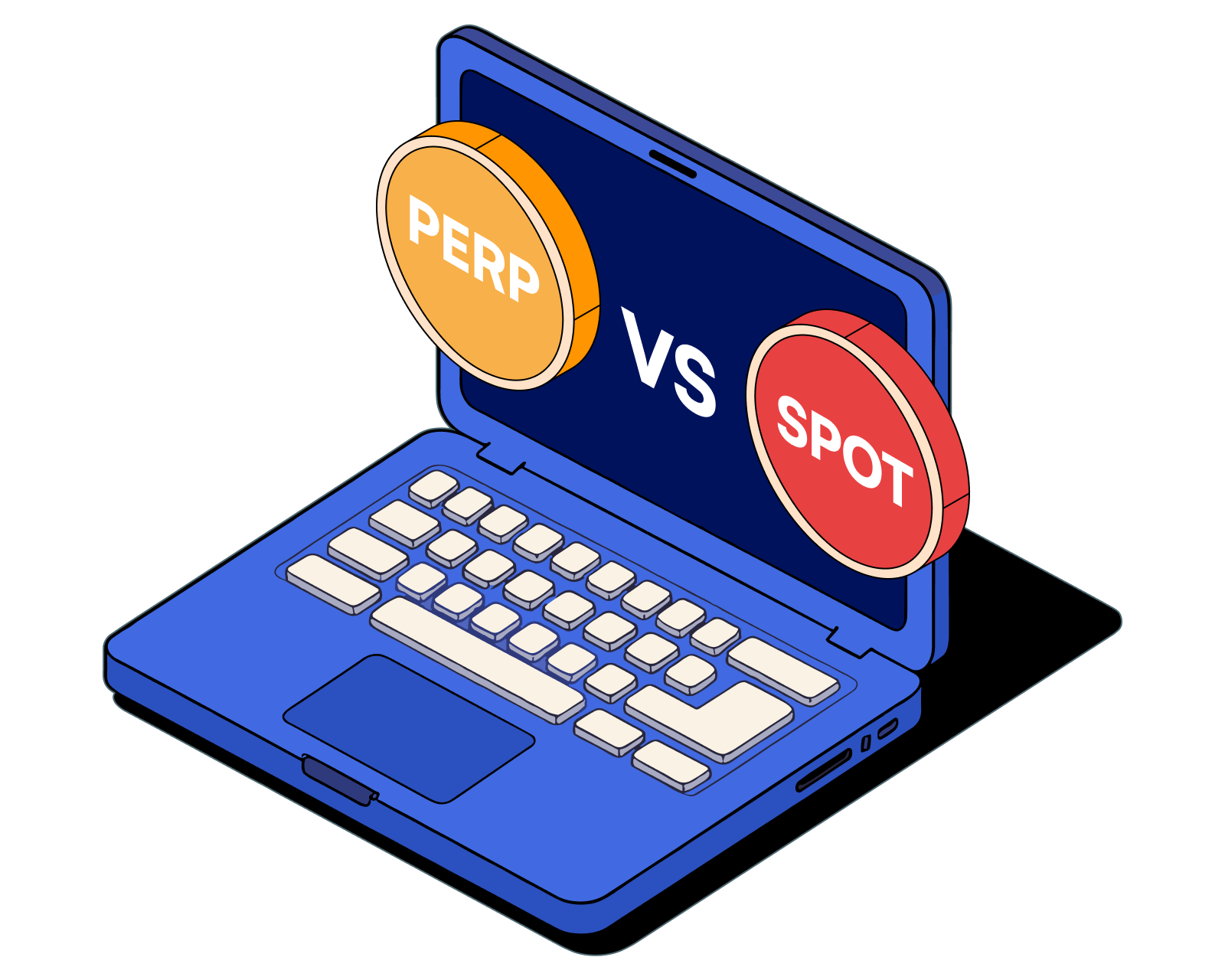
Perp DEX vs. Spot DEX Explained
Learn how Spot and Perpetual DEXs differ in purpose, mechanics, and risk. Discover which decentralized exchange model fits your trading goals in 2026.
Perp DEX vs. Spot DEX Explained
Learn how Spot and Perpetual DEXs differ in purpose, mechanics, and risk. Discover which decentralized exchange model fits your trading goals in 2026.

Understanding Funding Rates on Perp DEXs
Explore how smart contracts use funding rates to stabilize perpetual futures. Learn how payments between longs and shorts keep prices in balance.
Understanding Funding Rates on Perp DEXs
Explore how smart contracts use funding rates to stabilize perpetual futures. Learn how payments between longs and shorts keep prices in balance.
Understanding Leverage in Crypto Trading
Discover how crypto leverage works - from margin and collateral to liquidation and funding. Learn how Perp DEXs manage leveraged positions transparently.
Understanding Leverage in Crypto Trading
Discover how crypto leverage works - from margin and collateral to liquidation and funding. Learn how Perp DEXs manage leveraged positions transparently.
How Liquidation Works on Perp DEXs
Discover how Perp DEXs automatically close leveraged positions to prevent losses. Learn how liquidation thresholds, oracles, and insurance funds protect users.
How Liquidation Works on Perp DEXs
Discover how Perp DEXs automatically close leveraged positions to prevent losses. Learn how liquidation thresholds, oracles, and insurance funds protect users.
How Oracles Keep Perp DEX Prices Fair
Explore how oracle networks deliver real-time market data to Perp DEXs, ensuring accurate pricing, fair liquidations, and stable funding rates.
How Oracles Keep Perp DEX Prices Fair
Explore how oracle networks deliver real-time market data to Perp DEXs, ensuring accurate pricing, fair liquidations, and stable funding rates.

Top Risks of Trading on Perpetual DEXs
Learn about the biggest risks in decentralized perpetual trading, including liquidation, funding volatility, oracles, liquidity, and smart contract exploits.
Top Risks of Trading on Perpetual DEXs
Learn about the biggest risks in decentralized perpetual trading, including liquidation, funding volatility, oracles, liquidity, and smart contract exploits.

Choosing the Right Perp DEX in 2026
A practical guide to finding the best Perpetual DEX for your needs - covering security, liquidity, fees, oracles, leverage, and governance.
Choosing the Right Perp DEX in 2026
A practical guide to finding the best Perpetual DEX for your needs - covering security, liquidity, fees, oracles, leverage, and governance.

STAY AHEAD IN CRYPTO
Stay ahead in crypto with our weekly newsletter delivering the insights that matter most

Weekly crypto news, curated for you

Actionable insights and educational tips

Updates on products fueling economic freedom
No spam. Unsubscribe anytime.
Start investing safely with the Bitcoin.com Wallet
Over wallets created so far
Everything you need to buy, sell, trade, and invest your Bitcoin and cryptocurrency securely



Download App


© 2026 Saint Bitts LLC Bitcoin.com. All rights reserved
Download App
Company
Insights
Products & Services
Reviews
Follow
© 2026 Saint Bitts LLC Bitcoin.com. All rights reserved
 Get Bitcoin