
Was ist Dogecoin (DOGE)?
Zuletzt aktualisiert
Geschrieben von

Überprüft von

Inhaltsverzeichnis
Overview
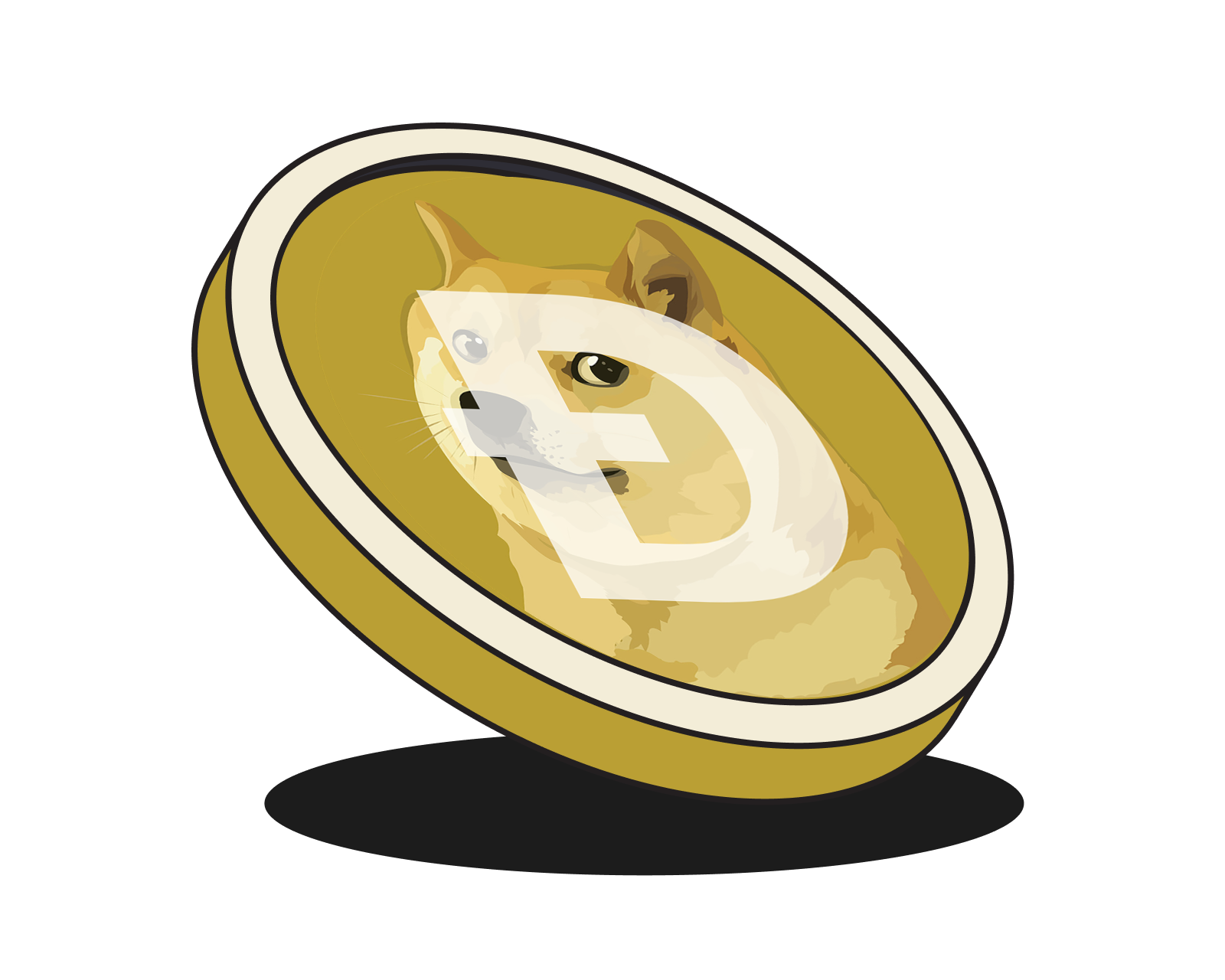
Dogecoin (DOGE) began as a light-hearted alternative to Bitcoin but has evolved into one of the most recognizable cryptocurrencies in the world. Launched in December 2013 by software engineers Billy Markus and Jackson Palmer, Dogecoin was inspired by the viral Shiba Inu “Doge” meme.
Despite its humorous origins, DOGE now operates a multi-billion-dollar economy supported by miners, developers, the Dogecoin Foundation, and a global community. It is widely considered the first major “meme coin,” but its utility as a fast, low-fee digital currency gives it practical relevance in 2026.
This article explains how Dogecoin works, what makes it unique, where it fits in the broader crypto ecosystem, and what users should consider before buying or using DOGE.
How Dogecoin Works
Dogecoin is based on a fork of Litecoin and uses the Scrypt hashing algorithm rather than Bitcoin’s SHA-256. This makes its proof-of-work mining process more energy-efficient and allows for faster blocks and lower fees.
Blockchain fundamentals
- Consensus mechanism: Proof of Work (PoW)
- Hashing algorithm: Scrypt
- Block time: ~1 minute
- Supply model: Inflationary, with no maximum supply cap
- Annual issuance: Approximately 5 billion DOGE minted every year
After the initial supply reached 100 billion DOGE, annual issuance was fixed at 5 billion, creating a predictable long-term inflation rate. This encourages DOGE to circulate as a medium of exchange rather than a store-of-value asset.
Merged mining
Dogecoin uses merged mining with Litecoin, meaning miners can secure both blockchains simultaneously without additional energy expenditure. This approach, which is common in crypto mining, helps strengthen network security while ensuring consistent mining participation across both networks.
Transaction speed and fees
Dogecoin’s one-minute block time and low network fees make it suitable for everyday payments, tipping, and microtransactions. Fees often remain a fraction of a cent, even during periods of high activity.
Key Features and Capabilities
Dogecoin’s value extends beyond its meme culture. Several technical and community-driven features contribute to its ongoing relevance.
1. Fast, inexpensive payments
DOGE can be used for low-cost transfers that settle quickly, making it practical for small purchases and digital gratuities.
2. Inflationary but predictable supply
Unlike Bitcoin, which caps supply at 21 million, Dogecoin’s unlimited supply ensures miners always have block rewards, supporting long-term network viability.
3. Strong community culture
Dogecoin’s community is known for charity campaigns, crowdfunding initiatives, and humanitarian projects. Historical examples include sponsoring the Jamaican bobsled team (2014) and supporting various global causes.
4. High-profile visibility
Elon Musk has repeatedly mentioned Dogecoin as his “favorite cryptocurrency.” Tesla accepts DOGE for select merchandise, and BitPay enables DOGE payments for merchants like Newegg, AMC Theatres, the Dallas Mavericks, and airBaltic.
5. Developer ecosystem and Libdogecoin
The Dogecoin developer community released Libdogecoin, a C library designed to make it easier to integrate Dogecoin functionality into applications. It supports multiple languages such as Python, Node.js, Ruby, and more. This library allows builders to create wallets, payment tools, and DOGE-native integrations without managing low-level blockchain code.
6. Dogecoin Foundation
Re-launched in 2021, the Dogecoin Foundation provides structure and guidance to Dogecoin’s development. Key advisors include:
- Vitalik Buterin (Ethereum co-founder)
- Billy Markus (Dogecoin co-founder)
- Jared Birchall (representing Elon Musk)
The foundation contributes to roadmap development such as improved performance, broader ecosystem integrations, and future scalability enhancements.
What Dogecoin is Used For
Dogecoin’s primary use cases revolve around simplicity, speed, and community.
Tipping and microtransactions
DOGE remains one of the most widely used currencies for tipping creators online. While Reddit and X (formerly Twitter) no longer offer native DOGE tipping, users can tip manually using wallet addresses or apps like MyDoge.
Merchant payments
Through BitPay and other processors, Dogecoin is accepted by:
- Tesla (limited merchandise)
- AMC Theatres
- Newegg
- Dallas Mavericks
- airBaltic
- Various global merchants who enable DOGE checkout
Remittances and P2P transactions
Fast settlement and low fees make DOGE suitable for small cross-border payments.
Speculation and trading
As one of the top altcoins, DOGE remains highly speculative. Investor interest often follows market cycles, social media trends, and celebrity commentary.
Dogechain and Expanded Web3 Utility
Dogechain is an independent, EVM-compatible blockchain built using the Polygon SDK to give Dogecoin holders access to Web3 applications. While it is not an official Dogecoin Foundation project, Dogechain provides a way for users to port DOGE into an environment that supports smart contracts, NFTs, DeFi, and GameFi.
Dogechain uses a Proof of Stake (PoS) consensus mechanism and offers a scalable, low-cost platform where developers can build decentralized applications using DOGE as part of the economic system. Because it is compatible with the Ethereum Virtual Machine (EVM), developers can deploy or migrate applications from Ethereum and other EVM networks without rewriting code or learning new programming languages.
For DOGE holders who want more utility than the main Dogecoin chain provides, Dogechain introduces optional access to advanced Web3 use cases while maintaining cultural alignment with the broader Dogecoin community.
Benefits of Dogecoin
1. Speed and low fees
DOGE transactions confirm quickly (around 1 minute) and remain inexpensive.
2. Large, active community
One of the most engaged crypto communities, providing consistent cultural relevance.
3. Merchant adoption
DOGE is widely supported by payment processors, making it accessible for real-world spending.
4. Developer tools
Libdogecoin expands the potential for DOGE integrations, enabling new apps and services.
Risks and Limitations
Dogecoin has strengths, but users should also consider its limitations and risk profile.
1. Inflation reduces long-term scarcity
The unlimited supply model means DOGE is unlikely to behave like Bitcoin as a long-term store of value.
2. Sentiment-driven price swings
DOGE reacts strongly to social media trends, jokes, and celebrity statements. This makes it more volatile and less predictable than Bitcoin or large-cap altcoins.
3. Concentrated ownership
Several large wallets hold significant shares of total DOGE supply, increasing potential market manipulation risk.
4. Limited smart contract functionality
Dogecoin does not natively support complex smart contracts like Ethereum or Solana. Most DOGE integrations rely on external tooling rather than on-chain programmability.
5. Slower development compared to major ecosystems
While Dogecoin is actively maintained, its development pace is modest compared to Ethereum, Solana, or Layer-2 networks.
Dogecoin vs Bitcoin vs Litecoin
Dogecoin vs Bitcoin
- Supply: BTC capped at 21 million; DOGE unlimited with 5 billion minted annually
- Block time: Bitcoin 10 minutes; Dogecoin ~1 minute
- Purpose: Bitcoin is a store of value; Dogecoin focuses on spending and tipping
- Security: Bitcoin’s SHA-256 miners consume more energy but offer higher hashpower and security
Dogecoin vs Litecoin
- Algorithm: Both use Scrypt
- Mining: DOGE uses merged mining with Litecoin, sharing the same mining ecosystem
- Supply: Litecoin has a fixed cap; DOGE is inflationary
- Fees and speed: Both are cheap and fast, but DOGE has lower fees in most conditions
How to Buy and Store Dogecoin
- Choose a reputable exchange that lists DOGE.
- Compare fees, liquidity, and spreads.
- Withdraw to a self-custodial wallet for safety and control.
- The Bitcoin.com Wallet supports buying, selling, swapping, and securely storing crypto assets.
Always follow best practices for private key management and backup security, which are core considerations when choosing a suitable Bitcoin wallet for long-term storage and everyday use.
Real-World Examples (2026)
- Dogecoin remains a top-10 to top-15 cryptocurrency by market cap.
- Major corporate headlines frequently impact price movements.
- ETF discussions in the United States have reintroduced DOGE to mainstream financial coverage.
- Network activity continues to rise, with spikes in active addresses during market cycles.
Conclusion
Dogecoin started as a joke but has become a cultural and economic fixture of the cryptocurrency world. Its fast, inexpensive transactions, strong community identity, and growing integrations make it unique among digital assets.
However, its inflationary model, sentiment-driven price behavior, and limited technical complexity mean it functions best as a spending currency - not a long-term store of value.
For new users, Dogecoin offers an accessible gateway into cryptocurrency. For experienced investors, it represents a speculative asset with cultural influence and unconventional utility.
Frequently Asked Questions
What is Dogecoin used for?
Dogecoin is used for tipping, microtransactions, peer-to-peer payments, and merchant purchases through services like BitPay. Tesla and several major retailers accept DOGE for select merchandise.
Who created Dogecoin?
Billy Markus and Jackson Palmer created Dogecoin in 2013 as a friendly, approachable alternative to Bitcoin.
How does Dogecoin work?
Dogecoin uses proof-of-work consensus with the Scrypt algorithm. Miners validate transactions and secure the network, producing a new block roughly every minute.
Is Dogecoin supply limited?
No. Dogecoin has an uncapped supply, minting about 5 billion DOGE each year. This creates predictable inflation and encourages spending rather than hoarding.
What is the Dogecoin Foundation?
A non-profit that supports Dogecoin’s development and long-term governance. Relaunched in 2021, with advisors like Vitalik Buterin and Elon Musk’s representative.
What is Libdogecoin?
A C-based library that allows developers to integrate Dogecoin functionality into apps without dealing directly with blockchain internals.
Why is Elon Musk associated with Dogecoin?
Elon Musk has publicly promoted DOGE as his favorite cryptocurrency. Tesla accepts DOGE for merchandise, and Musk’s comments often influence market sentiment.
Can Dogecoin be mined?
Yes. DOGE is mined with Scrypt-based hardware and is commonly mined alongside Litecoin through merged mining.
How fast are Dogecoin transactions?
Blocks are produced approximately every minute, allowing for quick confirmations and low fees.
What makes Dogecoin different from Bitcoin or Litecoin?
Dogecoin’s block time is faster than Bitcoin, fees are lower, and supply is unlimited. Compared to Litecoin, DOGE relies on merged mining and has an inflationary design.
What companies accept Dogecoin?
Tesla, AMC, Newegg, Dallas Mavericks, and many others via BitPay.
Is Dogecoin still actively developed?
Yes. Ongoing updates improve performance and security. Libdogecoin and Dogecoin Core enhancements continue into 2026.
Verwandte Anleitungen
Von hier aus starten →
Was ist Bitcoin?
Erhalten Sie eine unkomplizierte Einführung in Bitcoin und warum es wichtig ist.
Was ist Bitcoin?
Erhalten Sie eine unkomplizierte Einführung in Bitcoin und warum es wichtig ist.

Was sind Altcoins?
Altcoins sind Kryptowährungen jenseits von Bitcoin. Erfahren Sie mehr über ihre vielfältigen Funktionalitäten, Anwendungsfälle, Risiken und Potenziale.
Was sind Altcoins?
Altcoins sind Kryptowährungen jenseits von Bitcoin. Erfahren Sie mehr über ihre vielfältigen Funktionalitäten, Anwendungsfälle, Risiken und Potenziale.
Was ist Ethereum?
Verstehen Sie die Hauptmerkmale von Ethereum.
Was ist Ethereum?
Verstehen Sie die Hauptmerkmale von Ethereum.

Was sind Meme-Coins?
Meme-Coins sind Kryptowährungen, die von Internet-Memes und Online-Communities inspiriert sind.
Was sind Meme-Coins?
Meme-Coins sind Kryptowährungen, die von Internet-Memes und Online-Communities inspiriert sind.
Was ist ein DEX?
Eine dezentrale Börse (DEX) ist eine Art von Börse, die sich auf Peer-to-Peer-Transaktionen von Kryptowährungen und digitalen Vermögenswerten spezialisiert. Im Gegensatz zu zentralisierten Börsen (CEXs) benötigen DEXs keine vertrauenswürdige dritte Partei oder Zwischenhändler, um den Austausch von Krypto-Vermögenswerten zu erleichtern.
Was ist ein DEX?
Eine dezentrale Börse (DEX) ist eine Art von Börse, die sich auf Peer-to-Peer-Transaktionen von Kryptowährungen und digitalen Vermögenswerten spezialisiert. Im Gegensatz zu zentralisierten Börsen (CEXs) benötigen DEXs keine vertrauenswürdige dritte Partei oder Zwischenhändler, um den Austausch von Krypto-Vermögenswerten zu erleichtern.
Was ist eine Blockchain?
Dieser Anfängerleitfaden erklärt Blockchain, ihre Bedeutung für Kryptowährungen und wie sie funktioniert. Erforschen Sie ihre Anwendungen, Vorteile und zukünftiges Potenzial.
Was ist eine Blockchain?
Dieser Anfängerleitfaden erklärt Blockchain, ihre Bedeutung für Kryptowährungen und wie sie funktioniert. Erforschen Sie ihre Anwendungen, Vorteile und zukünftiges Potenzial.
Was ist Web3?
Erkunden Sie Web3, das dezentrale Internet, und sein Potenzial, Online-Interaktionen neu zu gestalten, Nutzer zu stärken und Innovation zu fördern.
Was ist Web3?
Erkunden Sie Web3, das dezentrale Internet, und sein Potenzial, Online-Interaktionen neu zu gestalten, Nutzer zu stärken und Innovation zu fördern.

BLEIBEN SIE IN DER KRYPTOWÄHRUNG VORAUS
Bleiben Sie im Krypto-Bereich vorne mit unserem wöchentlichen Newsletter, der die wichtigsten Einblicke liefert.

Wöchentliche Krypto-Nachrichten, für Sie kuratiert

Verwertbare Einblicke und bildende Tipps

Aktualisierungen zu Produkten, die wirtschaftliche Freiheit fördern
Kein Spam. Jederzeit abmelden.
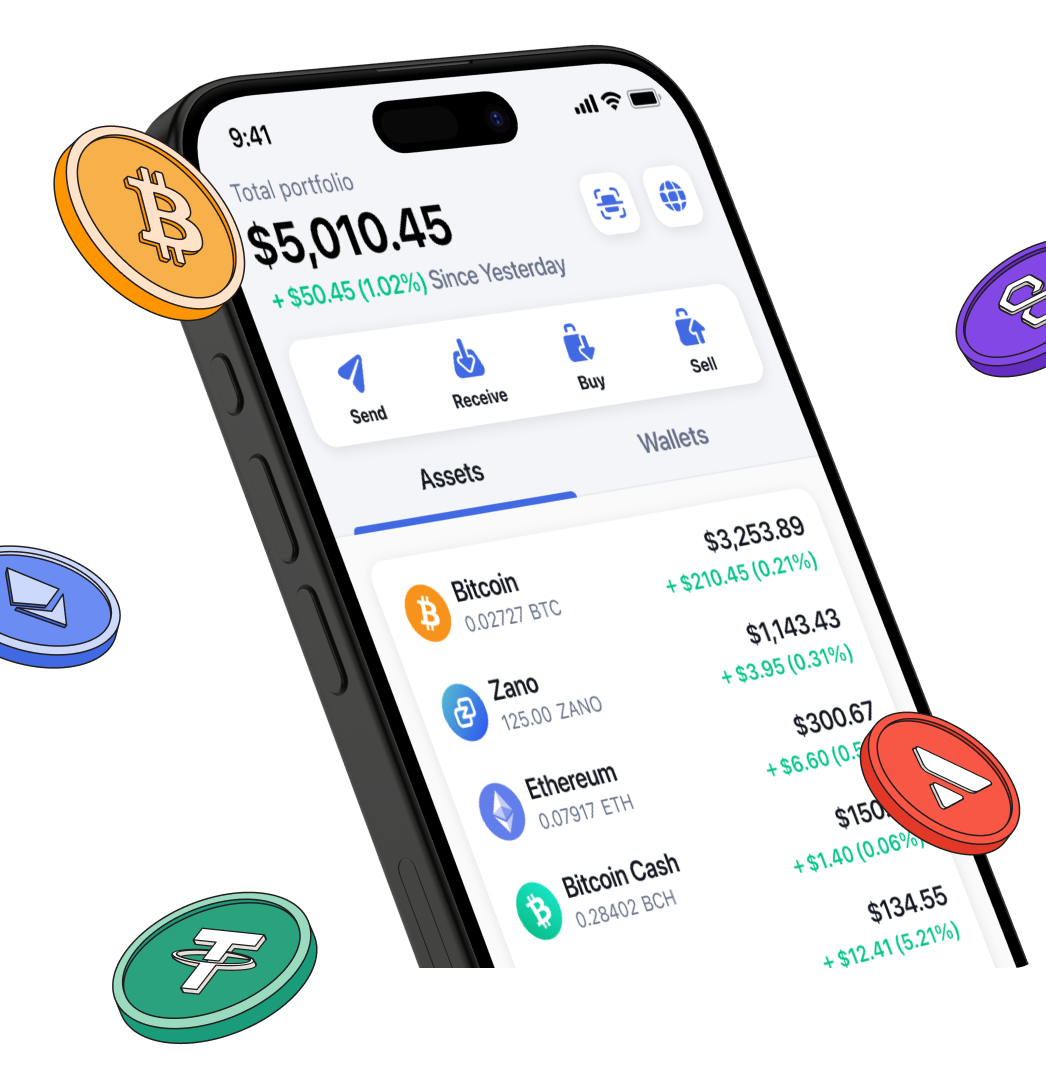
Beginnen Sie sicher zu investieren mit der Bitcoin.com Wallet.
Über Wallets bisher erstellt
Alles, was Sie benötigen, um Ihre Bitcoin und Kryptowährung sicher zu kaufen, verkaufen, handeln und investieren.



App herunterladen


© 2026 Saint Bitts LLC Bitcoin.com. Alle Rechte vorbehalten.
App herunterladen
Unternehmen
Einblicke
Produkte & Dienstleistungen
Bewertungen
Folgen
© 2026 Saint Bitts LLC Bitcoin.com. Alle Rechte vorbehalten.
 Get Bitcoin