
Verständnis der Liquidation auf Perp DEXs
Zuletzt aktualisiert
Geschrieben von

Überprüft von


Inhaltsverzeichnis
- Overview - Why Liquidation Happens
- How Liquidation Works
- Maintenance Margin and Liquidation Price
- Smart Contracts and Liquidation Engines
- Types of Liquidation Models on Perp DEXs
- Partial vs. Full Liquidation
- Insurance Funds and Backstop Mechanisms
- Common Causes of Liquidation
- How to Avoid Liquidation
- The Evolution of Liquidation Systems in 2026
- FAQ
Liquidation is the automatic process of closing a trader’s position when their margin balance falls below the required maintenance level. On decentralized perpetual exchanges (Perp DEXs), liquidations are enforced by smart contracts to prevent losses from exceeding deposited collateral.
Overview - Why Liquidation Happens
Leverage magnifies both gains and losses. When a market moves against a leveraged position, losses accumulate quickly. To protect liquidity pools and maintain solvency, Perp DEXs automatically liquidate positions once collateral no longer covers the potential loss.
Liquidation ensures the system remains fully collateralized - meaning every open position has sufficient backing to pay counterparties. Without this safeguard, a single undercollateralized position could destabilize the entire protocol.
By 2026, leading perpetual DEXs like GMX, dYdX v4, Hyperliquid, Drift, Avantis, Reya, and Level Finance have developed advanced liquidation systems with real-time monitoring, decentralized bots, and dynamic margin adjustments to minimize unnecessary liquidations while ensuring market stability.
Read more:
- What is Leverage in Crypto Trading?
- How Perpetual Futures Work on Decentralized Exchanges
- Risks of Trading on Perpetual DEXs
How Liquidation Works
When traders open a leveraged position, they deposit collateral as margin. The DEX continuously calculates the margin ratio:
Margin Ratio = (Collateral Value ÷ Position Value) × 100
If the ratio drops below the maintenance margin requirement, the position is automatically liquidated.
Example:
- Collateral: $1,000
- Leverage: 10x (Position = $10,000)
- Maintenance Margin: 5%
If the position loses $500 (5%), the margin ratio reaches the threshold. The Perp DEX closes the trade at market price, using the collateral to cover the loss. Any remaining balance after fees is returned to the trader’s account.
Maintenance Margin and Liquidation Price
1. Maintenance Margin
This is the minimum percentage of the total position value that must be maintained to avoid liquidation. Maintenance margin protects the system from undercollateralization.
Typical maintenance margins:
- 0.5–1% for BTC and ETH pairs
- 2–5% for altcoins (due to higher volatility)
2. Liquidation Price
The price level at which a position is closed. It depends on:
- Entry price
- Leverage used
- Collateral amount
- Maintenance margin threshold
Formula (simplified for long positions):
Liquidation Price = Entry Price × (1 - (1 / Leverage))
Example:
For a 10x leveraged long opened at $30,000 BTC, liquidation occurs near $27,000 (a 10% move).
Higher leverage reduces the liquidation buffer, making positions more sensitive to price swings.
Smart Contracts and Liquidation Engines
Unlike centralized exchanges that rely on internal systems, Perp DEXs use smart contract-based liquidation logic to maintain transparency and enforce risk parameters automatically.
Key Components:
-
Margin Monitoring:
Smart contracts track every position’s real-time value using oracle price feeds. -
Trigger Conditions:
When margin < maintenance threshold, liquidation is triggered automatically. -
Execution:
The contract closes the position, sells collateral, and redistributes it to counterparties or insurance funds. -
Post-Liquidation Settlement:
- Profitable counterparties receive gains.
- Insurance fund absorbs small shortfalls.
- Remaining collateral (if any) is returned to the trader.
Oracle Integration
Accurate pricing is critical. DEXs rely on decentralized oracles such as Chainlink, Pyth, or Chronicle to prevent manipulative liquidations.
See:
Types of Liquidation Models on Perp DEXs
| Platform | Model | Execution Method | Notable Features |
|---|---|---|---|
| dYdX v4 | Order-book | Auction-based | Off-chain order matching, on-chain settlement |
| Hyperliquid | Order-book | On-chain bots | Block-level liquidation with public incentive |
| GMX (v2) | AMM | Pool offset | Losses absorbed by liquidity providers (GLP) |
| Drift Protocol | Hybrid | Keeper bots | Community-maintained liquidation system |
| Avantis | Hybrid | Vault auto-close | Uses cross-margin vault for recovery |
| Reya | Order-book | Real-time engine | Institutional-grade block-by-block liquidation |
| Level Finance | AMM | Pool-share protection | Tiered LP tranches absorb losses differently |
Each approach balances market fairness, capital efficiency, and system safety. Platforms like Hyperliquid and Reya emphasize speed, while GMX and Level focus on liquidity pool stability.
See: How to Choose the Right Perp DEX
Partial vs. Full Liquidation
To prevent unnecessary loss of collateral, many DEXs now employ partial liquidation.
-
Partial Liquidation:
Only part of the position is closed to restore margin health. This reduces total loss and avoids full closure. -
Full Liquidation:
The entire position is closed, and collateral is used to cover the deficit.
For example, Drift Protocol and Avantis use adaptive partial liquidation models that automatically scale closure size based on leverage level and volatility.
GMX v2 and Level Finance apply similar logic through pool mechanics.
Insurance Funds and Backstop Mechanisms
When extreme volatility causes losses that exceed collateral, DEXs rely on insurance funds or backstop liquidity providers (BLPs).
- Insurance Fund:
A pool of capital set aside from trading fees to cover shortfalls after liquidation. - Backstop Liquidity Providers:
Entities that absorb residual losses in exchange for rewards or protocol tokens. - Protocol Tokens as Last Resort:
Some DEXs mint or allocate governance tokens (e.g., GMX’s GLP, dYdX’s token) to restore solvency if all else fails.
These mechanisms prevent cascading liquidations and protect the system’s credibility.
Common Causes of Liquidation
-
Excessive Leverage:
High leverage leaves minimal buffer before liquidation.
At 50x leverage, a 2% price move can erase all margin. -
High Volatility:
Sudden price swings or oracle delays can trigger unexpected liquidations. -
Neglecting Funding Costs:
Rising funding rates can deplete collateral faster than expected. -
Inadequate Margin Management:
Failing to add collateral or reduce exposure when prices move unfavorably. -
Network Congestion:
Delays in transaction confirmation can hinder timely collateral top-ups.
How to Avoid Liquidation
-
Use Low Leverage:
Start with 2x–3x to build margin management discipline. -
Monitor Collateral Ratio:
Keep a healthy buffer above the maintenance level. -
Understand Liquidation Price:
Always know the price point where liquidation occurs. -
Add Collateral When Needed:
Depositing more collateral can reduce risk and delay liquidation. -
Set Stop-Loss Orders (Where Supported):
Some Perp DEXs allow automated stop-loss via smart contracts. -
Track Funding and Volatility:
Avoid overexposure during periods of high funding or extreme price movement.
The Evolution of Liquidation Systems in 2026
Modern DEXs are shifting from static to dynamic liquidation frameworks, incorporating:
- Volatility-adjusted maintenance margins to adapt thresholds automatically.
- On-chain keeper networks for fair and fast liquidation execution.
- Intent-based liquidation markets where participants compete to close risky positions at optimal prices.
- Cross-margin protection, where profits from other positions cover losses automatically.
These advances reduce unfair liquidations and improve capital efficiency - key for the next generation of on-chain derivatives infrastructure.
Learn more:
- What is a Perpetual DEX? (2026 Guide to On-Chain Perpetual Futures)
- Perp DEX vs. Spot DEX: What’s the Difference?
- How Funding Rates Work on Perp DEXs
FAQ
What triggers liquidation on a Perp DEX?
Liquidation occurs when your collateral ratio falls below the maintenance margin, usually due to price movement against your position.
Do liquidations happen automatically?
Yes. Smart contracts enforce liquidation without intermediaries once margin requirements are breached.
Can I avoid liquidation by adding collateral?
Yes. Adding collateral or reducing leverage before the liquidation price is hit restores margin health.
What happens to my collateral after liquidation?
The DEX uses collateral to cover losses and fees. Any remaining balance is returned to you automatically.
Are liquidations the same on every platform?
No. Some use partial liquidation or insurance funds to minimize losses, while others liquidate positions entirely.
Want to trade safely and efficiently?
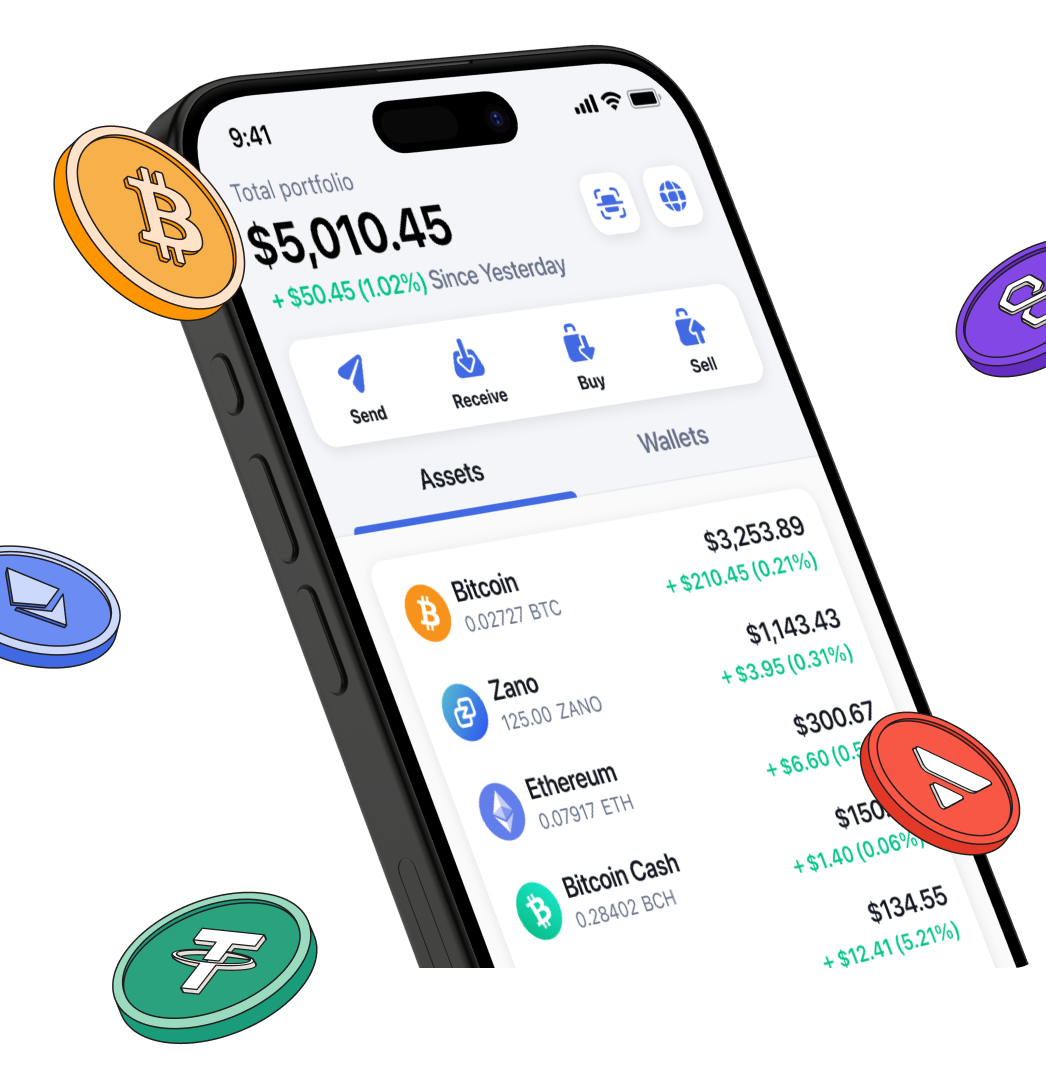
Download the Bitcoin.com Wallet App to manage your crypto and trade directly from your phone - no custodians, no middlemen.
And if you’re looking for more advanced tools, check out our pro-trading experience at orangerock.xyz.
Verwandte Anleitungen
Von hier aus starten →
Was ist Bitcoin?
Erhalten Sie eine unkomplizierte Einführung in Bitcoin und warum es wichtig ist.
Was ist Bitcoin?
Erhalten Sie eine unkomplizierte Einführung in Bitcoin und warum es wichtig ist.

Was sind Altcoins?
Altcoins sind Kryptowährungen jenseits von Bitcoin. Erfahren Sie mehr über ihre vielfältigen Funktionalitäten, Anwendungsfälle, Risiken und Potenziale.
Was sind Altcoins?
Altcoins sind Kryptowährungen jenseits von Bitcoin. Erfahren Sie mehr über ihre vielfältigen Funktionalitäten, Anwendungsfälle, Risiken und Potenziale.
Was ist ein CEX?
Erfahren Sie mehr über CEXs, die Unterschiede zwischen ihnen und DEXs und ob sie sicher zu verwenden sind.
Was ist ein CEX?
Erfahren Sie mehr über CEXs, die Unterschiede zwischen ihnen und DEXs und ob sie sicher zu verwenden sind.
Was ist ein DEX?
Eine dezentrale Börse (DEX) ist eine Art von Börse, die sich auf Peer-to-Peer-Transaktionen von Kryptowährungen und digitalen Vermögenswerten spezialisiert. Im Gegensatz zu zentralisierten Börsen (CEXs) benötigen DEXs keine vertrauenswürdige dritte Partei oder Zwischenhändler, um den Austausch von Krypto-Vermögenswerten zu erleichtern.
Was ist ein DEX?
Eine dezentrale Börse (DEX) ist eine Art von Börse, die sich auf Peer-to-Peer-Transaktionen von Kryptowährungen und digitalen Vermögenswerten spezialisiert. Im Gegensatz zu zentralisierten Börsen (CEXs) benötigen DEXs keine vertrauenswürdige dritte Partei oder Zwischenhändler, um den Austausch von Krypto-Vermögenswerten zu erleichtern.
Wie funktioniert ein Krypto-Austausch?
Wie sicher ist es, Ihre Kryptowährungen auf zentralisierten Börsen zu lagern?
Wie funktioniert ein Krypto-Austausch?
Wie sicher ist es, Ihre Kryptowährungen auf zentralisierten Börsen zu lagern?
Bitcoin-Charts für Anfänger lesen
Ein Leitfaden für Anfänger zum Verständnis von Bitcoin-Charts, der Kerzenmuster, technische Indikatoren, Marktanalysen und Risikomanagement abdeckt.
Bitcoin-Charts für Anfänger lesen
Ein Leitfaden für Anfänger zum Verständnis von Bitcoin-Charts, der Kerzenmuster, technische Indikatoren, Marktanalysen und Risikomanagement abdeckt.
Bitcoin-Handel für Anfänger
Ein umfassender Leitfaden zum Bitcoin-Handel für Anfänger, der Wallets, Börsen, Marktanalysen und Risikomanagementstrategien abdeckt.
Bitcoin-Handel für Anfänger
Ein umfassender Leitfaden zum Bitcoin-Handel für Anfänger, der Wallets, Börsen, Marktanalysen und Risikomanagementstrategien abdeckt.

BLEIBEN SIE IN DER KRYPTOWÄHRUNG VORAUS
Bleiben Sie im Krypto-Bereich vorne mit unserem wöchentlichen Newsletter, der die wichtigsten Einblicke liefert.

Wöchentliche Krypto-Nachrichten, für Sie kuratiert

Verwertbare Einblicke und bildende Tipps

Aktualisierungen zu Produkten, die wirtschaftliche Freiheit fördern
Kein Spam. Jederzeit abmelden.
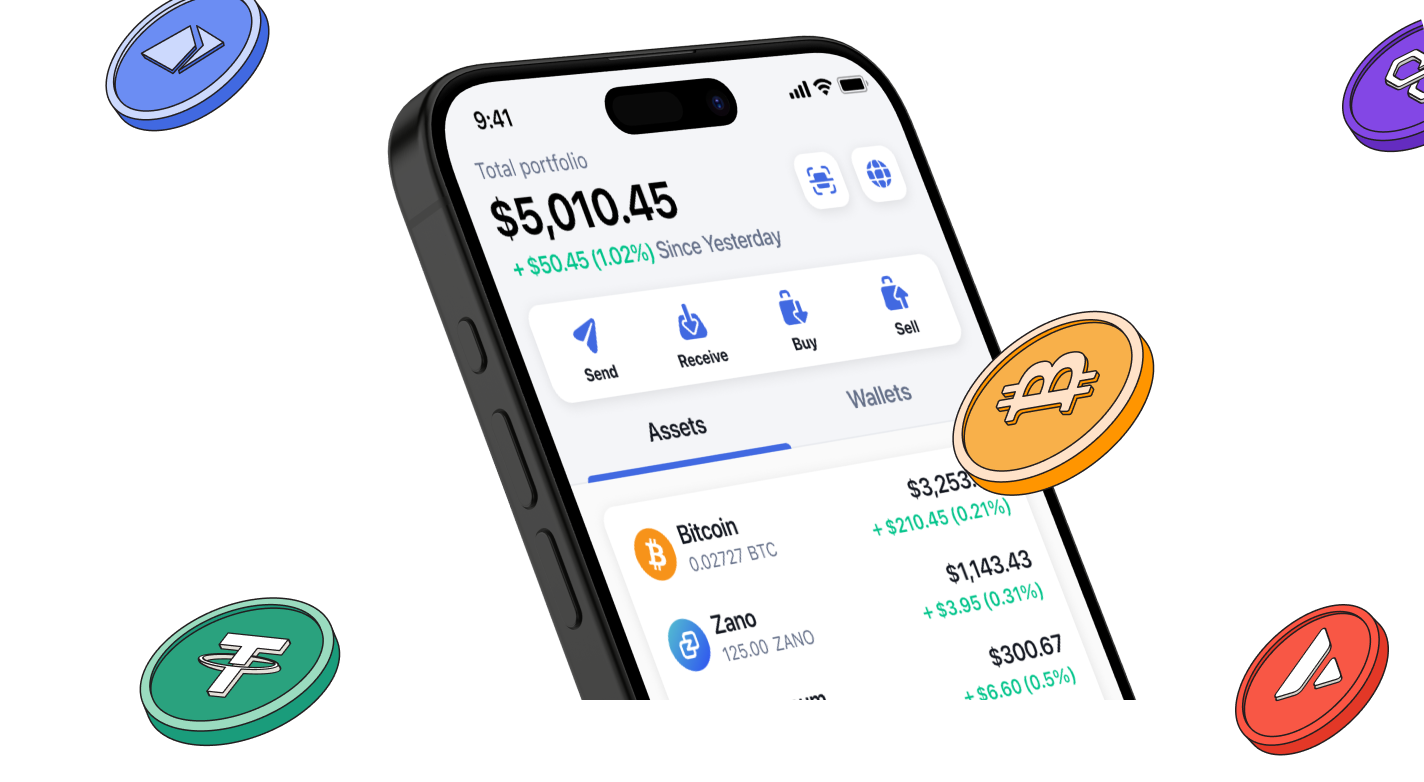
Beginnen Sie sicher zu investieren mit der Bitcoin.com Wallet.
Über Wallets bisher erstellt
Alles, was Sie benötigen, um Ihre Bitcoin und Kryptowährung sicher zu kaufen, verkaufen, handeln und investieren.



App herunterladen


© 2026 Saint Bitts LLC Bitcoin.com. Alle Rechte vorbehalten.
App herunterladen
Unternehmen
Einblicke
Produkte & Dienstleistungen
Bewertungen
Folgen
© 2026 Saint Bitts LLC Bitcoin.com. Alle Rechte vorbehalten.
 Get Bitcoin