
Risiken des Handels auf Perpetual DEXs
Zuletzt aktualisiert
Geschrieben von

Überprüft von


Inhaltsverzeichnis
- Overview - Why Risk Management Matters in Perp Trading
- Leverage and Liquidation Risk
- Funding Rate Volatility
- Oracle Failure or Manipulation
- Smart Contract Vulnerabilities
- Liquidity and Slippage Risk
- Front-Running and MEV (Miner Extractable Value)
- Systemic and Governance Risks
- Stablecoin and Collateral Risk
- Counterparty and Insurance Risk
- Behavioral and Psychological Risk
- Risk Management Strategies
- The Balance Between Transparency and Exposure
- FAQ
Risks of trading on Perpetual Decentralized Exchanges (Perp DEXs) include financial, technical, and systemic factors such as liquidation, leverage misuse, oracle errors, low liquidity, smart contract exploits, and funding volatility. These risks stem from both the complexity of leveraged derivatives and the decentralized infrastructure that powers them.
Overview - Why Risk Management Matters in Perp Trading
Perpetual DEXs enable traders to take leveraged positions directly on-chain, without intermediaries. This transparency and control come with trade-offs: higher autonomy, but also higher responsibility.
Unlike centralized exchanges that manage margin, custody, and system integrity internally, Perp DEXs rely on smart contracts, liquidity pools, and oracles - each of which can introduce unique vulnerabilities.
By 2026, decentralized perpetual protocols like GMX, dYdX v4, Hyperliquid, Drift, Avantis, Reya, and Aster have made remarkable progress in reducing risk through automation and governance. Yet, traders still face measurable exposure that can lead to total loss if not understood and managed properly.
Read more:
- What is Leverage in Crypto Trading?
- Understanding Liquidation on Perp DEXs
- How Oracles Keep Perp DEX Prices Fair
Leverage and Liquidation Risk
Leverage is the primary source of amplified gains and losses. Even small market movements can erase all collateral.
Example:
- Trader opens a 10x leveraged long on ETH.
- A 10% drop in ETH’s price leads to a 100% loss of collateral.
- The position is automatically liquidated by the smart contract.
On Perp DEXs, liquidation risk is heightened by:
- Volatile markets where price moves faster than transaction confirmation times.
- Network congestion preventing timely collateral top-ups.
- Smart contract automation, which executes liquidations without appeal.
Funding Rate Volatility
Funding rates - the periodic payments between long and short traders - are designed to align perpetual prices with spot markets. But during high volatility, funding can fluctuate dramatically.
Example:
When perpetual prices trade well above spot:
- Longs pay shorts a high rate to restore balance.
- This can create negative carry for long-term traders.
- A 0.1% funding rate per 8 hours equals ~110% annualized cost at constant conditions.
Platforms like Hyperliquid and GMX adjust funding dynamically, but extreme spikes can still drain collateral unexpectedly.
See:
Oracle Failure or Manipulation
Perp DEXs depend on oracles (e.g., Chainlink, Pyth, RedStone, Supra, Chronicle) for fair pricing.
If oracle data becomes delayed, inaccurate, or manipulated, traders can suffer from:
- False liquidations due to incorrect mark prices.
- Misdirected funding payments from incorrect spot-perp divergence.
- Unintended arbitrage losses if feeds desynchronize across markets.
Although top DEXs use multiple oracles, attacks or latency can still distort pricing briefly - especially on low-liquidity assets.
Smart Contract Vulnerabilities
Every Perp DEX runs on smart contracts governing leverage, margin, and liquidation. While transparent, these contracts can contain exploitable bugs.
Common risks include:
- Reentrancy attacks - recursive calls that drain funds.
- Logic errors - incorrect margin calculations or improper validation.
- Oracle manipulation vectors - flash-loan-based price spoofing.
- Upgrade or admin key misuse - central control risk in “semi-decentralized” systems.
Historical context:
In 2022–2023, several derivatives protocols suffered multi-million-dollar losses from contract exploits and faulty liquidation modules.
Modern protocols mitigate this with audits, bug bounties, and immutable core logic, but no contract is 100% risk-free.
Liquidity and Slippage Risk
Perpetual DEX liquidity is provided by users and aggregators rather than centralized market makers. This introduces slippage - the difference between expected and executed prices.
Key contributors to liquidity risk:
- Thin order books on smaller DEXs.
- Low pool depth in AMM-based perps (e.g., altcoin pairs).
- Cross-chain fragmentation, where liquidity is split across multiple networks.
Slippage widens during volatility, and traders may exit positions at worse prices than expected - especially in partial liquidation scenarios.
Example:
A 2% slippage on a 20x leveraged position effectively doubles the realized loss.
Front-Running and MEV (Miner Extractable Value)
Perp DEX transactions are public on-chain. Arbitrage bots can front-run trades by paying higher gas fees to execute first, especially during funding updates or liquidation events.
This results in:
- Worse execution prices for retail traders.
- Artificial volatility spikes near liquidation thresholds.
- Increased cost for closing or adjusting positions during congestion.
Some DEXs, such as Hyperliquid and Reya, use batch auctions or private mempools to reduce MEV. However, full mitigation is an ongoing challenge across DeFi.
Systemic and Governance Risks
While Perp DEXs are decentralized, most rely on core teams or DAOs for upgrades, oracle source selection, and insurance fund management.
This introduces:
- Governance centralization, where a few token holders can make critical decisions. Learn more about Bitcoin Governance and Governance on Ethereum.
- DAO capture or collusion risks. Learn about Decentralized Autonomous Organizations (DAOs).
- Protocol downtime or parameter mismanagement during emergencies.
Example: Adjusting funding coefficients or liquidation ratios requires governance votes - slow or controversial changes can lead to losses for users in real time.
Stablecoin and Collateral Risk
Most Perp DEXs require stablecoins (like USDC, USDT, or DAI) as collateral. These assets themselves carry risks:
- Depegging events, as seen with USDC in 2023.
- Custodial exposure for centrally backed stablecoins.
- Smart contract vulnerabilities for algorithmic ones.
Collateral failures can cause cascading liquidations across multiple protocols sharing the same stablecoin exposure.
Counterparty and Insurance Risk
While DEXs remove direct custodial intermediaries, they often maintain insurance funds or backstop liquidity providers (BLPs) to absorb extreme losses.
These systems can fail if:
- The insurance fund is undercapitalized.
- Multiple markets crash simultaneously.
- BLPs withdraw liquidity during stress events.
In March 2025, several emerging Perp DEXs faced shortfalls after ETH flash crashes caused correlated liquidations across networks - testing the resilience of decentralized insurance models.
Behavioral and Psychological Risk
Decentralized perpetual markets operate 24/7 with immediate leverage access.
This creates behavioral risks:
- Overtrading and revenge trading after losses.
- Misjudging liquidation levels due to emotional bias.
- Neglecting funding costs during long holding periods.
Discipline and risk limits are critical. Professional traders use position sizing, stop-loss triggers, and collateral buffers to maintain longevity in perpetual markets.
Risk Management Strategies
| Risk Type | Mitigation Strategy |
|---|---|
| Leverage & Liquidation | Use low leverage (2x–3x) and monitor collateral health |
| Funding Volatility | Track rate trends; avoid holding high-cost positions long term |
| Oracle Manipulation | Trade on DEXs with multiple oracle feeds (e.g., Chainlink + Pyth + RedStone + Supra) |
| Smart Contract Exploits | Check audit history and open-source code reviews |
| Liquidity Risk | Prefer DEXs with deep pools and active trading volume |
| MEV / Front-Running | Use DEXs with private order flow or batch auctions |
| Governance Risk | Review DAO structures and transparency reports |
| Stablecoin Exposure | Diversify collateral types; avoid algorithmic stables |
| Behavioral Risk | Implement strict position limits and automated risk rules |
The Balance Between Transparency and Exposure
Perp DEXs trade centralized counterparty risk for on-chain transparency.
Users can verify contract code, oracle logic, and funding formulas - yet they also inherit technical complexity and direct exposure to the system’s mechanics.
This trade-off defines the core ethos of DeFi: “Trust the code, not the company.”
Understanding how each risk category interacts is key to sustainable participation in perpetual markets.
Learn more:
- What is a Perpetual DEX? (2026 Guide to On-Chain Perpetual Futures)
- How Perpetual Futures Work on Decentralized Exchanges
- Perp DEX vs. Spot DEX: What’s the Difference?
- How to Choose the Right Perp DEX
FAQ
What is the biggest risk of trading on a Perp DEX?
Leverage misuse and liquidation remain the most common sources of loss. Even small price swings can wipe out positions completely.
Are Perp DEXs safer than centralized exchanges?
They remove custodial risk but introduce smart contract and technical risks. Safety depends on the trader’s knowledge and platform security.
Can oracle errors cause losses?
Yes. Incorrect oracle data can trigger false liquidations or mispriced funding rates, even on audited platforms.
How can I manage risk when trading perps?
Use low leverage, diversify collateral, and understand how liquidation and funding work before opening a position.
What’s the safest Perp DEX?
No DEX is completely safe, but well-established protocols like dYdX, GMX, and Hyperliquid use robust oracles, deep liquidity, and multiple audits.
Want to trade safely and efficiently?
Download the Bitcoin.com Wallet App to manage your crypto and trade directly from your phone - no custodians, no middlemen.
And if you’re looking for more advanced tools, check out our pro-trading experience at orangerock.xyz.
Verwandte Anleitungen
Von hier aus starten →
Was ist Bitcoin?
Erhalten Sie eine unkomplizierte Einführung in Bitcoin und warum es wichtig ist.
Was ist Bitcoin?
Erhalten Sie eine unkomplizierte Einführung in Bitcoin und warum es wichtig ist.

Was sind Altcoins?
Altcoins sind Kryptowährungen jenseits von Bitcoin. Erfahren Sie mehr über ihre vielfältigen Funktionalitäten, Anwendungsfälle, Risiken und Potenziale.
Was sind Altcoins?
Altcoins sind Kryptowährungen jenseits von Bitcoin. Erfahren Sie mehr über ihre vielfältigen Funktionalitäten, Anwendungsfälle, Risiken und Potenziale.
Was ist ein CEX?
Erfahren Sie mehr über CEXs, die Unterschiede zwischen ihnen und DEXs und ob sie sicher zu verwenden sind.
Was ist ein CEX?
Erfahren Sie mehr über CEXs, die Unterschiede zwischen ihnen und DEXs und ob sie sicher zu verwenden sind.
Was ist ein DEX?
Eine dezentrale Börse (DEX) ist eine Art von Börse, die sich auf Peer-to-Peer-Transaktionen von Kryptowährungen und digitalen Vermögenswerten spezialisiert. Im Gegensatz zu zentralisierten Börsen (CEXs) benötigen DEXs keine vertrauenswürdige dritte Partei oder Zwischenhändler, um den Austausch von Krypto-Vermögenswerten zu erleichtern.
Was ist ein DEX?
Eine dezentrale Börse (DEX) ist eine Art von Börse, die sich auf Peer-to-Peer-Transaktionen von Kryptowährungen und digitalen Vermögenswerten spezialisiert. Im Gegensatz zu zentralisierten Börsen (CEXs) benötigen DEXs keine vertrauenswürdige dritte Partei oder Zwischenhändler, um den Austausch von Krypto-Vermögenswerten zu erleichtern.
Wie funktioniert ein Krypto-Austausch?
Wie sicher ist es, Ihre Kryptowährungen auf zentralisierten Börsen zu lagern?
Wie funktioniert ein Krypto-Austausch?
Wie sicher ist es, Ihre Kryptowährungen auf zentralisierten Börsen zu lagern?
Bitcoin-Charts für Anfänger lesen
Ein Leitfaden für Anfänger zum Verständnis von Bitcoin-Charts, der Kerzenmuster, technische Indikatoren, Marktanalysen und Risikomanagement abdeckt.
Bitcoin-Charts für Anfänger lesen
Ein Leitfaden für Anfänger zum Verständnis von Bitcoin-Charts, der Kerzenmuster, technische Indikatoren, Marktanalysen und Risikomanagement abdeckt.
Bitcoin-Handel für Anfänger
Ein umfassender Leitfaden zum Bitcoin-Handel für Anfänger, der Wallets, Börsen, Marktanalysen und Risikomanagementstrategien abdeckt.
Bitcoin-Handel für Anfänger
Ein umfassender Leitfaden zum Bitcoin-Handel für Anfänger, der Wallets, Börsen, Marktanalysen und Risikomanagementstrategien abdeckt.

BLEIBEN SIE IN DER KRYPTOWÄHRUNG VORAUS
Bleiben Sie im Krypto-Bereich vorne mit unserem wöchentlichen Newsletter, der die wichtigsten Einblicke liefert.

Wöchentliche Krypto-Nachrichten, für Sie kuratiert

Verwertbare Einblicke und bildende Tipps

Aktualisierungen zu Produkten, die wirtschaftliche Freiheit fördern
Kein Spam. Jederzeit abmelden.
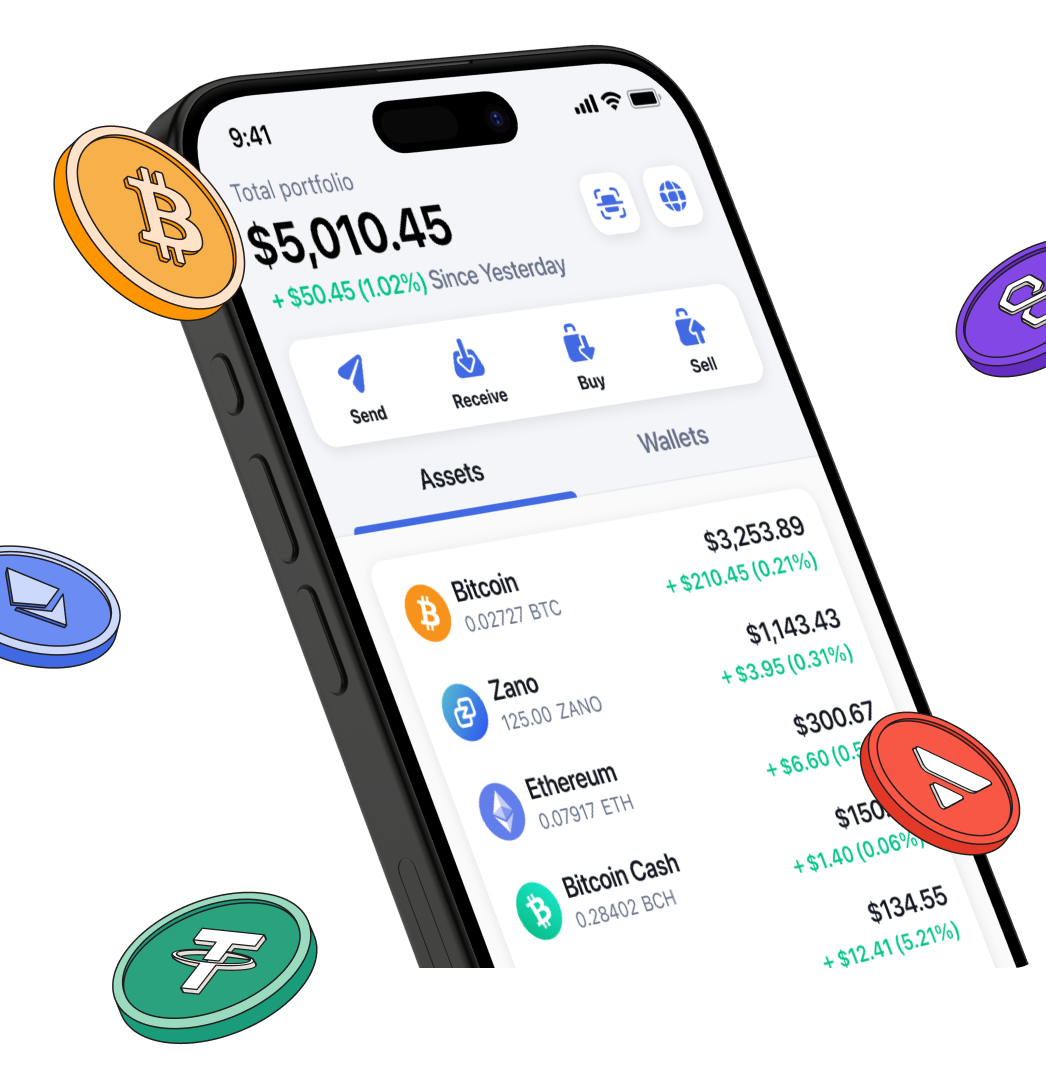
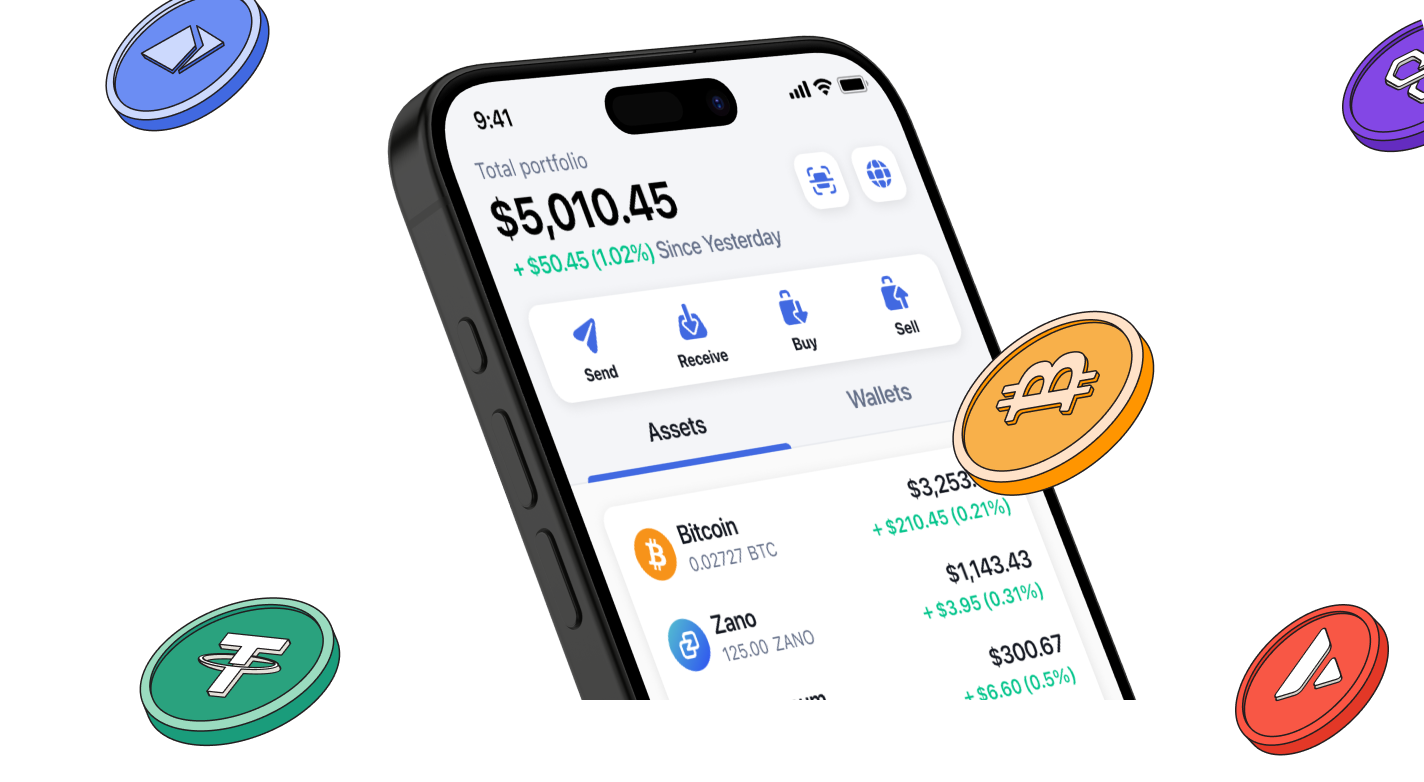
Beginnen Sie sicher zu investieren mit der Bitcoin.com Wallet.
Über Wallets bisher erstellt
Alles, was Sie benötigen, um Ihre Bitcoin und Kryptowährung sicher zu kaufen, verkaufen, handeln und investieren.



App herunterladen


© 2026 Saint Bitts LLC Bitcoin.com. Alle Rechte vorbehalten.
App herunterladen
Unternehmen
Einblicke
Produkte & Dienstleistungen
Bewertungen
Folgen
© 2026 Saint Bitts LLC Bitcoin.com. Alle Rechte vorbehalten.
 Get Bitcoin