
What is Reya? The Trading-Specific Based Rollup Bringing High-Performance Execution to Ethereum
Last updated
Written by

Reviewed by


Table of Contents
Reya is a trading-optimized Layer 2 network that uses a based zero-knowledge rollup architecture to deliver high-speed execution, verifiable settlement, and seamless interoperability with Ethereum’s decentralised finance ecosystem.
Overview: The Problem Reya Aims to Solve
Modern onchain trading faces a fundamental bottleneck: general-purpose blockchains are not designed to support the speed, predictability, and reliability required by active markets. Ethereum provides unmatched security and decentralisation, yet its base layer cannot deliver sub-millisecond confirmations or handle the order flow required for high-frequency strategies without introducing confirmation delays or fee spikes.
Many projects have attempted to address this by launching alternative Layer 1s or single-sequencer rollups. These approaches typically sacrifice decentralisation, neutrality, or economic security. A high-performance trading environment that relies on a single sequencer or a small validator set becomes vulnerable to censorship, downtime, or inconsistent ordering.
Reya approaches the problem differently. Instead of treating trading as a generic smart contract workload, it introduces a specialised execution layer designed around the microstructure of markets while remaining tightly aligned with Ethereum’s validator set. The result is a trading environment that seeks to match traditional exchange performance without compromising on verifiability or decentralisation.
How Reya Works
Reya operates as a trading-specific based rollup - a design in which Ethereum validators play a central role in sequencing, while dedicated execution nodes handle high-speed transaction processing and proof generation.
Based Rollups Explained
A based rollup is a Layer 2 system that integrates directly with Ethereum’s proposer set rather than relying on an independent sequencer. Ethereum validators are responsible for block construction and can delegate execution responsibilities to designated nodes following a pre-established schedule.
This structure provides several benefits:
- Ethereum-level neutrality: Validators remain the ultimate authority over ordering, reducing censorship risk.
- Economic security alignment: The rollup inherits the economic guarantees of Ethereum’s validator base.
- Predictable execution windows: Validators know in advance when specific execution nodes will propose blocks.
- Reduced reliance on a single sequencer: Sequencing authority rotates, preventing the centralisation issues seen in first-generation rollups.
Reya uses this model to anchor high-speed trading logic directly to Ethereum’s settlement guarantees.
Execution Nodes and the Pre-Confirmation Model
Reya uses specialised execution nodes that process orders, run the trading engine, and produce zero-knowledge proofs of the resulting state transitions. These nodes issue two levels of transaction acknowledgment:
-
Pre-confirmation:
A near-instant execution receipt provided by the execution node.
This gives traders deterministic feedback on order acceptance with sub-millisecond latency. -
Finalization:
Batched transactions are submitted to Ethereum, where they are included in an L1 block.
Once finalised, trades gain the full settlement guarantees of Ethereum.
The dual-confirmation model allows Reya to combine the speed of specialised execution with the credibility of Ethereum settlement.
Hybrid Data Availability
Order flow and execution data have different resource demands. Reya separates them:
- Execution and account updates are posted to Ethereum using cost-efficient blob space.
- Order book data, which has significantly higher throughput requirements, uses an external data availability layer.
Both pathways are validated through zero-knowledge proofs, ensuring the rollup can scale without compromising on verifiability.
This hybrid setup enables Reya to support deep, high-speed order flow without overwhelming Ethereum with raw trading data.
Architecture Breakdown
Reya’s architecture is purpose-built to support markets with high volume and low latency requirements.
Trading Engine
Reya employs a custom trading engine implemented in Rust. The engine is designed for determinism and is cross-compiled into zero-knowledge circuits. This allows the network to generate validity proofs for each state transition, ensuring that order execution is provably correct.
Proof System and State Verification
The system generates proofs asynchronously, enabling execution nodes to validate trades quickly while the final proof is prepared in parallel. Once included in an L1 block, the new state becomes canonical.
This ensures:
- deterministic replayability
- transparent and verifiable order execution
- stateless validation
- strong guarantees against malicious behaviour by execution nodes
Composability with Ethereum
Because sequencing authority ties directly into Ethereum validators, Reya maintains synchronous composability with the L1. Assets and positions can interoperate with other Ethereum protocols without needing asynchronous bridges or trust-minimised intermediaries.
This design differentiates Reya from ecosystems that rely on separate validator networks or bespoke settlement layers.
What You Can Trade on Reya
Reya supports trading products specifically optimised for its low-latency execution model:
- Perpetual futures, the core product at launch
- Spot markets, planned to be added as the network evolves
- RWA-linked perpetuals, an upcoming category linking synthetic exposure to real-world assets
- Additional structured products, enabled by the composability of the underlying rollup
These markets run on top of Reya’s unified margin architecture, which is described below.
Token Model
Reya’s token ecosystem consists of several components that support network security, liquidity efficiency, and protocol governance.
REYA
The primary token is used for:
- network alignment and governance
- incentivising execution node operators
- participating in the protocol’s economic model
It is designed to ensure that the parties running critical infrastructure have long-term incentives tied to the health of the network.
rUSD
rUSD serves as the base liquidity token within the protocol. It is primarily used in liquidity staking and in mechanisms that support collateralisation and liquidity flows.
srUSD
srUSD is a yield-bearing stablecoin backed by rUSD deposits. It is designed for capital efficiency:
- it earns yield automatically from protocol fees and liquidity flows
- it can be used simultaneously as trading collateral
- its balance remains stable while its value increases through accrual
This structure enables both passive yield and active trading with the same capital base.
sREYA
sREYA represents staked REYA used in governance and protocol alignment. Holding sREYA grants additional rights and may provide enhanced benefits across the trading ecosystem.
Margin Design and Risk Isolation
Reya supports multiple margin accounts under a single user. Each account is isolated, meaning losses in one account do not affect funds in another. This structure provides:
- clearer risk segmentation
- improved portfolio control
- protection of idle capital from leveraged positions
This approach mirrors professional trading platforms while preserving the benefits of self-custody.
Roadmap
Reya is evolving from its initial Orbit-based implementation into a full based rollup. The transition is staged to avoid user disruption.
Key phases include:
- Deployment of a custom order book running on the specialised execution engine
- Migration to the based rollup model with a single execution node
- Expansion to a rotating set of execution nodes, eliminating single-operator reliance
- Upcoming product expansion, including spot markets, RWA-linked derivatives, and tokenised yield models for srUSD
These milestones reflect a long-term strategy to build a fully decentralised, high-performance execution layer aligned with Ethereum’s validator ecosystem.
Strengths
Reya’s design offers several notable advantages:
-
Alignment with Ethereum:
By leveraging Ethereum validators, the rollup avoids the centralisation risks of independent sequencers. -
High-speed execution:
Sub-millisecond pre-confirmations and a purpose-built trading engine support real-time market interactions. -
ZK-verified settlement:
All state transitions are backed by zero-knowledge proofs for transparent correctness. -
Risk isolation across accounts:
Professional-grade margin segmentation within a self-custodial system. -
Capital-efficient stablecoin model:
srUSD combines yield generation with collateral utility. -
Synchronous composability:
Direct interoperability with Ethereum DeFi without asynchronous bridging.
Risks and Limitations
Despite its strengths, Reya has risks that users should consider:
-
Execution node centralisation:
Until node rotation is fully implemented, the system relies on a limited set of operators. -
External DA dependency:
Order data relies on an external data availability layer, which introduces a new operational dependency. -
Complexity of ZK systems:
Zero-knowledge circuits for trading engines are still an evolving domain and may introduce unexpected performance or security considerations. -
Ecosystem maturity:
As a newer execution layer, Reya must build liquidity, trading volume, and developer adoption. -
Regulatory considerations:
Perpetual markets and synthetic RWA exposure may face legal scrutiny depending on jurisdiction.
How to Use Reya
Users can interact with Reya through its main application interface:
- Connect a supported wallet such as the Bitcoin.com Wallet.
- Bridge or deposit supported assets.
- Mint srUSD through the platform if using the yield-bearing stablecoin.
- Open and manage positions across supported markets.
- Use multiple margin accounts for risk segmentation.
The Bitcoin.com Wallet enables secure self-custody and access to the Ethereum ecosystem while maintaining full control over assets used on Reya.
Conclusion: Reya as a Trading Execution Layer
Reya introduces a specialised execution environment designed to bring institutional-grade trading performance to Ethereum without compromising decentralisation or verifiability. Its based rollup architecture, hybrid data availability model, and custom trading engine enable deterministic, low-latency execution while preserving the settlement guarantees of the underlying L1.
As the network transitions toward full execution node rotation and expands its product line, Reya is positioned to become an influential component of Ethereum’s evolving trading infrastructure, offering a credible path for onchain price discovery and advanced market design.
FAQ
What is a based rollup?
A based rollup is a Layer 2 system where Ethereum validators play a direct role in sequencing transactions, reducing dependency on external sequencers and improving alignment with L1 security.
How does Reya differ from other Layer 2 networks?
Reya is tailored specifically for trading. It uses a custom trading engine, a dual-confirmation model, and a data architecture designed for high-frequency order flow.
Is the REYA token required to trade?
No. Trading does not require REYA, although the token participates in governance and protocol alignment mechanisms.
How does srUSD earn yield?
srUSD accrues yield automatically through protocol fees and liquidity mechanisms. The balance remains constant while its value increases through periodic revaluation.
Is Reya fully decentralised today?
Not yet. The system is progressing through a staged roadmap toward full execution node rotation and decentralised operator participation.
Can I use the Bitcoin.com Wallet with Reya?
Yes. The Bitcoin.com Wallet can connect to Ethereum-based applications, enabling secure self-custody while interacting with the Reya ecosystem.
Want to explore more advanced trading features?
Visit orangerock.xyz - Bitcoin.com’s pro-trading experience for serious traders.
Related guides
Start from here →
Understanding Perpetual DEXs in 2026
Discover how decentralized perpetual exchanges (Perp DEXs) enable on-chain leverage, self-custody, and 24/7 global trading - all powered by smart contracts.
Understanding Perpetual DEXs in 2026
Discover how decentralized perpetual exchanges (Perp DEXs) enable on-chain leverage, self-custody, and 24/7 global trading - all powered by smart contracts.
Inside Perpetual Futures on Decentralized Exchanges
A complete breakdown of how perpetual futures operate on decentralized exchanges - covering smart contract mechanics, margin systems, and funding rate dynamics.
Inside Perpetual Futures on Decentralized Exchanges
A complete breakdown of how perpetual futures operate on decentralized exchanges - covering smart contract mechanics, margin systems, and funding rate dynamics.

Perp DEX vs. Spot DEX Explained
Learn how Spot and Perpetual DEXs differ in purpose, mechanics, and risk. Discover which decentralized exchange model fits your trading goals in 2026.
Perp DEX vs. Spot DEX Explained
Learn how Spot and Perpetual DEXs differ in purpose, mechanics, and risk. Discover which decentralized exchange model fits your trading goals in 2026.

Understanding Funding Rates on Perp DEXs
Explore how smart contracts use funding rates to stabilize perpetual futures. Learn how payments between longs and shorts keep prices in balance.
Understanding Funding Rates on Perp DEXs
Explore how smart contracts use funding rates to stabilize perpetual futures. Learn how payments between longs and shorts keep prices in balance.

Understanding Leverage in Crypto Trading
Discover how crypto leverage works - from margin and collateral to liquidation and funding. Learn how Perp DEXs manage leveraged positions transparently.
Understanding Leverage in Crypto Trading
Discover how crypto leverage works - from margin and collateral to liquidation and funding. Learn how Perp DEXs manage leveraged positions transparently.

How Liquidation Works on Perp DEXs
Discover how Perp DEXs automatically close leveraged positions to prevent losses. Learn how liquidation thresholds, oracles, and insurance funds protect users.
How Liquidation Works on Perp DEXs
Discover how Perp DEXs automatically close leveraged positions to prevent losses. Learn how liquidation thresholds, oracles, and insurance funds protect users.

How Oracles Keep Perp DEX Prices Fair
Explore how oracle networks deliver real-time market data to Perp DEXs, ensuring accurate pricing, fair liquidations, and stable funding rates.
How Oracles Keep Perp DEX Prices Fair
Explore how oracle networks deliver real-time market data to Perp DEXs, ensuring accurate pricing, fair liquidations, and stable funding rates.

Top Risks of Trading on Perpetual DEXs
Learn about the biggest risks in decentralized perpetual trading, including liquidation, funding volatility, oracles, liquidity, and smart contract exploits.
Top Risks of Trading on Perpetual DEXs
Learn about the biggest risks in decentralized perpetual trading, including liquidation, funding volatility, oracles, liquidity, and smart contract exploits.

Choosing the Right Perp DEX in 2026
A practical guide to finding the best Perpetual DEX for your needs - covering security, liquidity, fees, oracles, leverage, and governance.
Choosing the Right Perp DEX in 2026
A practical guide to finding the best Perpetual DEX for your needs - covering security, liquidity, fees, oracles, leverage, and governance.

STAY AHEAD IN CRYPTO
Stay ahead in crypto with our weekly newsletter delivering the insights that matter most

Weekly crypto news, curated for you

Actionable insights and educational tips

Updates on products fueling economic freedom
No spam. Unsubscribe anytime.

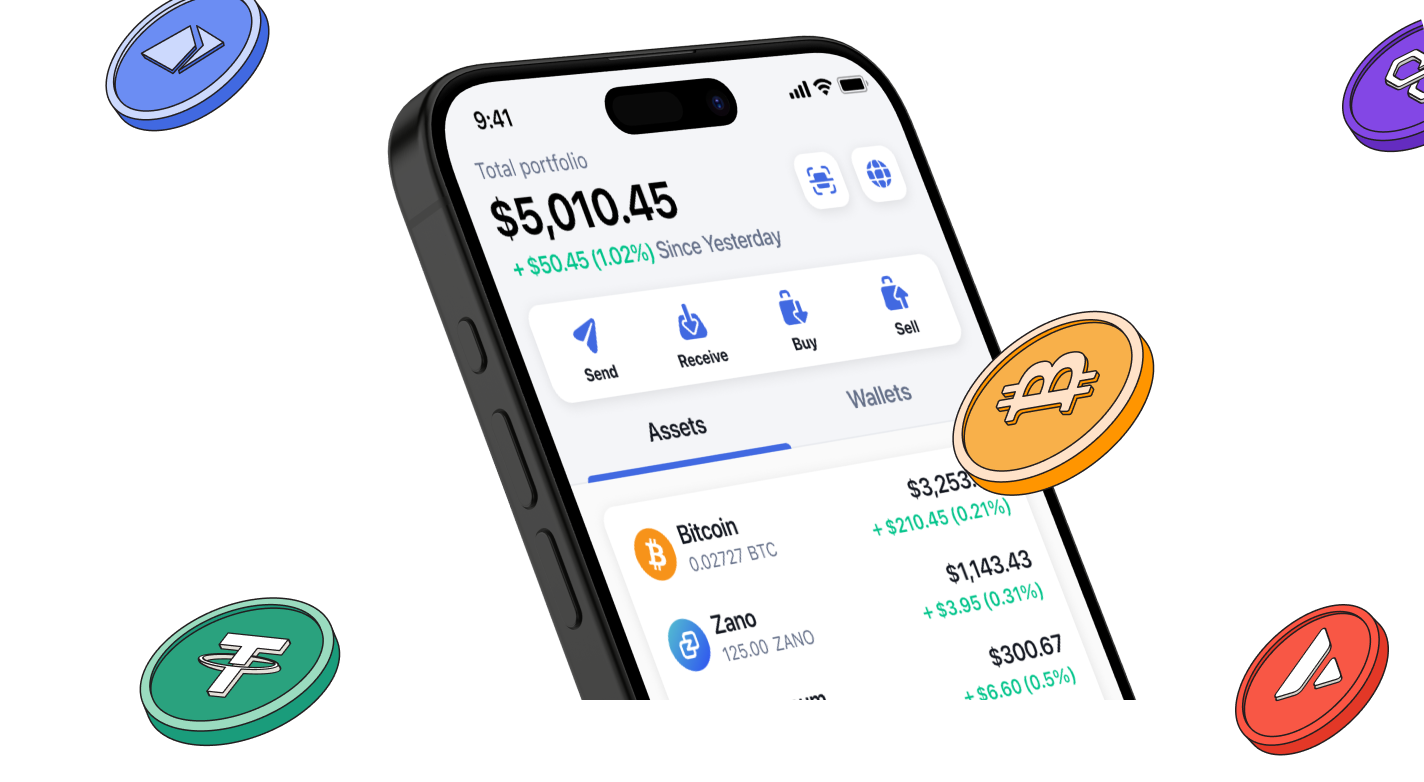

Start investing safely with the Bitcoin.com Wallet
Over wallets created so far
Everything you need to buy, sell, trade, and invest your Bitcoin and cryptocurrency securely



Download App


© 2026 Saint Bitts LLC Bitcoin.com. All rights reserved
Download App
Company
Insights
Products & Services
Reviews
Follow
© 2026 Saint Bitts LLC Bitcoin.com. All rights reserved
 Get Bitcoin