
What is Drift? Inside the Solana-Based Hybrid Perp, Spot, and Margin Trading Protocol
Last updated
Written by

Reviewed by

Table of Contents
Drift is a decentralized trading protocol built on Solana that combines perpetual futures, spot markets, borrow-lend pools, unified margining, and a hybrid liquidity system designed for low-latency, on-chain execution.
Overview
Drift is a non-custodial trading protocol on Solana that has evolved from a single-product perpetual futures exchange into a comprehensive on-chain trading environment. Launched in 2021, Drift introduced the Dynamic AMM (DAMM) as its early innovation: a pricing system that anchored liquidity around an oracle-derived midpoint rather than a constant-product curve. This allowed Drift to reduce toxic flow, protect liquidity providers, and bring institutional-grade execution closer to the on-chain environment.
Drift’s evolution accelerated with the release of Drift v2, which added an on-chain orderbook, a new liquidity mechanism called Just-in-Time (JIT) liquidity, a revamped risk engine, spot markets, and unified cross-margining across all assets. These additions turned Drift into a multi-product trading layer that supports perpetual futures, spot trading, lending and borrowing, programmatic market making, and advanced margin systems.
The protocol is built to take advantage of Solana’s architecture, including fast block times, parallel execution, and low transaction fees. Drift performs order matching and risk checks directly on-chain, preserving transparency while offering low-latency execution that approaches the feel of centralized venues.
Today Drift is one of the largest trading protocols in the Solana ecosystem, known for deep liquidity, flush execution quality, and an architecture that blends AMM liquidity, orderbook depth, and JIT liquidity into a single system. This hybrid model allows Drift to support a wide range of traders, from retail users to professional market makers participating through APIs and automated strategies.
How Drift Works
Drift’s architecture combines several distinct components into a cohesive system: DAMM liquidity, on-chain orderbooks, JIT liquidity providers, and a unified risk engine that manages cross-margin collateral across spot and perpetual markets. Together these systems enable efficient price discovery, deep liquidity, and transparent risk management.
Dynamic AMM (DAMM)
Drift’s Dynamic AMM was the protocol’s initial breakthrough. Instead of using a constant-product curve, DAMM uses oracle-pegged midpoints to center liquidity around the fair price. The AMM adjusts its virtual reserves dynamically to keep pricing aligned with market conditions.
Key characteristics of DAMM include:
- Liquidity providers act as makers in a more controlled environment
- Pricing is anchored to Pyth oracles to minimize divergence
- LPs earn trading fees and funding payments
- DAMM sits behind the orderbook to provide baseline liquidity
DAMM is now one of three liquidity sources on Drift: orderbook makers, JIT liquidity providers, and the DAMM vault.
Orderbook Execution Layer
Drift v2 introduced a fully on-chain orderbook that supports limit orders, post-only orders, resting liquidity, and advanced order types. The orderbook receives regular updates from makers who post bids and asks, providing deeper liquidity than an AMM alone can support.
The system includes:
- On-chain matching logic
- Market maker APIs
- Time-in-force and post-only flags
- Maker rebates and taker fees
- Range orders for strategy execution
This orderbook complements the DAMM by providing additional liquidity at tighter spreads.
JIT (Just-in-Time) Liquidity
JIT liquidity is one of Drift’s defining innovations. When a user submits a trade, JIT makers can compete to fill the order at the moment of execution. This mechanism creates a competitive, low-latency market-making environment where multiple participants attempt to provide the best price.
JIT liquidity improves execution quality by:
- Reducing slippage for large orders
- Tightening spreads
- Allowing highly efficient capital deployment
- Creating competitive price discovery across multiple liquidity sources
The execution flow for a trade attempts to fill orders in this priority:
- Resting orderbook liquidity
- JIT makers competing to fill
- DAMM vault liquidity for any remaining size
This layered system ensures that orders receive the best possible price at the time of execution.
Unified Cross-Margin System
Drift uses a unified cross-margin system for both perpetual futures and spot positions. Users deposit collateral into a single margin account, and all positions share the same collateral pool. Margin requirements are determined dynamically based on asset volatility, open interest, and position size.
Key margin features include:
- Multi-asset collateral
- Dynamic initial and maintenance margin
- Real-time risk checks
- Portfolio-based risk modeling
- Automatic liquidation engines with partial liquidation paths
This unified margin system allows users to create complex portfolios, such as hedging perp positions with spot assets, and benefit from collateral efficiency.
Sub-Accounts and Portfolio Margining
Drift supports multiple sub-accounts per user. Each sub-account maintains isolated risk, enabling traders to run multiple strategies or segregate long-term holdings from leveraged trades.
Borrow/Lend Architecture
Drift's borrow-lend pools allow users to supply liquidity and earn a variable yield paid by traders who borrow assets for margin trading or spot leverage. These pools introduce a passive liquidity layer that supports perpetual and spot markets.
Participants in lending pools earn:
- Borrowing interest
- Potential additional protocol incentives when active
Lenders effectively support the broader trading ecosystem by enabling leveraged positions and collateral flexibility.
Spot Trading Integration
Drift supports spot trading directly within the unified margin system. Spot assets can be used as collateral, borrowed for shorting, or traded alongside perps. This creates a seamless trading environment where spot and perps interact naturally within a single portfolio.
Spot markets include:
- SOL, USDC, USDT, and major ecosystem assets
- Direct access through Drift’s interface or API
- Collateralization and borrowing within the same margin account
Oracle Infrastructure (Pyth and Switchboard)
Drift uses multiple oracle feeds to maintain accurate pricing across markets. Pyth provides high-frequency prices, while Switchboard adds redundancy and additional coverage.
Oracle-based risk checks include:
- Confidence intervals for price adjustments
- Deviation guards to halt execution when oracles drift
- Time-weighted price feeds for liquidation calculations
The oracle system underpins DAMM, margin calculations, and liquidation engines.
Key Features
Drift has expanded into a multi-product trading environment that supports a wide range of traders, strategies, and liquidity providers.
Perpetual Futures
- High-leverage trading on major assets
- Funding payments between longs and shorts
- Deep liquidity supported by DAMM, orderbooks, and JIT
Spot Markets
- Unified margin spot trading
- Spot positions usable as collateral
- Default settlement on Solana for fast finality
Hybrid Liquidity
- DAMM vaults for passive LPs
- On-chain orderbook liquidity
- JIT market makers for best execution
Advanced Order Types
- Limit
- Market
- Post-only
- Trigger (stop-loss, take-profit)
- TWAP
- Conditional orders
LP Vaults
DAMM vaults allow liquidity providers to earn:
- Trading fees
- Funding payments
- Yield from participating in the protocol’s baseline liquidity layer
Borrow/Lend Pools
- Supply assets to earn yield
- Enable leveraged spot and perp trading
- Integrated into unified margining
Developer Tools and APIs
- Market maker APIs
- SDKs for automated strategies
- WebSockets for low-latency order flow
DRIFT Token
The DRIFT token supports governance, staking, fee rebates, and insurance mechanisms across the protocol.
Utility
DRIFT is used for:
- Governance participation
- Protocol fee discounts
- Incentivizing market makers and LPs
- Staking for protocol rewards
Staking and the Insurance Fund
Staked DRIFT contributes to the insurance fund, which is used to cover shortfalls in extreme volatility or liquidation events. In return, stakers earn:
- A portion of trading fees
- Potential incentives depending on governance parameters
Governance
Holders can propose and vote on:
- Fee schedules
- Incentive programs
- Risk parameters
- Market additions
Fee Rebates
Active traders and market makers may receive DRIFT-based fee rebates tied to volume tiers or maker activity.
esDRIFT
Earlier stages of the protocol involved escrowed DRIFT for long-term incentive alignment. esDRIFT still appears in certain long-term vesting schedules depending on governance decisions.
Security and Audits
Drift maintains a multi-year security track record with audits from established firms and a series of layered protections across both protocol and network levels.
Audit History
Audits have been performed by:
- OtterSec
- Trail of Bits
- Zellic
Each major upgrade has undergone multiple reviews, including simulations of liquidation cascades and oracle failure scenarios.
Insurance Fund
The insurance fund covers:
- Bad debt from undercollateralized positions
- Oracle failure-related losses
- Shortfalls during volatility spikes
Circuit Breakers and Safeguards
Drift includes:
- Rate limits for abnormal price movements
- Oracle deviation checks
- Funding rate caps
- Liquidation throttling during extreme market conditions
Solana Network Security
Being on Solana provides:
- Fast settlement
- Parallel execution
- Low fees
However, Drift inherits network-level risks, including potential congestion or temporary outages.
Strengths
Drift’s strengths come from its hybrid architecture and the capabilities of Solana’s execution environment.
- Efficient liquidity from AMM vaults, orderbooks, and JIT providers
- Low-latency trading with on-chain transparency
- Unified margin system for better capital efficiency
- Deep risk controls and robust liquidation systems
- Strong ecosystem integrations and developer tooling
- Spot and perps combined into one trading portfolio
Risks
Drift, like all on-chain trading systems, has inherent risks.
- Smart contract vulnerabilities despite audits
- Oracle dependency, including potential manipulation
- Liquidation risk during extreme volatility
- Solana network congestion or downtime
- Reliance on JIT makers for optimal execution
- Divergence between oracle prices and external markets
No protocol can eliminate risk entirely, and users should manage leverage and collateral appropriately.
Conclusion
Drift has grown into one of the most advanced decentralized trading platforms in the Solana ecosystem, offering a wide range of markets, competitive liquidity, and transparent on-chain execution. Its hybrid architecture unifies perpetual futures, spot markets, borrow-lend pools, and advanced risk management into a single system. With deep integrations, strong security practices, and a broad set of tools for both retail and institutional traders, Drift represents a significant step forward in on-chain derivatives trading while expanding into a full-spectrum DeFi trading environment.
FAQ
What is Drift?
Drift is a decentralized trading protocol on Solana offering perpetual futures, spot trading, lending, borrowing, and unified margin accounts.
Is Drift only a perp DEX?
No. Perps are the core product, but Drift now includes spot markets, lending pools, unified cross-margining, and multiple liquidity models.
How does Drift compare to dYdX and Hyperliquid?
Drift is built on Solana and uses a hybrid liquidity model with DAMM, orderbooks, and JIT liquidity. dYdX uses an appchain with off-chain orderbooks, and Hyperliquid uses its own L1 with native matching.
What is JIT liquidity on Drift?
JIT liquidity allows market makers to fill orders at the moment of execution, improving pricing and reducing slippage.
Does Drift require KYC?
No. Drift is fully permissionless and non-custodial.
What assets can be traded on Drift?
Drift supports a range of perpetual and spot markets, primarily focused on major crypto assets and Solana ecosystem tokens.
Can I use spot positions as collateral?
Yes. Drift’s unified margin system allows spot holdings to be used to support leveraged positions.
How does Drift handle liquidations?
Liquidations are executed on-chain using price oracles and partial liquidation paths to minimize losses.
How does DAMM differ from normal AMMs?
DAMM uses an oracle-pegged midpoint and dynamic reserves rather than a constant-product curve, improving pricing during volatility.
Is Drift safe?
Drift has undergone multiple audits and uses insurance funds, circuit breakers, and oracle safeguards, but smart contract and market risks remain.
What is the DRIFT token used for?
Governance, staking, insurance fund contributions, fee rebates, and incentives.
Can I trade on Drift from a hardware wallet?
Yes. Solana hardware wallet integrations support trading directly through Drift.
What wallets can I use to connect to Drift?
You can connect common Solana wallets such as Phantom, Backpack, Solflare, and others.
How does Drift price its assets?
Drift uses Pyth and Switchboard oracles, with confidence intervals and deviation checks for accuracy.
Related guides
Start from here →
Understanding Perpetual DEXs in 2026
Discover how decentralized perpetual exchanges (Perp DEXs) enable on-chain leverage, self-custody, and 24/7 global trading - all powered by smart contracts.
Understanding Perpetual DEXs in 2026
Discover how decentralized perpetual exchanges (Perp DEXs) enable on-chain leverage, self-custody, and 24/7 global trading - all powered by smart contracts.
Inside Perpetual Futures on Decentralized Exchanges
A complete breakdown of how perpetual futures operate on decentralized exchanges - covering smart contract mechanics, margin systems, and funding rate dynamics.
Inside Perpetual Futures on Decentralized Exchanges
A complete breakdown of how perpetual futures operate on decentralized exchanges - covering smart contract mechanics, margin systems, and funding rate dynamics.
Perp DEX vs. Spot DEX Explained
Learn how Spot and Perpetual DEXs differ in purpose, mechanics, and risk. Discover which decentralized exchange model fits your trading goals in 2026.
Perp DEX vs. Spot DEX Explained
Learn how Spot and Perpetual DEXs differ in purpose, mechanics, and risk. Discover which decentralized exchange model fits your trading goals in 2026.

Understanding Funding Rates on Perp DEXs
Explore how smart contracts use funding rates to stabilize perpetual futures. Learn how payments between longs and shorts keep prices in balance.
Understanding Funding Rates on Perp DEXs
Explore how smart contracts use funding rates to stabilize perpetual futures. Learn how payments between longs and shorts keep prices in balance.
Understanding Leverage in Crypto Trading
Discover how crypto leverage works - from margin and collateral to liquidation and funding. Learn how Perp DEXs manage leveraged positions transparently.
Understanding Leverage in Crypto Trading
Discover how crypto leverage works - from margin and collateral to liquidation and funding. Learn how Perp DEXs manage leveraged positions transparently.
How Liquidation Works on Perp DEXs
Discover how Perp DEXs automatically close leveraged positions to prevent losses. Learn how liquidation thresholds, oracles, and insurance funds protect users.
How Liquidation Works on Perp DEXs
Discover how Perp DEXs automatically close leveraged positions to prevent losses. Learn how liquidation thresholds, oracles, and insurance funds protect users.
How Oracles Keep Perp DEX Prices Fair
Explore how oracle networks deliver real-time market data to Perp DEXs, ensuring accurate pricing, fair liquidations, and stable funding rates.
How Oracles Keep Perp DEX Prices Fair
Explore how oracle networks deliver real-time market data to Perp DEXs, ensuring accurate pricing, fair liquidations, and stable funding rates.

Top Risks of Trading on Perpetual DEXs
Learn about the biggest risks in decentralized perpetual trading, including liquidation, funding volatility, oracles, liquidity, and smart contract exploits.
Top Risks of Trading on Perpetual DEXs
Learn about the biggest risks in decentralized perpetual trading, including liquidation, funding volatility, oracles, liquidity, and smart contract exploits.

Choosing the Right Perp DEX in 2026
A practical guide to finding the best Perpetual DEX for your needs - covering security, liquidity, fees, oracles, leverage, and governance.
Choosing the Right Perp DEX in 2026
A practical guide to finding the best Perpetual DEX for your needs - covering security, liquidity, fees, oracles, leverage, and governance.

STAY AHEAD IN CRYPTO
Stay ahead in crypto with our weekly newsletter delivering the insights that matter most

Weekly crypto news, curated for you

Actionable insights and educational tips

Updates on products fueling economic freedom
No spam. Unsubscribe anytime.
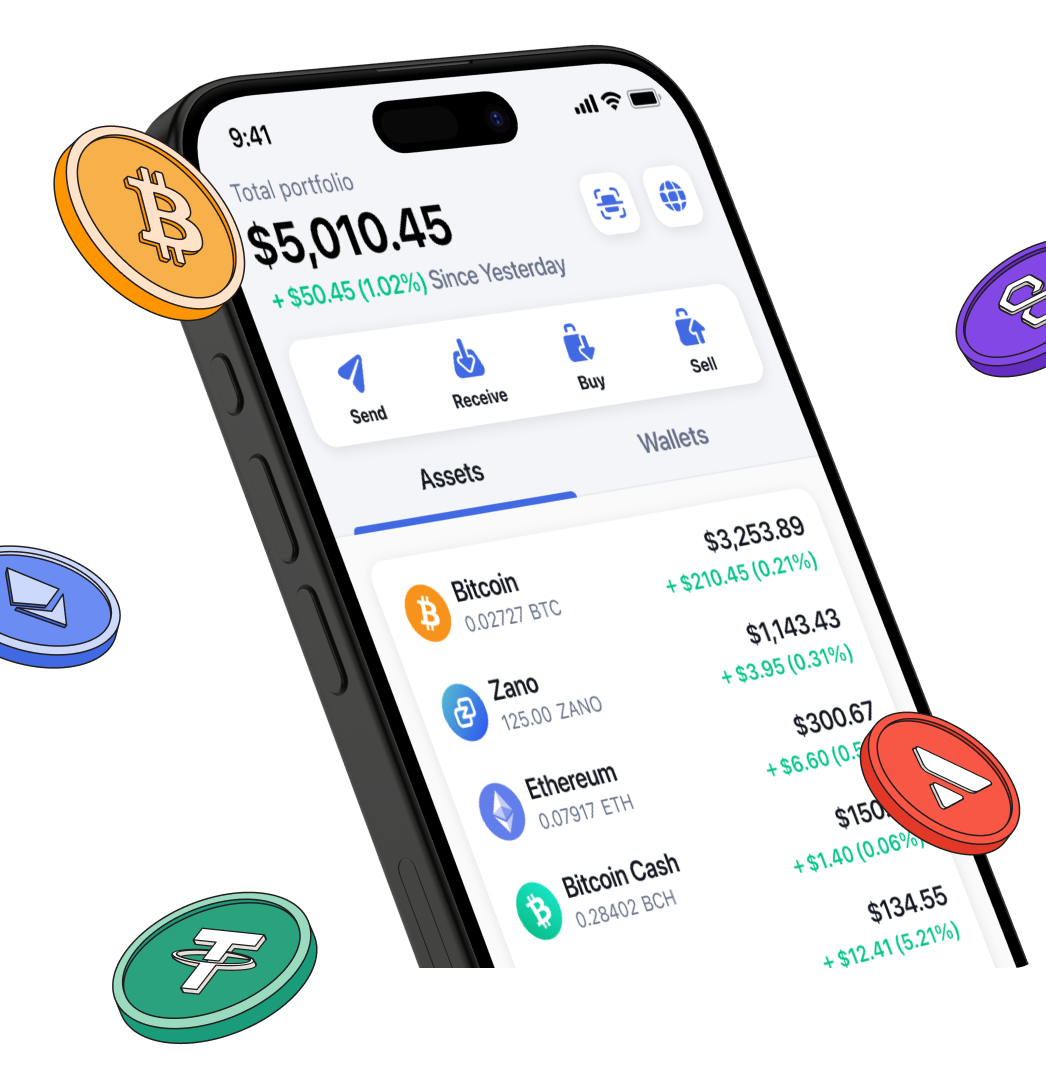
Start investing safely with the Bitcoin.com Wallet
Over wallets created so far
Everything you need to buy, sell, trade, and invest your Bitcoin and cryptocurrency securely



Download App


© 2026 Saint Bitts LLC Bitcoin.com. All rights reserved
Download App
Company
Insights
Products & Services
Reviews
Follow
© 2026 Saint Bitts LLC Bitcoin.com. All rights reserved
 Get Bitcoin