

Market Updates
随着比特币价格面临8.5万美元的阻力位,币安储备量达到69.3万枚BTC
币安的比特币储备已攀升至69.3万枚BTC以上,创下两年来的最高水平,约占各大交易所总储备量的30%。


使用借记卡、信用卡、银行转账或 Apple Pay 购买比特币。最低仅需 30 美元,几分钟内即可获得加密货币,并将其存放在只有您才能控制的钱包中。
Other popular cryptocurrencies to buy
整个过程大约需要五分钟。


1. 准备一个钱包
下载 Bitcoin.com 钱包移动应用 或者注册一个账户,即可在任何设备上管理您的加密货币。
.svg?v=1785350642344)
2. 验证您的身份
支付服务提供商依法有义务核实您的身份。大多数身份验证流程在五分钟内即可完成,且您只需进行一次。

3. 选择金额并付款
请输入您希望支付的金额,最低30美元起。在您确认之前,系统会显示确切的手续费以及您将收到的比特币数量。

4. 查询订单
从付款到送达,全程追踪您的订单。

5. 领取您的比特币
一旦网络确认了该笔交易,您的比特币就会到达您的钱包地址,通常需要10到30分钟。
几分钟内即可购买并送达,直接存入只有您才能控制的钱包。
Choose a wallet you control as the destination and receive your crypto there after the purchase is processed.
Debit card, credit card or bank transfer, depending on what is available where you are.
Your payment is processed by the payment provider shown during checkout. Review the provider, payment method and final quote before confirming.
Buy Bitcoin, Ethereum, stablecoins and a wide range of other assets from one place.
Manage your crypto after the purchase: move it, swap it for other assets, or sell it back to fiat.
Use the Bitcoin.com Wallet app on mobile, or a Bitcoin.com account to reach your crypto from any device.
币安的比特币储备已攀升至69.3万枚BTC以上,创下两年来的最高水平,约占各大交易所总储备量的30%。

在CPI数据公布后,比特币价格逼近8万美元,剧烈波动导致加密货币市场出现7.32亿美元的强制平仓。经济学家们就美联储加息风险发表了看法。

在山寨币市场回调的背景下,ZEC跌破1,100美元。Bitfinex的分析指出,山寨币杠杆率正在上升,并揭示了此轮上涨背后的主要风险。
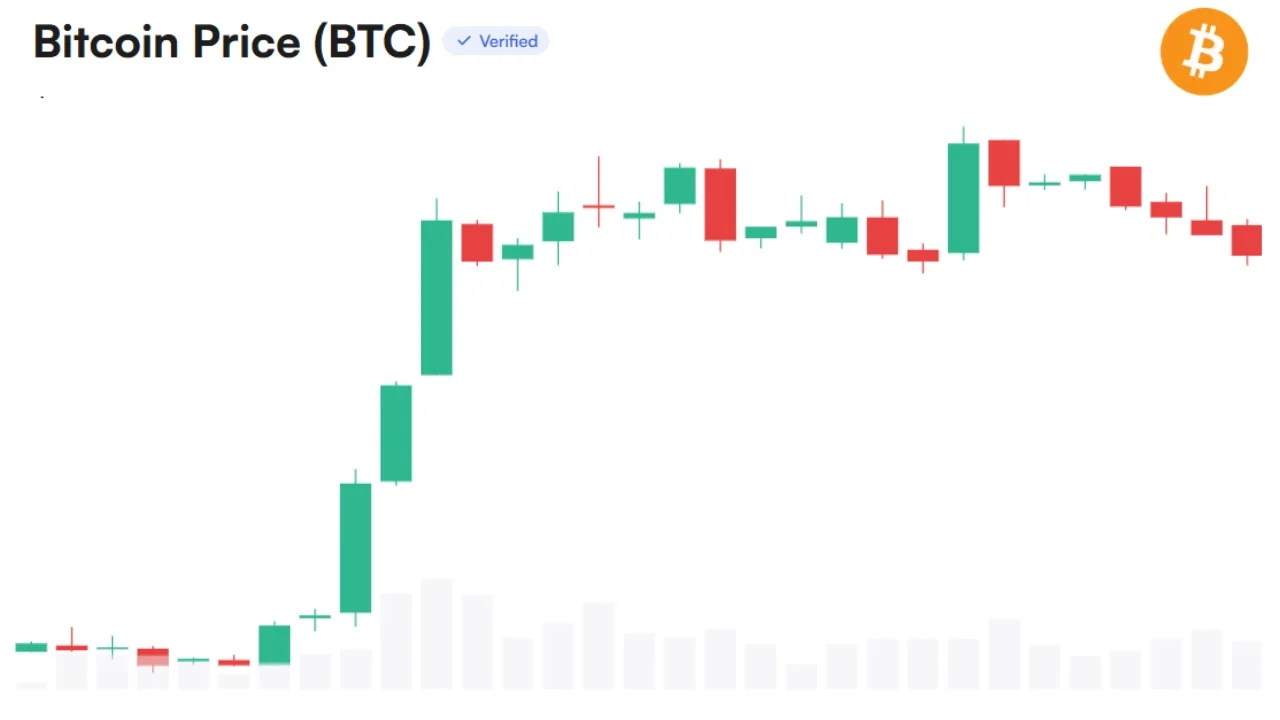
在9月份ETF资金净流入表现积极,且山寨币市场风险偏好增强的迹象下,比特币的前景更加乐观。随着最新PPI数据的发布,一
Buying crypto online comes down to three choices: which asset you want, how you pay, and where it goes afterwards. The process is the same whether you are buying Bitcoin, Ethereum or anything else. What changes between methods is speed, cost, how much identity verification is involved, and whether you end up holding the asset yourself.
| Method | Speed | Relative cost | ID usually required | Where your crypto lands |
|---|---|---|---|---|
| Debit or credit card | Usually instant | Higher | Yes | Wallet or account |
| Bank transfer | 1 to 3 days | Lowest | Yes | Wallet or account |
| Apple Pay or Google Pay | Usually instant | Higher | Yes | Wallet or account |
| Crypto exchange | Varies | Low to moderate | Yes | Exchange, then your wallet |
| Peer-to-peer | Varies | Varies | Sometimes | Escrow, then your wallet |
The pattern is consistent: the faster and more convenient the method, the more it tends to cost. Bank transfers are usually cheapest but slowest, cards and payment apps are quick but cost more, and peer-to-peer varies widely by platform.
Cards are the quickest route on this page. You enter an amount, pick your card, and the crypto is delivered once the payment clears, which is usually straight away. Apple Pay and Google Pay are offered in some regions and settle the same way a card does.
Your bank may run a 3-D Secure check before approving the payment. That usually means confirming the transaction in your banking app or entering a one-time code, and it happens between you and your bank rather than on this page.
There is one thing worth checking before paying by credit card: some issuers classify cryptocurrency purchases as a cash advance rather than an ordinary purchase. That can mean a higher interest rate with no grace period, plus a cash-advance fee from your issuer, on top of the purchase fee. Debit cards are not treated as cash advances, although other issuer or provider fees may still apply.
Card limits are set by the payment provider and your card issuer rather than by Bitcoin.com, and they differ by region and by how much verification you have completed. The provider shows the limits that apply to you during checkout.
This is the part that makes buying crypto different from buying a single asset. There are thousands of cryptocurrencies, and most of what beginners buy falls into three groups. This is a buyer's-eye view rather than a full explainer of each type.
| Type | What buyers use it for | Lives on | Price behaviour | Before you buy |
|---|---|---|---|---|
| Major coins (e.g. Bitcoin, Ethereum) | A starting point and long-term holding | Their own network | Can move sharply | Widely supported, easy to buy and sell |
| Stablecoins (e.g. USDT, USDC) | Holding value or paying without big swings | Several networks |
What to weigh when you choose:
This page is not investment advice; the aim is to help you buy confidently, whatever you choose. If you have already settled on an asset, the coin pages go deeper on what is specific to each one.
Buying crypto and holding crypto are two separate steps. Where your assets sit afterwards depends on the route you used, and it is the choice that matters most for a first-time buyer.
Your crypto is sent to a wallet whose recovery credentials you control, such as the Bitcoin.com Wallet. Once the transaction has confirmed and the asset is available in your wallet, you can hold, send or use it without asking a provider to release it first.
If you buy on a centralized exchange, or through some payment apps, the crypto may initially stay in an account that the provider controls. To take self-custody, you withdraw it to an address you control on the right network.
| Aspect | Self-custody | Custodial account |
|---|---|---|
| Private keys | You control them | The provider controls them |
| Sending crypto | You initiate transactions directly | The provider processes withdrawals |
| Recovery |
Neither model removes risk; they relocate it. Self-custody puts key management on you: if you lose access to the wallet and do not have a usable backup or recovery phrase, there may be no third party able to restore access. A custodial account hands that responsibility to a provider, and in exchange you depend on that provider staying solvent, available and willing to process your withdrawal.
Identity verification may be required when buying crypto with fiat currency. What is required depends on the payment provider, the transaction, the payment method and your location. On Bitcoin.com, the provider tells you during the purchase what verification it needs.
These requirements are set by the payment provider processing your transaction rather than by Bitcoin.com. Verification requirements differ between providers and purchase methods.
The advertised fee is only one part of the cost. Depending on where you buy, the total can also include:
The final amount of crypto you receive is the most useful comparison because it reflects the quoted rate and the costs included in the purchase.
There are four common places to buy: directly on this page with a card or bank transfer, in the Bitcoin.com Wallet app, on a centralized crypto exchange, or peer-to-peer. They differ mainly in who holds the crypto afterwards, which payment methods are accepted, how pricing works and how much verification is involved.
Buying here sends the crypto to the wallet you select during checkout, which can be a self-custody wallet you control. The same purchase flow is available in the Bitcoin.com Wallet app, which sets up a self-custody wallet on your device so the crypto arrives somewhere you already control.
A cryptocurrency exchange typically lets you buy and trade through an account controlled by the platform, often using an order book. You create an account, complete the exchange's verification requirements, fund the account, and place an order. The crypto remains in the exchange's custody unless you withdraw it, so many people move it to a personal wallet afterwards.
A peer-to-peer marketplace connects you directly with another person selling crypto. Some use escrow to hold the seller's asset while payment is completed. Payment methods vary widely and can include options card-based providers do not support, and depending on the marketplace, sellers may set their own rates or terms. P2P trades can involve counterparty risk as well as risks associated with the marketplace and payment method, so read the payment and release rules carefully before you send funds.
Dollar-cost averaging means buying the same amount at regular intervals rather than investing a larger amount at once. It spreads your purchases across different prices instead of requiring you to choose one entry point. Common schedules include weekly or monthly purchases.
Potential advantages
Trade-offs
Dollar-cost averaging does not remove risk or guarantee a profit.
| Designed to stay near a set value |
| Pick the version on a network your wallet supports |
| Other tokens (many altcoins) | Access to a specific app, project or use case | A host network such as Ethereum | Often more volatile | Check your wallet supports that token and network |
| Account recovery through the provider |
| Platform dependency | Lower | Higher |
| Ease for beginners | Requires you to back up your wallet | Often a familiar account model |