






How to Choose a DEX to Buy and Trade Arbitrum Tokens
When selecting an Arbitrum swap platform, it’s essential to consider several key factors to ensure a seamless and secure trading experience. These include trading fees, supported wallets, and the security of the platform. Additionally, accessibility, liquidity, customer support, and the reputation of the exchange within the Arbitrum community are crucial elements to evaluate. By carefully assessing these aspects, you can choose the best exchange for your needs, maximizing your trading efficiency and safety.
Trading Fees
Trading fees are an important consideration when choosing a decentralized exchange for Arbitrum (ARB). Since trading on a DEX is conducted fully on-chain, each trade incurs transaction fees, which are less of a problem on Arbitrum than they are on Arbitrum’s underlying Layer 1, Ethereum. Other costs include protocol fees for the more widespread AMM exchanges or maker and taker fees for order book DEXes that use the traditional model. The cost of these fees can add up, especially for frequent trades. Therefore, comparing the fee rates of different exchanges is essential to be sure you’re minimizing your costs and maximizing your profits.
Supported Wallets
Wallet support is another important factor that determines whether you can access a DEX. Most DEXes require you to connect an existing non-custodial wallet, while some newer DEX-based trading apps may provide a built-in wallet that is created and tied to your anonymous trading account. It’s also important to check if your preferred Arbitrum wallet is supported natively or through alternative methods like WalletConnect. Since all trades are funded directly from your wallet, you need to choose a DEX with wallet options that match your setup, or get a new wallet out of the supported ones.
Security
Security is paramount when it comes to Arbitrum swaps. Ensure that the platform you choose has robust security features, and the smart contract has undergone thorough security audits. A secure platform doesn’t gain full access to your funds when you connect, offering you peace of mind as you trade. Avoid DEXes with known smart contract vulnerabilities or exploits.
Accessibility
Accessibility is essential for a user-friendly trading experience. This includes the platform's regional availability, mobile support, and ease of use. You need a platform that’s accessible in your region, and one that offers a straightforward interface can significantly enhance your trading. Additionally, mobile compatibility allows you to swap wherever you are, ensuring you never miss an opportunity in the fast-paced world of crypto trading.
Liquidity
Liquidity is a vital factor in Arbitrum DEXs, as it determines how easily you can buy or sell assets at your desired price. High liquidity means there are enough buyers and sellers in the market, reducing the risk of significant price slippage between the time you place an order and when it’s executed. Choosing an exchange with deep liquidity ensures smoother and more efficient trading, especially during volatile market conditions.
Support
Customer support is an important aspect to consider when selecting a swap platform. Whether you encounter issues with transactions, need help connecting your wallet, or have technical questions, responsive and effective support can make all the difference. Look for platforms that offer multiple support channels, such as live chat, email, and phone, and ensure they have a reputation for resolving issues promptly.
User Interface
The user interface (UI) of an exchange directly impacts your trading experience. A well-designed UI should be intuitive, making it easy to navigate the platform, execute swaps, and access necessary information. Whether you’re a beginner or an experienced trader, a clean and responsive interface can improve your efficiency and confidence when using an Arbitrum DEX.
Reputation Amongst Traders
The reputation of a platform within the Arbitrum (ARB) decentralized trading community is a key indicator of its reliability. Platforms that are well-regarded by ARB traders typically offer more features, deeper liquidity, and a smoother trading experience. Engaging with community forums and reading user reviews can provide insights into the exchange’s reputation, helping you choose a platform that meets your expectations.
What Is an Arbitrum DEX?
An Arbitrum DEX is a decentralized exchange that operates natively on the Arbitrum network, allowing users to trade tokens without intermediaries or custodians. Unlike centralized exchanges that hold your funds, an Arbitrum DEX lets you swap tokens directly from your wallet through automated smart contracts.
The Arbitrum network is a Layer 2 scaling solution built on top of Ethereum. It uses optimistic rollup technology to process transactions off the Ethereum mainnet while maintaining the same security guarantees. Think of it like an express lane: Arbitrum bundles hundreds of transactions together, processes them quickly off-chain, and posts a compressed summary back to Ethereum. This approach delivers 95% lower fees and 10x faster speeds compared to Ethereum, making Arbitrum DEXes ideal for cost-effective trading.
Key characteristics of Arbitrum DEXes
Different Arbitrum DEXes serve different needs, depending on the platform type, supported assets and features.
- Autonomous trading through smart contracts, no intermediaries
- Wallet-based access with no account creation, no asset custody
- Liquidity pools or automated market makers; new Arbitrum DEXes may feature order books instead of AMMs
- Support for tokens bridged to Arbitrum; some modern DEXes also offer perpetual futures contracts trading
Why Use Arbitrum for Token Swaps?
Arbitrum has become a popular environment for decentralized trading due to its efficiency and growing ecosystem.
Main advantages
- Lower transaction fees than the Ethereum mainnet
- Faster confirmation times
- Broad compatibility with Ethereum tooling
- An expanding selection of Arbitrum DEXes
These factors make Arbitrum a practical choice for users who want on-chain trading without mainnet-level costs.
Types of Arbitrum Exchanges and Trading Platforms
Arbitrum tokens can be traded on different types of platforms, each with distinct advantages. For swapping tokens on Arbitrum itself, decentralized exchanges (DEXs) are the primary option. However, users can also access Arbitrum tokens through centralized platforms.
Arbitrum DEXs (Decentralized Exchanges)
Arbitrum DEXs are the most common way to swap tokens directly on the Arbitrum network. These platforms operate using automated smart contracts, allowing users to trade without intermediaries.
Key characteristics:
- Non-custodial: You maintain full control of your assets—funds stay in your wallet until the swap executes
- No KYC required: Trade anonymously without identity verification
- Lower fees: $0.50-$2 per swap on average
- Immediate trading: No deposit/withdrawal delays
Types of Arbitrum DEXs:
- AMM DEXs: Use liquidity pools for swaps (Uniswap V3, Camelot, SushiSwap, Balancer)
- Order Book DEXs: Traditional limit orders with advanced trading features (Vertex Protocol)
- Perpetual DEXs: Trade leveraged perpetual futures (GMX, Gains Network)
- DEX Aggregators: Find the best prices across multiple DEXs (1inch, Paraswap)
Best for: Users who want to swap tokens directly on Arbitrum, prioritize privacy, or avoid custodial risk.
Centralized Exchanges Supporting Arbitrum
Centralized exchanges (CEXs) that support Arbitrum allow users to deposit and withdraw tokens directly to/from the Arbitrum network, bypassing the need to bridge from Ethereum.
Benefits:
- Direct Arbitrum withdrawals: Binance, Crypto.com, and OKX support withdrawing ETH, USDC, and USDT directly to Arbitrum
- No bridging fees: Save $5-$15 in Ethereum gas fees by withdrawing straight to Arbitrum
- Faster setup: Buy crypto with fiat and withdraw to Arbitrum in one step
- Lower trading fees: Typically 0.1% or less on CEXs vs 0.3% on DEXs
Trade-offs:
- KYC required: Must verify identity to use
- Custodial risk: Exchange holds your funds
- Withdrawal limits: Minimum withdrawal amounts apply
Best for: Users who want to acquire tokens on Arbitrum without bridging from Ethereum, or traders who prefer the advanced features of centralized platforms.
Cross-Chain Swap Platforms
Cross-chain swap platforms enable swapping Arbitrum tokens for assets on other blockchains (Binance Smart Chain, Solana, Polygon) without using a CEX.
How they work:
- Maintain liquidity pools on multiple chains
- Execute swaps through smart contracts and bridges
- Process cross-chain transfers in one transaction
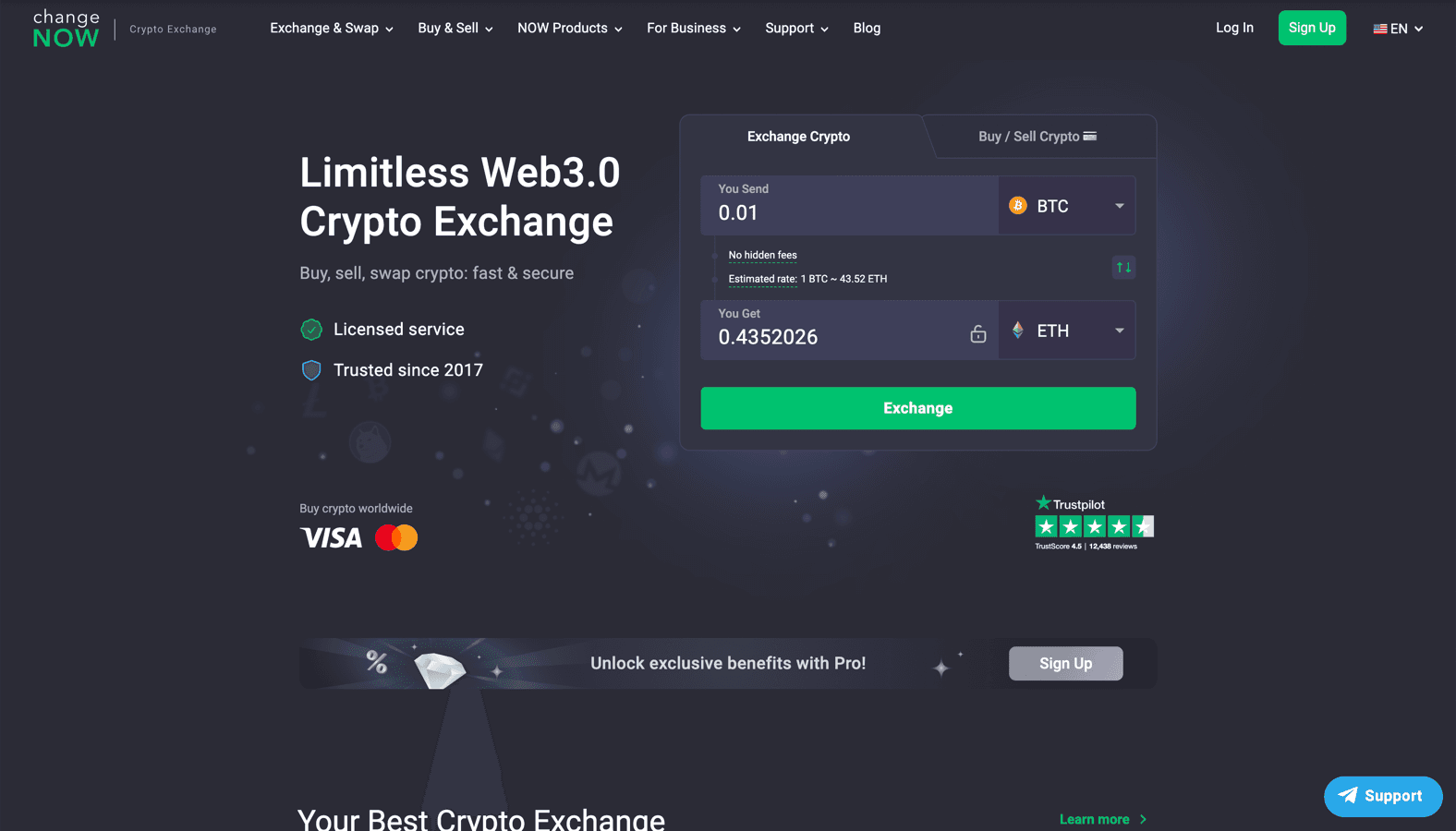
Popular options: ChangeNOW, Changelly, SecureShift.io
Best for: Users who need to move value between Arbitrum and other blockchains without using a centralized exchange.
For most users: An Arbitrum DEX is the best choice for swapping tokens on the network. CEXs are useful for initially acquiring Arbitrum tokens without bridging, while cross-chain platforms help move assets between different blockchains.
How to Start Trading on an Arbitrum DEX
- Select an exchange: Research and choose a reliable exchange that supports Arbitrum trading, focusing on factors like functionality, fees, and security.
- Connect a wallet: In most cases, you will need to connect an external self-custodial wallet that supports the Arbitrum network.
- Deposit funds: Deposit tokens on Arbitrum into your trading wallet. If your assets are on a different blockchain, you may need to bridge the tokens first using an Arbitrum bridge.
- Place your order: Navigate to the trading section, select the desired trading pair, and place a buy or sell order based on your market analysis.
- Monitor and manage: Track your order’s status, manage your portfolio, and consider setting up stop-loss orders in case the market moves against you.
Arbitrum Bridge: Moving Assets to Arbitrum
Before executing an Arbitrum swap, you need to have tokens available on the Arbitrum network. An Arbitrum bridge transfers your assets from Ethereum (or other blockchains) to Arbitrum, enabling you to trade on Arbitrum DEXs. This is typically a one-time setup step—once your assets are on Arbitrum, you can swap freely without bridging again.
Why Bridging to Arbitrum Is Necessary
Assets on Ethereum mainnet exist on a separate network from Arbitrum. Even though Arbitrum is built on Ethereum, your ETH or tokens on Ethereum cannot be used directly for Arbitrum swaps - they must be bridged first.
Key reasons for bridging:
- Ethereum and Arbitrum are separate networks with different token balances
- Arbitrum DEXs can only access tokens that exist on the Arbitrum network
- Bridging creates a version of your tokens that works on Arbitrum
- One-time process: After bridging, your tokens stay on Arbitrum for ongoing trading
Alternative to bridging: Many centralized exchanges support direct withdrawals to Arbitrum, allowing you to skip the bridge entirely by buying crypto on the CEX and withdrawing straight to the Arbitrum network.
How to Buy Arbitrum (ARB)
ARB is the governance token of the Arbitrum ecosystem. Holding ARB is not required to use Arbitrum, but some users choose to buy it to participate in governance or interact with certain applications.
High-level overview
- ARB can be purchased on supported CEXes, DEXes, or swap platforms
- Tokens are stored in a compatible wallet
- ARB may need to be bridged to Arbitrum
- Once bridged, it can be used across the ecosystem
Using the Arbitrum blockchain does not require holding ARB, aside from having ETH available on Arbitrum for network fees.
Exchange Fees When Buying and Selling Arbitrum Tokens
Understanding the fees associated with trading on Arbitrum is crucial for managing your overall costs and maximizing profitability. Usually, the fees you pay consist of network fees and trading fees. Knowing these fees helps you make informed decisions about which platforms to use and how to optimize your trading strategy.
Network Fees
Network fees are charged for processing transactions on the blockchain, such as moving ARB between wallets or trading on decentralized exchanges. These fees vary depending on network congestion and can significantly impact the cost of trading. Arbitrum’s Layer 2 solution helps reduce these fees, but they remain an important factor to consider.
Trading Fees
Trading fees are the costs associated with buying and selling Arbitrum tokens on an exchange. These can include maker and taker fees, which are charged for placing and executing orders. Comparing trading fees across different platforms is important, especially for active traders, as lower fees can significantly improve their overall profitability.
Conclusion: The Best ARB Buy & Sell Platforms Ranked by Bitcoin.com
Choosing the right platform for trading Arbitrum tokens involves evaluating factors like fees, security, and user experience. By considering these elements, you can find the most suitable exchange for your needs. Our rankings are regularly updated to reflect the latest market developments, so check back frequently for the most up-to-date information.
🙋 Expert Insight
In my experience, navigating the world of Arbitrum trading requires a keen understanding of the unique dynamics of Layer 2 solutions. One of the most critical aspects to consider is the choice of exchange, as it can significantly impact your trading efficiency and security. I've witnessed traders benefit immensely from platforms that offer high liquidity and robust security measures, which are paramount in protecting assets and ensuring smooth transactions.
Furthermore, staying informed about the latest developments in the Arbitrum ecosystem can provide a strategic advantage. As the technology evolves, new opportunities for staking and yield farming may arise, offering additional avenues for generating returns. In my professional opinion, diversifying your portfolio with other promising altcoins on Arbitrum can also mitigate risks and enhance potential gains, given their complementary roles in the blockchain space.
Overall, successful ARB trading hinges on a combination of strategic exchange selection, continuous market education, and a diversified investment approach. By leveraging these insights, traders can position themselves to capitalize on the growing opportunities within the Layer 2 landscape.


